Doing the impossible…

Leaves 3

“There is nothing wrong with America that faith, love of freedom, intelligence, and the energy of her citizens cannot cure.”

–Dwight D. Eisenhower

“Start by doing what’s necessary; then do what’s possible; and suddenly you are doing the impossible.”

–Francis of Assisi


Foundations for Security

In seeking security for those we care for – access to food and clean water, the safety of our children, or a defense against a collapsing civil order – we would do well to consider the qualities of order and stability that security requires.

Safety depends on the conditions we put in place around us, and therefore upon our ability to provide for necessities and to create a dependable environment.  This will not be possible without active trustworthy relationships with our neighbors.

With deteriorating social and economic conditions we will be exposed to the failure of institutions and systems we have depended on for basic needs.  Our neighborhoods may feel less safe.  Police protection may become less dependable.  We are likely to see some of our fellow citizens become disoriented and lose their balance.

We may be required to organize our communities effectively to meet needs and resolve practical problems.

It may also be wise to think carefully and rationally about the potential for sociopathic violence.  But, let’s be clear: The possibility for violence is only one among a wide range of security concerns.  In the coming weeks I will touch on some of these, including ways we can both prepare for and limit violence.

As we experience increasing social and economic disorder, I expect it will become increasingly clear that we must assume responsibility for our own necessities.

Food security will be a major problem if we do not learn how to produce and preserve food.  Hunger is not fun and hungry people are often not very nice.

The greatest test for some may be the sudden recognition that we do not really know how to be self-sufficient.  Our well-being will depend on how we respond to these challenges.  And so, as we find our way forward in a new reality it will become apparent that the requirements of security are in fact the requirements of stable communities.

That said, let’s be realistic about the relative nature of security.

President Dwight Eisenhower, a five star general, reminded us of the limits: “If you want total security,” he said, “go to prison. There you’re fed, clothed, given medical care and so on. The only thing lacking… is freedom.”

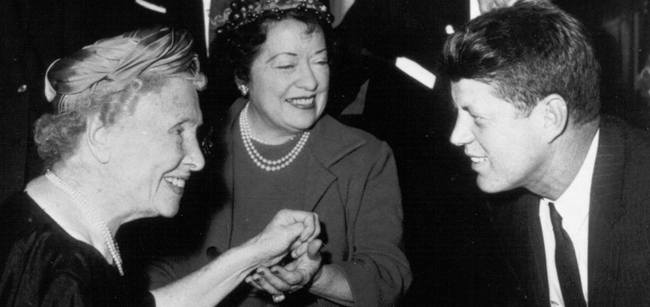
Like President Eisenhower, Helen Keller also had a way of putting things in perspective.  Being both deaf and blind gave her insights into life that the rest of us would do well to think about.

Security is mostly a superstition,” she said. “It does not exist in nature, nor do the children of men as a whole experience it.  Avoiding danger is no safer in the long run than outright exposure.  Life is either a daring adventure, or nothing.”

Fear can interfere with our ability to address problems and to keep our heads clear in difficult circumstances.  However, security concerns certainly do need to be addressed to keep our families safe and our communities productive.

I suggest that a sequence of responsibilities applies to local communities:  Freedom depends on security, which depends on stability, which in turn depends upon honesty, trust, dependability, and forbearance.

There is one other essential component as well, which I call “constructive action.”  By this I mean the active condition in which dependable working relationships develop.  We have already discussed the critical importance of trust and dependability at length.  These depend on constructive action, guided by principle and a sense of purpose.

Principle and purpose cannot exist frozen in time.  I believe stability is only possible when we are in motion.

Constructive action supported by a shared sense of purpose will be the only way to navigate through dark times.  For family and community, a stable foundation is our first priority.  Constructive action allows us dynamic flexibility in responding to what the world throws at us.

All of this will depend on our readiness to work closely with people we have differences with. We cannot be tentative about it.  Building trustworthy communities will not be easy.  Our future depends on it.

Tom

Dear readers:  In the coming weeks I will consider several issues related to security for families and communities.  I look forward to your comments and constructive feedback; this project would be impossible without you.

Walking the Talk

Big corporations often seem to behave with disregard for the humanity of citizens and community.  Geared to function with a singular profit-making intensity that is resistant to compromise, these are not human creatures.

Living with a dominant corporate culture, we find ourselves perceived as economic units, “consumers” pressed into service by a materialist mindset.

And so we have been isolated from one another, forced apart by social forces that are difficult to overcome.  The personal experience of meaning and interconnectedness that civil society depends upon has evaporated.

Americans need not submit to such a sorry destiny.

Independence is always relative, but it is an attitude and a choice.  Self-sufficiency could actually become a matter of life or death.  It can mean food security or financial stability or being a good parent.  Its’ meaning will take on new dimensions when crises strike.  But, there is much more to it than survival.

It is in community and in the quality of our active relationships that we form the matrix of a free society.  Freedom is realized in serving a principled purpose, and in the vitality of lives that are engaged and in motion.

It is in productive interaction with others that ideas are shared and problem-solving is most effective.  In trustworthy relationships, self-sufficiency gains strength and dependability.

But, are we willing to take this on?

We might not want to put up with community.  A few try to avoid it all together.  But, it is impossible to completely ignore it – unless we take snowshoes, an axe and a rifle, and walk into the wilderness.

I know how attractive solitude can be.  I also know that it would deny me the opportunity to grow as an individual, as well as the honor and adventure of dedication to the country I love.

Historically, the basic building blocks of the American Republic have been communities. And, the bonds that held everything together were the personal relationships that make communities work.

Communities are formed by the inspiration and determination of individuals and families, interwoven into mutually supportive networks, and networks of networks.  And, no, it will not be easy to regain what came to us so naturally in the past.

Let me state again, however, that the ultimate visionary force can only be that loyalty to the American Idea that welcomes diversity and rejects hostile divisiveness.

Americans are accustomed to contentious politics and unconstrained partisanship.  There will always be value in the clash of differing opinions.  However, we have entered a period of instability and potential danger.  It is time to rise above our differences in the interests of ensuring the balance and cohesion of the Republic.

We face the instability of extraordinary complexity, deteriorating infrastructure, and institutions that are trapped in the past.  Things are not going to work the way we think they should, and there will be no one to resolve the problems except ourselves.

If we are to rebuild a society in which the foolishness of the past is not repeated, we must think constructively about the qualities and principles that are needed.  Generosity and good will are essential human virtues.  We must keep them strong in our hearts, but help one another to understand why they are not enough.  Some things just don’t work.

Finding solutions to community problems will demand that we put our heads together.  It will require consultation, deliberation, and creative imagination.  And, it calls for the most diverse range of minds and perspectives possible.  The way to maximize effective problem-solving is to include people with a broad range of experience and practical skills.

This might sound idealistic.  In fact, it is the only way to restore a broken society.  Learning how to do it will be hard work, but people of good faith will always have the capacity to succeed.

We must hold our personal beliefs clearly in mind, while keeping in mind that we can expect less conflict and far greater security if we connect, listen and learn, understand and influence.

Holding ourselves apart from one another in disagreement while hurling insults can only reap destruction.  Engaging with one another can be extremely challenging, but there is no other way.

Tom

Next week: Foundations for security.

Common sense…

Farm 4-x

“Common sense is genius dressed in its working clothes.”

–Ralph Waldo Emerson

Finding Courage in Crisis

The courage to step forward constructively in a time of crisis depends on our readiness to meet pain or frustration as a positive personal act.  This is not easy, especially when the world around us is self-destructing.

To persevere at such a time, our values and sense of personal integrity become very important.  And, beyond this, we are in need of a vision of the future that embodies our hopes and a purpose we believe in.

However, the immediate problems confronting us will usually present themselves in a social context. The deterioration of civil order will be a great challenge for us.

In my view, a commitment to the integrity of civil order is a commitment to ones’ own personal integrity.  Both commitments are guided by our values and sense of responsibility.  Both are essential components of a free society.

Each of us needs to think about who we are and what integrity means to us.  And this will require that we strengthen both our sense of self-sufficiency and our sense of purpose.

Self-sufficiency and purpose give us self-confidence, so both are important.  Self-sufficiency is about practical matters and will power.  But purpose has to do with ideas, and ideas can be problematic.  So, let’s think about this.

Purpose needs to remain responsive to change and creative thinking, as well as to our personal views.  Like the world around us, we are constantly responding and growing.  It is easy to attach ourselves unwittingly to ideas that are rooted in past circumstances and which no longer hold true.

There is both strength and danger here.

Most of us develop a firm commitment to certain ideas.  This has value, so long as we keep our minds open.  We need the capacity to stick to our beliefs and to follow through with plans.  Otherwise nothing would get done.

However, at a time of extraordinary disruption and change, when the future is hard to imagine, our intended direction will sometimes take unexpected turns – or disappear temporarily into a fog.

We know what kind of world we wish to live in, at least in general terms, but the details of the future will be veiled from view.  Why?  Because the emerging reality of the future is in constant motion.

This is why shared moral values and social principles in our communities are important.  A vision for the future needs to be built upon mutual respect and understanding, rather than on the assumptions of a crumbling past.

Even in the midst of chaos, “constructive action” can be understood as the means by which we progress toward our intended goals, not away from them.

So, let’s keep two priorities in mind:  First, to hold firmly to values capable of guiding us through turmoil.  Second, to stay alert, allowing flexibility of judgment and adjusting our thinking as conditions change.

If we believe in freedom we cannot allow presuppositions to set the future in concrete.  That is not what freedom is about.

Let’s be clear.  Assumptions that we carry with us from the past are dinosaurs that threaten our ability to create the future.  Our values and principles must be permitted to guide our way, based on the realities at hand.

We may dislike the conditions in which we find ourselves at any particular moment.  We may determine to alter them.  But, to be rigid and inflexible would court disaster.  Our independence as free people depends in large part on our capacity to engage effectively with ever-changing circumstances.

We are challenged to keep our balance at the vortex of an historic turning point.  Our values will support personal integrity, and our vision will determine the direction we seek as we traverse the storm.

If we wish to exercise our liberty fully as citizens, we must hold to a principled compassion, resist absolutism and bigotry, and adjust effectively to the flow of change.

To be free in the tumult of a great storm we must summon our courage to spread our wings and soar on the wind.

Tom

Next week:  Walking the talk.

A note to new readers:  Blog entries adapted from the forthcoming book are posted on most Fridays on both this site and the Facebook page.  To receive alerts by email you may click “Follow” on this site.

From Darkness to Light

Without safe communities, and neighbors we can depend on, how will we find security for our families or begin to create a future we can believe in?  Tell me, please, in what other place do we have the freedom and the opportunity to build a stable civil order?

Do we imagine that a shining superhero will ride to our rescue?  Or will we, as I asked last week, pick ourselves up and do what needs to be done?

This is an uncompromising question.  Not to answer it, or to defer commitment, is in fact to answer it.  Failure to rise to necessity is to accept defeat.

Whatever our personality, our political philosophy or religious belief, the individual has an unavoidable choice to make.  Either we retreat into ourselves, accepting what is given as beyond our control, or we step forward to engage hardship and purpose with constructive intent.

This is a very personal choice, but at a time of existential crisis for the United States it takes on great importance – not only for ourselves, but for America and the world.

The United States has served as a model for governance and an engine of creative vitality that is unparalleled in human history.  The American idea has been a beacon of hope for people everywhere.  There has never been anything else like it.  And, the world is watching.

To hesitate here would be to respond as victims rather than as citizens.  It would be to choose loss over promise, helplessness over responsibility.  We may be temporarily intimidated by difficult circumstances.  But we must never give in and never lose sight of the dawn of the new day that even now lights the horizon.

Living with purpose gives us courage and inspiration.

I never said it will be easy.  It will not.  What I am saying is that we have no choice.  Without the courage to begin anew, we will join the slide into chaos.

Standing firm in the context of community does not isolate us from uncertainty.  It will provide only limited protection from the confusion around us.  What it does is keep us close to trustworthy and dependable friends and neighbors.

It positions us to best keep our balance, mentally and spiritually.  And, it keeps the potential for an American future alive.

Working with people is probably the most challenging part of life.  Choosing to take control of our destiny will require perseverance and forbearance – a readiness to exercise tolerance, patience, self-control.  Communicating effectively will become a necessity.

There will always be difficult people to test us.

Our job is not to be heroes.  Our job is to win over hearts and minds to the cause of safety, mutual respect, and rational governance.  Only then will it be possible for fear to give way to curiosity, for judgmental attitudes to be replaced with genuine listening and compassionate understanding.

Progress will come just one step at a time, and will often seem painfully slow.  Making a commitment to stay positive can require considerable resolve.  But, holding to the truth in our vision, focusing on productive purpose, and building trustworthy friendships – can make a very big difference.

The negativity that surrounds us may appear powerful, but in reality it can only exist in the absence of constructive action, and it only has the energy we grant it.  When we set out on a practical path and offer encouragement to others with a radiant spirit, we become as a light that pushes back the darkness.

If we are met with overbearing negativity, it may be wise to take our energy elsewhere.  But, we must never allow our vision to dim or our compassion to be compromised.

Darkness can always be countered with light.  Darkness is the absence of light and has no substance of its own.  The light of a small candle defies and defeats even the darkest night.

Tom

Next week:  Finding courage in crisis.

A note to new readers:  Blog entries adapted from the forthcoming book are posted on most Fridays at both this, the main blog site, and on the Facebook page.  To receive alerts by email you may click “Follow” on this site.

Live as if you were…

Clouds 4

“Learn as if you were to live forever; live as if you were to die tomorrow.”

–Anonymous,

taken from “Team Player” by John C. Maxwell

An uncharted land…

Helen Keller 1

“The only thing worse than being blind is having sight but no vision.”

“No pessimist ever discovered the secret of the stars, or sailed to an uncharted land, or opened a new doorway for the human spirit.”

“Optimism is the faith that leads to achievement.  Nothing can be done without hope and confidence.”

Helen Keller, who lived her life both blind and deaf.

To See for Ourselves

We each have the ability to see, to evaluate and understand things for ourselves.  Yet, all too often we allow the judgments and agendas of others to take us in.  Sometimes we allow ourselves to be manipulated, accepting what is said without investigation – because something supports our preconceived assumptions.

The dishonesty and deceit of partisan politics runs rampant.  Mass media is particularly insidious, creating various alternative realities and imposing them on us in an incoherent stream of disconnected images and sound bites.  Social media is worse.

We can never fully comprehend the reality in which we live, physically or spiritually.  But, we can see that the world survives repeated cataclysms, ever recovering its balance and somehow progressing despite the delusions, duplicity, and chicanery of human beings.

In the previous post I proposed a way of seeing and understanding the world on the basis of justice.  I wrote of a dependable, self-sustaining framework or foundation underlying the whole of reality, which has the character of justice.

We would do well to align ourselves with this basis, to unite with its’ standards and observe its’ conditions as best we can.

Religious people may recognize this truth as the function of God’s Grace.  Others might see it as a function of the integrity of the natural order in the universe.  I believe both are true.

A balanced and coherent unity can be recognized in both the human and natural worlds, when they are freed from manipulation.  The elegant balance found in nature will, if left alone, always manage itself with a delicate, yet robust and resilient functionality.

Human society has a similarly purposeful balance.  But, this is often distorted by insistent efforts to control things according to our selfish desires, rather than with any sense of the right order of things.

Religion has taught us of the integrity and interdependence of the relationships that form the fabric of human communities.  Science has shown us that the earth’s biosphere is a delicate web of life organized as an integrated network of networks.

Whether in human affairs or in the natural world, any disruption or injury inflicted upon the balance will incur consequences that may not be immediately apparent.  Yet the repercussions of injury and injustice spread rapidly abroad, as each impact leads to others in widening circles that extend themselves in perpetuity.

Why is this important to our understanding of freedom?  Understanding the fundamental form and function of things allows us to see things for ourselves without undue influence from others.

While dialog with a trusted friend or genuine consultation within a group can be important safeguards, the personal ability to recognize the consequences of events for ourselves, “to see the end in the beginning,” allows us to determine our own course of action without responding to pressure.

And, understanding the far-flung aftereffects of our own deeds provides us with a degree of protection from engaging in overly emotional, ill-conceived, or destructive acts.

A cursory review of human history reveals numerous examples of poorly conceived actions followed by disastrous consequences.  As we have all seen, both individuals and groups are quite capable of seriously misguided error.

How does this happen?  Well, sometimes we think we have everything all figured out when, in fact, our information is limited and we are only aware of a part of the “truth.”

It is essential that we include a diversity of experience and perspective in our consultations with others.  And, we must always step back periodically to find the mental space to think objectively for ourselves.

Remaining mindful of the foundation of justice that is given, and always checking and rechecking our own motives, will pay ever greater dividends in constructive outcomes and the avoidance of unnecessary trouble.

Justice is a gift that will not go away.  To ignore or repudiate it is fruitless.

However destructive the consequences of unjust acts may be, justice remains integral to the substance of reality, unperturbed and uncompromised.  It remains with us at all times, however discouraged or confused we might feel.

We can count on this, even in the darkest night.

Tom

Next week: Liberty with integrity

A note to new readers:  Blog entries adapted from the forthcoming book are posted on most Fridays at both the main blog site and the Facebook page.  To receive alerts by email you may click “Follow” here at the main blog site.

Liberty, Justice Made Personal

Liberty cannot be pulled out of the air, and it cannot be handed to us by those who assume political or religious authority.

Our freedom is constrained by many forces and circumstances in life. These can be inflicted upon us socially, economically, or by physical nature; but every limitation can be addressed with a positive attitude, with creativity and wisdom.

It is through a commitment to responsibility that we find the substance of personal freedom. Indeed, it has been said that there can be no liberty without responsibility.

This is important to understand when the world around us seems to be coming apart.

If we are to keep our balance when the ground is shifting under our feet, how can we best prepare ourselves? We must do more than simply prepare materially for hard times, although that is important, too. How can we find the moral and mental strength to persevere?

How can we take a long view in the midst of chaos – to gain a sense of ultimate purpose, and a vision of the future we can believe in?

In my view, there is a clear and dependable reason to believe that justice is indestructible and will prevail in the end. Please bear with me!

It is my firm conviction that there is an integral foundation underlying all things, which has the character of justice. This is the ultimate ground of being.

The reality we live in, both physically and metaphysically, has a dynamic and perfectly balanced “functional structure” that we can each learn to see with our own eyes (and not through the eyes of others), and understand for ourselves without being swayed by others.

Justice is the governing principle and inherent character of this truth. It is the basis of religious law, the purpose of which is our protection, and it allows us to keep our balance in a disturbed world.

Whether this idea is viewed through religious or philosophical eyes, all of us can benefit by gaining confidence in the ground we stand on. It is reasonable, it is dependable, and it offers a stable basis for constructive action.

Everyone sees things differently and none of us can comprehend ultimate truth. Yet, the concept proposed here can be helpful in maintaining our composure, and in determining the right course of action in difficult circumstances.

Stated briefly, justice is the ultimate balance manifested in the self-sustaining structure of the whole of being. Or, to put it in another way, justice is a dynamic framework upon which all things depend, and which remains unified and transcendent despite the disruptions caused by human activity.

When things get crazy it helps to understand that a firm, inviolable structure supports the reality of things. And, when we endeavor to align ourselves with it, things go well for us with far greater consistency.

Such an understanding can be the starting point for both thinking and action.

If we are to rebuild our communities and nation in a constructive and principled manner, it will be necessary to adjust with flexibility to the unexpected changes that comes with crises.

Life is always going to be a challenge, living as we do in a world dominated by materialism, egotism, and conflict. It is not possible to fully comprehend the dynamic in which we find ourselves. Yet, I submit to you that an ultimate and indestructible balance does, in fact, exist at the foundation of things.

The ground of justice allows us a steady hand in exercising responsibility, building trustworthy relationships, and conducting our lives with integrity.

Justice furnishes the ordered condition in which we have the opportunity to bring ourselves into balance with the world of existence as it truly is – and as I believe it is meant to be.

Tom

Next week: The freedom to see for ourselves.

Dear readers, I am depending on your comments and constructive feedback.

The Resilience of Inner Freedom

I fear America is sliding steadily toward social disorder and economic disarray. In an atmosphere of deepening crisis, I am concerned about the potential for overreaction by government, police agencies, and citizens. These are circumstances in which terrible things can happen, and indeed are happening.

This week I will share a story with you that illuminates our capacity as human beings to assert our dignity and inner freedom even amidst the most dreadful circumstances.

Responding to the contradictions and injustices we experience in life is challenging. Yet, doing so rationally and responsibly can be a personal statement of transcendent freedom. This is possible regardless of the conditions around us, however difficult they may be.

To be free we must seek to be autonomous individuals first, whole and complete in ourselves, and then to actualize our identity with dignity and perseverance.

We may not like the reality in which we find ourselves. Indeed, it could be nightmarish. But, possessing free will necessitates a commitment to be free in oneself and to engage proactively with the circumstances we face.

If there is a primary requirement for attaining inner integrity, it is the personal determination to do so. In my view, this choice has never been described more eloquently than by Viktor Frankl in the book, Man’s Search for Meaning, the testimony of four terrible years as a prisoner in Auschwitz, the Nazi death camp.

Because his response to that experience is so revealing, I will devote most of this post to his words:

“I may give the impression that the human being is completely and unavoidably influenced by his surroundings. (In this case the surroundings being the unique structure of camp life, which forced the prisoner to conform his conduct to a certain set pattern.) But, what about human liberty?

“Is there no spiritual freedom in regard to behavior and reaction to any given surroundings? …Do the prisoners’ reactions to the singular world of the concentration camp prove that man cannot escape the influences of his surroundings? Does man have no choice of action in the face of such circumstances?

“We can answer these questions from experience as well as on principle.

“The experiences of camp life show that man does have a choice of action. There were enough examples, often of a heroic nature, which proved that apathy could be overcome, irritability suppressed. Man can preserve a vestige of spiritual freedom, of independence of mind, even in such terrible conditions of psychic and physical stress.

“We who lived in concentration camps can remember the men who walked through the huts comforting others, giving away their last piece of bread. They may have been few in number, but they offer sufficient proof that everything can be taken from a man but one thing: the last of the human freedoms – to choose one’s attitude in any given set of circumstances, to choose one’s own way.

“And there were always choices to make. Every day, every hour, offered the opportunity to make a decision, a decision which determined whether you would or would not submit to those powers which threatened to rob you of your very self, your inner freedom….

“Even though conditions such as lack of sleep, insufficient food and various mental stresses may suggest that the inmates were bound to react in certain ways, in the final analysis it becomes clear that the sort of person the prisoner became was the result of an inner decision, and not the result of camp influences alone. Fundamentally, therefore, any man can, even under such circumstances, decide what shall become of him – mentally and spiritually. He may retain his human dignity even in a concentration camp.”

As we face our own tests, which we hope will not be so daunting as Dr. Frankl’s, how can we find this resilience within ourselves? Here is a freedom gained through empowered compassion and responsibility as we respond to the turmoil of a transformative age.

No one can do this for us. As we turn our attention to the suffering and confusion of those around us, we are preparing for both the coming hardship and the new day beyond.

Tom

Next week: Liberty and justice made personal.

The First Steps to Freedom

The struggle for freedom and fairness in governance has a long and turbulent history. In the past the passion for liberty set citizens against totalitarian authority, and the goal was understood to be protection against the self-serving motivations of governments.  By liberty was meant limits on the power of government to impose its’ will on the community.

Later, people came to believe it unnecessary that government should be independent and opposed in its’ interests to themselves. Consequently, a new demand for short-term elected leaders became predominant.

This idea was assumed at first to mean that elected officials should identify with the people and the interests of the nation. It followed that such a nation would not need to be protected from itself.  Supposedly a democracy would not exercise tyranny over itself.

However, as Americans well know, the notion that citizens have no reason to limit their power over themselves only seems reasonable to those who have no experience with popular government.

After two hundred years of experience we know that “self-government” can be fragile and complicated. “The will of the people” often turns out to be the will of the most actively dominant portion of the citizenry, usually the majority, but quite possibly those with overbearing economic or financial firepower.

The American founders took great pains to control any possible abuses of power. As we saw in Chapter Four: Freedom and Order, the Constitutional Convention of 1787 recognized the importance of limiting such dangers throughout an uncertain future.

Liberty came to mean the freedom of each to live our lives as we see fit, so long as we do not impose ourselves on the well-being of others.

As an ideal, this is not so simple in practice. It was controversial then and it is controversial now. And, as I have suggested, the changes and challenges of the ensuing years have given us much to ponder.

Finding ourselves facing the dangers, complexities, and tensions of the present turning point, I believe the American people would do well to step back and reassess the values, principles, and general attitudes with which we can best regain our poise and seek a shared vision and purpose.

In short, I propose that the first steps to freedom will be those that lead to problem-solving and cooperation – if we are to avert catastrophe. And, I believe that this can be done most effectively when addressing felt-needs in our local communities. We will learn by doing, and act we must.

The first steps are challenging, but straight forward:

1) To engage as neighbors, which means learning to listen and to truly understand one another, and then to rise above our differences to resolve problems and address local needs.

2) To recognize the diversity of knowledge, skills, and experience we have available to do what needs to be done; our survival might depend on it.

3) To identify the extent to which we share values, and to build a level of trust that ensures we have neighbors we can depend on when the going gets tough.

4) To commit ourselves seriously to the ultimate purpose of seeking a vision of the future we can hold in common – a future we can all respect and believe in.

In focusing on first things first, we must learn the ways of community that Americans once practiced so well in the vibrant civil society of our past.

Such is the purpose of this little book. The pages that follow are devoted to finding our way through the difficulties and perplexity of this most difficult endeavor.

As we begin to take these first steps, I think we will find it helpful to reflect on the meaning of freedom in our personal lives. For it is deep in our own souls that we must first build confidence in our personal ability to prevail over fear and loss.

There is no greater strength to be found than knowledge of the freedom we control within ourselves. Indeed, it is through this primal freedom that we gain the capacity to respond to life’s tests with grace.

Tom

Next week: The resilience of inner freedom

Dear readers: I wish to thank all those who kept me in your thoughts and prayers during the past two weeks. My surgery went well and I am recovering rapidly. I keep finding more ways to appreciate you, and I look forward very much to continuing our conversation. (Please see the Facebook page, where there is active reader engagement.)