Finding Our Balance in the Storm

The passion for freedom challenges us to rise to the best of our ability as human beings. Whether or not institutions fail us, we are fully capable of giving life to our values when we engage with society, strengthen our communities, connect and collaborate with others.

It is in serving a purpose that each of us discovers the potential in ourselves for strength of character, generosity of spirit, and the inspiration to reach for a better place.

The practical limitations imposed on our personal freedom by moral responsibility and a complex world can be quite challenging, and crisis conditions make things all the more difficult.  For the mature adult, however, these constraints provide a springboard for a meaningful and productive life.

Naturally, it can be difficult to find our place and focus our energy constructively.  At times our courage can fail us.  The demands made on us sometimes feel impossible, even without consideration for others.  Without self-confidence it is difficult to be supportive of others, many of whom we seem to have little in common with.

Preparing ourselves will be important as we navigate through one of history’s great turning points.  Our ability to function responsibly in difficult circumstances will be challenging.

I believe we have entered a period of upheaval that will be unprecedented in character and global in its dimensions.  In my forthcoming book I explain why we will face “a confluence of crises” in the coming years, a series of consecutive and interrelated crises, both natural and man-made.

Preserving the Republic and holding to the core values of the American Idea will be our great responsibility as we transit the upheavals of a great storm.  Our belief systems are already being tested.  Civil order and economic stability will be shaken.

It will be imperative that we meet our tests with dignity, resetting our vision of the American identity based principle rather than watching it descend into chaos.

Our future depends on the survival of core human values and our commitment to retrieving a humane and sustainable future from the wreckage of the past.

Any alternative is too terrible to imagine.

We will prevail if our actions are constructive and the means we employ are harmonious with the ends that we seek.  We must keep our balance in the storm, keep our hearts and minds focused on the greatest good, and not allow ourselves to be dragged down by fear.

And so I offer you a metaphor here for freedom’s truth, a physical reflection of the metaphysical reality.  What follows are the final lines of a eulogy I gave for my father at his memorial service, and a testimony to what I learned from him:

“He gave me one truly great thing above all else….  And, this he did by teaching me the ways of sailing boats.  He taught me to fly on the wind.  He taught me to sail, to ride high on the blustering gale!

“Without fear we ventured out on the running tide, suspended between liquid and ether, to know the snap of the rigging, the sting of salt spray, and the unyielding rush of a steady keel straining against the wild.  Together we embraced the untamed and raced across the sky.  He was my Dad.”

Throughout life we are subject to the vagaries of a capricious human world that seems similar in many ways to the fickle nature of wind and sea.  Yet, core principles, laws, and standards remain firmly in place in both worlds, if we have the eyes to see.

Understanding and embracing this truth, we can spread our wings and learn to fly.

As with a sailing vessel at sea, our identity as human beings can only be realized in action.  And so we are free to discover the world we are given, learning as the sailor learns to engage a fluid and often unpredictable reality with wisdom and flexibility.

Failing this, we will beat ourselves against an implacable and merciless resistance.  An unwillingness to learn will expose us to the storms of life in a rudderless ship and with our rigging in disarray.

Tom

Next week: Turning the corner.

A note to new readers:  Blog entries adapted from the forthcoming book are posted on most Fridays at both this, the main blog site, and on the Facebook page.  To receive alerts by email you may click “Follow” on this site.

Don’t judge each day…

Flowers 6

“I am an optimist.  It doesn’t seem to be much use being anything else.”

–Winston Churchill

“Don’t judge each day by the harvest you reap, but by the seeds that you plant.”

–Robert Louis Stevenson

“Don’t worry about the world coming to an end today.  It’s already tomorrow in Australia.”

–Charles M. Schulz (“Peanuts”)

America at a Tipping Point

To speak of rebuilding the foundations of the Republic is not to suggest deficiencies in the structure and process of governance provided by the Constitution.  On the contrary, the founders created a structural bulwark for stability that must be defended vigorously whenever necessary.

The foundation many of us are concerned about is that of integrity: Justice, trust, responsibility, and a mutual respect that transcends differences among citizens.

A reader commented on this blog’s Facebook page last week that, “America is at a tipping point because every tenet [and] moral fiber of this nation has been diminished, so that no one is held accountable.  [There is] no moral compass because the foundations are removed.”

We do not have to agree on all the details to recognize truth in this view.  And, we cannot wait for somebody else to fix it.  It is time to stop complaining and to step forward to engage with those around us in securing the safety and well-being of our communities.

Changing our attitude does not require changing opinions or compromising principles.  Addressing people and problems with dignity and kindliness will win respect, not harsh or derogatory words.

If we wish to be heard, to share our views and represent our principles, we must do what is necessary to make this possible.  Communication and understanding will not be easy until we are cooperating shoulder-to-shoulder with our neighbors to make things right.

No, it will not be easy.  But this is how mutual respect begins and the ability to listen becomes genuine.

We will talk more about this later, but the important thing to recognize is that when the going gets tough, relationships count.  I don’t just mean next door neighbors, as important as they are.  If we find ourselves under threat, directly or indirectly, the last thing we need is neighbors down the road or over the hill who are an unknown quantity.

And, we are not simply talking about making acquaintances here.  This is not about borrowing a cup of sugar over the back fence.  To create safe communities – to rebuild the nation – we need dependability.  And that means trust.

Yes, well, in the midst of this crisis we find that trust is not something that Americans know much about.  Mostly we do not believe in it any more.  This is a big problem.

We cannot simply start trusting people because we wish to be trusting.  The reality we live in is decidedly untrustworthy.  Most of the people around us do not have a clear concept of what trust means, much less an understanding of why it is important or what to do about it.

Change will take time.  The challenge begins with our willingness to take initiative, to be patient, to accept differences, and, most of all, to listen to others with interested curiosity.  If we wish to be heard it is usually necessary to first convince others that we are actually hearing them.  Only then will we be heard.

In his book, “The Seven Habits of Highly Effective People“, Stephen Covey wrote:

“If you’re like most people, you probably seek first to be understood; you want to get your point across. And in doing so, you may ignore the other person completely, pretend that you’re listening, selectively hear only certain parts of the conversation or attentively focus on only the words being said, but miss the meaning entirely. So why does this happen? Because most people listen with the intent to reply, not to understand.”

We can all see that the loss of trust has accompanied the loss of civil order and security in this country.  We know there are serious structural problems that must be addressed, but I hope we can also see why trust will serve a vital role in recovering stability and prosperity.

Learning how to build trust will come in the context of practical experience – teaming up to work closely with one another, resolving practical problems and meeting needs in our communities.

Without trust the American republic faces existential danger.  And, without personal cooperation and understanding no trust is possible and no progress is attainable.

Tom

Next week: Finding our balance in the storm

Dear readers, I would appreciate your feedback: ideas, viewpoints, and observations.  Expansive reader engagement on the Facebook page has been quite helpful.

The foundational principle…

Lake 1

“Trust is the glue of life. It’s the most essential ingredient in effective communication.  It’s the foundational principle that holds all relationships.”

“When the trust account is high, communication is easy, instant, and effective.”

–Stephen R. Covey

Living with Integrity

I have suggested here that liberty is closely related to justice, and that both depend upon moral responsibility.  How can we think about these things, and find integrity in them and through them?

By responsibility I mean active engagement with the people and institutions around us as interested and caring citizens.  Responsibility gives meaning and order to our lives.  It is a partner to liberty, which cannot exist without it.

I refer to moral responsibility more specifically as our ability to respond on the basis of conscience, using personal judgment regarding what is right and wrong in human behavior, and acting with respect for the dignity of those we encounter.

A friend once pointed out to me that the meaning of “responsibility” might be found in the compound word, “response-ability.”  Without this ability, justice cannot be realized and liberty has no purpose.

We heard from Viktor Frankl several weeks ago in a post entitled: “The Resilience of Inner Freedom.”  Dr. Frankl emerged from his World War II ordeal in a Nazi death camp with the firm conviction that freedom can only be secured through responsibility.

Freedom,” he wrote, “is not the last word.  Freedom is only part of the story and half of the truth.  Freedom is but the negative aspect of the whole phenomenon whose positive aspect is responsibleness.  In fact, freedom is in danger of degenerating into mere arbitrariness unless it is lived in terms of responsibleness.”

For many of us, seeking freedom in our lives is a gradual process of maturing, letting go of dependencies, and trying to make a go at life with what resources we can gather or create.

This is meaningful for a time.  However, we soon begin to realize that the society in which we live, and the material limitations in our lives, impose themselves on us in uncomfortable ways.

Do we then give in to anger – or feeling sorry for ourselves?  Or, do we seek dignity in the face of limitation, asserting control over our personal vices, and engaging constructively in our community and the wider world beyond?

Many of us find it necessary to construct the lives we wish for from the wreckage of past mistakes, our own and those of others, and are grateful simply for the opportunity to do so.  Even cleaning up a mess offers a certain satisfaction.

There is no happiness to be found in complaining.  Self-respect cannot wait for things to change.  We are each capable of responding to the world around us with dignity and creativity.

Contributing to problem-solving in collaboration with others is a choice that can bring great gratification, however difficult the challenges.

Accepting responsibility can mean many things depending on our circumstances.  Usually we think of responsibility as the act of responding to what needs to be done.  I suggest, however, that a core responsibility underlying all others is the imperative to build and ensure trust.

Without trust, the fabric of this nation will continue to disintegrate.  Trust is the substance of integrity and the single most essential factor making it possible for us to build the future.

Can we find ways of thinking and being that are consistent with the foundation of justice we have considered in recent posts?  The integrity of such a framework supports our endeavors in the same way that a sound physical foundation is required to construct a building.

A principled integrity gains primacy in our very identity: our character and way of being.  But, it can easily be squandered in a moment of carelessness.

So, there you have it: Integrity is the quality of being; trustworthiness is the substance of that quality; and, responsibility is the action with which we make it so.  And, finally, justice is the beginning and the end, the matrix that holds it all together.

Responsibility follows immediately from integrity and is the expression of it.  Stability and order depend on this.  When responsibility is understood and applied to the challenges we face, progress is possible.  Otherwise the integrity of intention is lost.

There is no middle ground.  Either integrity and responsibility are wholly present or they are compromised.  Without them no civilization is possible.

Tom

Next week:  On dependability and trust

A note to regular readers:  I wish to express my gratitude for the interest and constructive feedback you have shared on the Facebook page.  I could not reasonably proceed without this.  Those of you who have taken the step of clicking “Follow” on this site are also serving a significant role.  When it comes time to publish, the numbers really can make a difference.

An uncharted land…

Helen Keller 1

“The only thing worse than being blind is having sight but no vision.”

“No pessimist ever discovered the secret of the stars, or sailed to an uncharted land, or opened a new doorway for the human spirit.”

“Optimism is the faith that leads to achievement.  Nothing can be done without hope and confidence.”

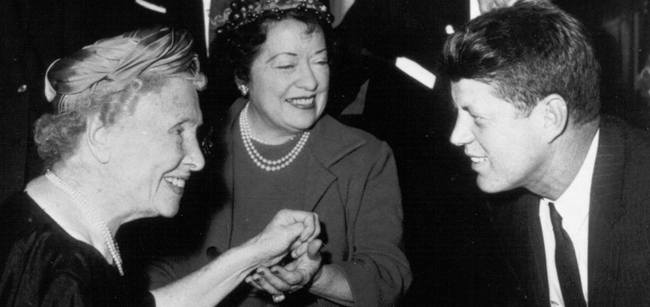
Helen Keller, who lived her life both blind and deaf.

To See for Ourselves

We each have the ability to see, to evaluate and understand things for ourselves.  Yet, all too often we allow the judgments and agendas of others to take us in.  Sometimes we allow ourselves to be manipulated, accepting what is said without investigation – because something supports our preconceived assumptions.

The dishonesty and deceit of partisan politics runs rampant.  Mass media is particularly insidious, creating various alternative realities and imposing them on us in an incoherent stream of disconnected images and sound bites.  Social media is worse.

We can never fully comprehend the reality in which we live, physically or spiritually.  But, we can see that the world survives repeated cataclysms, ever recovering its balance and somehow progressing despite the delusions, duplicity, and chicanery of human beings.

In the previous post I proposed a way of seeing and understanding the world on the basis of justice.  I wrote of a dependable, self-sustaining framework or foundation underlying the whole of reality, which has the character of justice.

We would do well to align ourselves with this basis, to unite with its’ standards and observe its’ conditions as best we can.

Religious people may recognize this truth as the function of God’s Grace.  Others might see it as a function of the integrity of the natural order in the universe.  I believe both are true.

A balanced and coherent unity can be recognized in both the human and natural worlds, when they are freed from manipulation.  The elegant balance found in nature will, if left alone, always manage itself with a delicate, yet robust and resilient functionality.

Human society has a similarly purposeful balance.  But, this is often distorted by insistent efforts to control things according to our selfish desires, rather than with any sense of the right order of things.

Religion has taught us of the integrity and interdependence of the relationships that form the fabric of human communities.  Science has shown us that the earth’s biosphere is a delicate web of life organized as an integrated network of networks.

Whether in human affairs or in the natural world, any disruption or injury inflicted upon the balance will incur consequences that may not be immediately apparent.  Yet the repercussions of injury and injustice spread rapidly abroad, as each impact leads to others in widening circles that extend themselves in perpetuity.

Why is this important to our understanding of freedom?  Understanding the fundamental form and function of things allows us to see things for ourselves without undue influence from others.

While dialog with a trusted friend or genuine consultation within a group can be important safeguards, the personal ability to recognize the consequences of events for ourselves, “to see the end in the beginning,” allows us to determine our own course of action without responding to pressure.

And, understanding the far-flung aftereffects of our own deeds provides us with a degree of protection from engaging in overly emotional, ill-conceived, or destructive acts.

A cursory review of human history reveals numerous examples of poorly conceived actions followed by disastrous consequences.  As we have all seen, both individuals and groups are quite capable of seriously misguided error.

How does this happen?  Well, sometimes we think we have everything all figured out when, in fact, our information is limited and we are only aware of a part of the “truth.”

It is essential that we include a diversity of experience and perspective in our consultations with others.  And, we must always step back periodically to find the mental space to think objectively for ourselves.

Remaining mindful of the foundation of justice that is given, and always checking and rechecking our own motives, will pay ever greater dividends in constructive outcomes and the avoidance of unnecessary trouble.

Justice is a gift that will not go away.  To ignore or repudiate it is fruitless.

However destructive the consequences of unjust acts may be, justice remains integral to the substance of reality, unperturbed and uncompromised.  It remains with us at all times, however discouraged or confused we might feel.

We can count on this, even in the darkest night.

Tom

Next week: Liberty with integrity

A note to new readers:  Blog entries adapted from the forthcoming book are posted on most Fridays at both the main blog site and the Facebook page.  To receive alerts by email you may click “Follow” here at the main blog site.

A new kind of thinking…

Tree 11

“We cannot solve our problems with the same thinking we used when we created them.”

–Albert Einstein

“You don’t think your way into a new kind of living. You live your way into a new kind of thinking.”

–Henri J.M. Nouwen, Christian theologian

“If the human race is to survive it will have to change more in its ways of thinking in the next twenty-five years than it has done in the last twenty-five thousand.”

–Kenneth Boulding, former president of the American Association for the Advancement of Science, and a Christian mystic.

Liberty, Justice Made Personal

Liberty cannot be pulled out of the air, and it cannot be handed to us by those who assume political or religious authority.

Our freedom is constrained by many forces and circumstances in life. These can be inflicted upon us socially, economically, or by physical nature; but every limitation can be addressed with a positive attitude, with creativity and wisdom.

It is through a commitment to responsibility that we find the substance of personal freedom. Indeed, it has been said that there can be no liberty without responsibility.

This is important to understand when the world around us seems to be coming apart.

If we are to keep our balance when the ground is shifting under our feet, how can we best prepare ourselves? We must do more than simply prepare materially for hard times, although that is important, too. How can we find the moral and mental strength to persevere?

How can we take a long view in the midst of chaos – to gain a sense of ultimate purpose, and a vision of the future we can believe in?

In my view, there is a clear and dependable reason to believe that justice is indestructible and will prevail in the end. Please bear with me!

It is my firm conviction that there is an integral foundation underlying all things, which has the character of justice. This is the ultimate ground of being.

The reality we live in, both physically and metaphysically, has a dynamic and perfectly balanced “functional structure” that we can each learn to see with our own eyes (and not through the eyes of others), and understand for ourselves without being swayed by others.

Justice is the governing principle and inherent character of this truth. It is the basis of religious law, the purpose of which is our protection, and it allows us to keep our balance in a disturbed world.

Whether this idea is viewed through religious or philosophical eyes, all of us can benefit by gaining confidence in the ground we stand on. It is reasonable, it is dependable, and it offers a stable basis for constructive action.

Everyone sees things differently and none of us can comprehend ultimate truth. Yet, the concept proposed here can be helpful in maintaining our composure, and in determining the right course of action in difficult circumstances.

Stated briefly, justice is the ultimate balance manifested in the self-sustaining structure of the whole of being. Or, to put it in another way, justice is a dynamic framework upon which all things depend, and which remains unified and transcendent despite the disruptions caused by human activity.

When things get crazy it helps to understand that a firm, inviolable structure supports the reality of things. And, when we endeavor to align ourselves with it, things go well for us with far greater consistency.

Such an understanding can be the starting point for both thinking and action.

If we are to rebuild our communities and nation in a constructive and principled manner, it will be necessary to adjust with flexibility to the unexpected changes that comes with crises.

Life is always going to be a challenge, living as we do in a world dominated by materialism, egotism, and conflict. It is not possible to fully comprehend the dynamic in which we find ourselves. Yet, I submit to you that an ultimate and indestructible balance does, in fact, exist at the foundation of things.

The ground of justice allows us a steady hand in exercising responsibility, building trustworthy relationships, and conducting our lives with integrity.

Justice furnishes the ordered condition in which we have the opportunity to bring ourselves into balance with the world of existence as it truly is – and as I believe it is meant to be.

Tom

Next week: The freedom to see for ourselves.

Dear readers, I am depending on your comments and constructive feedback.

The trial of principle…

Wire 3

“Comfort and prosperity have never enriched the world as much as adversity has.”
–Billy Graham

“Adversity is the trial of principle. Without it, a man hardly knows whether he is honest or not.”
–Henry Fielding

“These are the times that try men’s souls.”
–Thomas Paine

The Resilience of Inner Freedom

I fear America is sliding steadily toward social disorder and economic disarray. In an atmosphere of deepening crisis, I am concerned about the potential for overreaction by government, police agencies, and citizens. These are circumstances in which terrible things can happen, and indeed are happening.

This week I will share a story with you that illuminates our capacity as human beings to assert our dignity and inner freedom even amidst the most dreadful circumstances.

Responding to the contradictions and injustices we experience in life is challenging. Yet, doing so rationally and responsibly can be a personal statement of transcendent freedom. This is possible regardless of the conditions around us, however difficult they may be.

To be free we must seek to be autonomous individuals first, whole and complete in ourselves, and then to actualize our identity with dignity and perseverance.

We may not like the reality in which we find ourselves. Indeed, it could be nightmarish. But, possessing free will necessitates a commitment to be free in oneself and to engage proactively with the circumstances we face.

If there is a primary requirement for attaining inner integrity, it is the personal determination to do so. In my view, this choice has never been described more eloquently than by Viktor Frankl in the book, Man’s Search for Meaning, the testimony of four terrible years as a prisoner in Auschwitz, the Nazi death camp.

Because his response to that experience is so revealing, I will devote most of this post to his words:

“I may give the impression that the human being is completely and unavoidably influenced by his surroundings. (In this case the surroundings being the unique structure of camp life, which forced the prisoner to conform his conduct to a certain set pattern.) But, what about human liberty?

“Is there no spiritual freedom in regard to behavior and reaction to any given surroundings? …Do the prisoners’ reactions to the singular world of the concentration camp prove that man cannot escape the influences of his surroundings? Does man have no choice of action in the face of such circumstances?

“We can answer these questions from experience as well as on principle.

“The experiences of camp life show that man does have a choice of action. There were enough examples, often of a heroic nature, which proved that apathy could be overcome, irritability suppressed. Man can preserve a vestige of spiritual freedom, of independence of mind, even in such terrible conditions of psychic and physical stress.

“We who lived in concentration camps can remember the men who walked through the huts comforting others, giving away their last piece of bread. They may have been few in number, but they offer sufficient proof that everything can be taken from a man but one thing: the last of the human freedoms – to choose one’s attitude in any given set of circumstances, to choose one’s own way.

“And there were always choices to make. Every day, every hour, offered the opportunity to make a decision, a decision which determined whether you would or would not submit to those powers which threatened to rob you of your very self, your inner freedom….

“Even though conditions such as lack of sleep, insufficient food and various mental stresses may suggest that the inmates were bound to react in certain ways, in the final analysis it becomes clear that the sort of person the prisoner became was the result of an inner decision, and not the result of camp influences alone. Fundamentally, therefore, any man can, even under such circumstances, decide what shall become of him – mentally and spiritually. He may retain his human dignity even in a concentration camp.”

As we face our own tests, which we hope will not be so daunting as Dr. Frankl’s, how can we find this resilience within ourselves? Here is a freedom gained through empowered compassion and responsibility as we respond to the turmoil of a transformative age.

No one can do this for us. As we turn our attention to the suffering and confusion of those around us, we are preparing for both the coming hardship and the new day beyond.

Tom

Next week: Liberty and justice made personal.

The Ultimate Freedom…

Farm 5-x

“Every human has four endowments – self awareness, conscience, independent will, and creative imagination. These give us the ultimate human freedom… The power to choose, to respond, to change.”

–Stephen R. Covey, The 7 Habits of Highly Effective People