
A Deepening Crisis

There is trouble in the land. Things are not right and the signs confront us daily. The mainstream media focuses on politics and the economy, but we know it goes far deeper.

The illness is shows itself in violence and bitterness, in material deprivations, in the degradation of human dignity and loss of responsibility. Many of us share a sinking feeling. We are afraid of the future, and increasingly we fear one another.

A wide range of crises are emerging into view or loom on the horizon.

I have surveyed some of these threats in Chapter Two of the book project, “A Confluence of Crises,” where I note that many are interrelated. And, I have argued that Americans must pull together despite our differences, both for self-preservation and to ensure the survival of the American republic.

The broad theme running through this blog (and forthcoming book) is the necessity for Americans to work together shoulder-to-shoulder to meet local needs and resolve local problems. As difficult as this prospect may seem, I do not believe we have a choice.

However, my purpose here is not to warn of impending crises, but to prepare us to remain positive in mind and spirit – to get us through a dark and chaotic time, and out the other side.

We face a long crisis. A constructive response needs to be mounted even as we withstand hardships and disasters.

We are challenged as Americans to rebuild the foundations of the nation in preparation for a future we can respect and believe in. This will require courage and steady determination. Even when we cannot see our way clearly, we must keep our focus on the ends we seek.

In the coming weeks I will offer a broad overview of issues that I think should be taken into consideration as we think about a future beyond this upheaval. We will need to have a realistic understanding of circumstances if we are to progress intelligently, rationally, avoiding wrong turns and hidden dangers.

The most important consideration in all this, in my view, is recognition of the structural nature of the transition. We have arrived at an historic turning point, both as Americans and as human beings. We are experiencing massive structural change.

Structural change takes place outside the realm of our normal experience and expectations. It is caused by events beyond our control.

Examples would include an aging population with insufficient savings, bankrupt governments and institutions, the unprecedented complexity of economic distortions and disruptions, the uncontrolled advance of extraordinary technologies, and the threat of terrorism – all developments that have little to do with partisan politics.

That mistakes have been made and illusions foolishly pursued is undeniable. But, very big changes are taking place that are actually not anyone’s fault.

I have focused attention on values and principles in recent blog posts because, as a practical matter, we are entering new territory. We can only navigate safely with principles that are valid and dependable.

To think of the future in terms of recovering the past will not be helpful. We must pick ourselves up, hit the reset button, and move forward in a manner that is congruent with a rapidly changing reality.

You see, there is a reason the bankers and their economists are not succeeding at returning the economic condition of the United States to some semblance of order. They have proceeded as though they are dealing with a cyclical crisis rather than a structural crisis. And, as long as they continue to do so, there will be no recovery.

Why don’t they understand this? Well, some of them do. But, few dare to speak openly because the financial world would panic.

Why do they continue with a strategy that cannot possibly succeed? Well, there is a reason for that, too. Central bankers (and governments) are trapped between a rock and a hard place.

In the coming weeks we will address the ways a rapidly changing world is changing our lives. We must move past our emotions even as the world is driven over a cliff – because our grandchildren deserve a rational inheritance. And that depends on us.

Tom

Next week: Why the bankers are trapped.

Note to readers: You can support this blog and the book project by recommending that your friends and associates take a look.

If Humankind is to Survive…

City 4

“The fact is we can only love what we know personally. And we cannot know much. In public affairs, in the rebuilding of civilization, something less dramatic and emotional is needed, namely tolerance.”

–E. M. Forster (Novelist)

“If man is to survive, he will have learned to take a delight in the essential differences between men and between cultures. He will learn that differences in ideas and attitudes are a delight, part of life’s exciting variety, not something to fear.”

–Gene Roddenberry (Creator of Star Trek)

Values That Matter

Readers responded last week to my request for thinking about shared values for a genuine American renewal. What values can we agree on, I asked, as a foundation for a unified starting point – a common American “center” that transcends culture, religion, politics?

[This exchange of ideas took place primarily on the blog’s Facebook page, where more than 80 readers clicked post like: http://www.facebook.com/freedomstruth ]

Ideas were offered and important points were made. Values were identified and we heard the deeply felt need for government policies that reflect them. Frustrations were expressed, as well as some feelings verging on hopelessness.

I wrote of my belief that a small unified core of determined Americans could generate a powerful moral presence, if we articulate essential values clearly and project a vision for the future with a compassionate and welcoming spirit.

This would be immensely attractive to a nation desperate for the feel of solid ground beneath its feet.

A dynamic initiative will not require large numbers at the start. It will grow rapidly. I believe the vision of a civil order based on trust and responsibility will draw Americans to it from every walk of life – from every religious faith, from every economic condition and political philosophy.

A signed pledge would make individual commitment very clear. Such a pledge could be added in the back of the book, if you think this is a good idea. Please let me know what you think.

The hard part is this: It will require a willingness to temporarily set aside some of the political differences that separate us – until such time as we have secured the stability necessary to address common problems in our communities.

What is essential is not that we agree on every aspect of personal belief, but that we join with one another to restore the integrity of a civil society that allows for constructive cooperation, engaging with one another respectfully, so that we can secure the safety of our families and the economic well-being of local and regional communities.

If this is our priority we cannot allow America to disintegrate in unrestrained acrimony and hostility. We will have to choose our battles. Some will have to be fought on another day.

My request for your thinking may not have been clear regarding the distinction between government policies and the principles behind them. My intention here is to take the first step in building a foundation on which we can then proceed to structure debate and build policy.

Among genuinely committed Americans, finding common ground in our values will alter perceptions and increase our ability to actually listen to one another.

Stephen Covey wrote that “most people listen with the intent to reply, not to understand.” If Americans are to recover the vision of this country as free and fair, this will have to change.

In his best-selling book, The 7 Habits of Highly Effective People, Stephen Covey wrote:
Every human has four endowments — self awareness, conscience, independent will and creative imagination. These give us the ultimate human freedom, the power to choose, to respond, to change.

Our challenge is to establish a condition, a mental space, in which we can sustain this freedom and attract our fellow-Americans to it.

Having asked you last week to identify the values that should characterize such a condition, I will share those that I consider essential for a free and just society.

I add these to our commitment to defend the Constitution and respect the rule of law: Justice, equity, truthfulness, honesty, fair-mindedness, reliability, trustworthiness, and responsibility.

There you have it. These values are essentially universal, having been taught by every world religion down through the ages. Unfortunately, many of the followers of religion don’t get it, and so our work is cut out for us.

I would appreciate receiving another round of feedback from readers. Please focus your comments on basic values and the principles to live by – and share the reasons why you think the future of the world depends upon them.

Tom

In the coming weeks: Economic reconstruction and a future built on fairness.

Note to readers: You can support this blog and the book project by suggesting that your friends and associates take a look.

A Foundation for Renewal

I cannot imagine an American renewal without a meaningful dialog concerning values.

Can we rise above our differences as Americans to agree on the most basic of shared values? Will a courageous few stand together to agree on a unified starting point – a common American “center” that transcends culture, religion, politics?

Will the center hold?

It is difficult to visualize how this can happen, yet I believe we can do it and will do it. I believe it possible in part because it is not necessary to begin with large numbers. A small unified core of determined Americans can make this happen, citizens with the tenacity and open-minded compassion necessary to assert a powerful moral presence.

If we are willing and able to present a vision for the future with a generous and welcoming spirit, it will be immensely attractive to a nation desperate for the feel of solid ground beneath its’ feet.

I believe the vision of a civil order based on trust and responsibility will draw Americans to it from every walk of life – from every religious faith, from every economic condition and political philosophy.

And, yes, this begs a question. How can we agree? We have substantial differences. This is the hard part.

What is essential is not that we agree on every aspect of personal belief, but that we join with one another to restore the integrity of a civil society that allows for constructive cooperation, engaging with one another respectfully, so that we can secure the safety of our families and the productivity of our communities.

If this is our priority we cannot allow America to disintegrate in unrestrained acrimony and hostility. We will have to choose our battles. Some will have to be fought on another day.

James Madison fought to have slavery abolished in the Constitution when it was first drafted in 1787. It was painful for him to walk away from that vision, but he realized it threatened to kill the entire project. It took decades of determination for abolitionists to finally get the job done.

Today, however, agreement on certain principles will be immediately necessary. What must these be?

What are the core principles that will put America on the road to a dynamic future? Not the core principles held dear by each of us personally, but the essential principles required to pull a diverse people together as a nation.

Each of us will have to decide what we can accept in a healthy, diverse, pluralistic American society. Each will need to consider the extent to which we are prepared to engage in meaningful dialog and debate concerning this question.

I have suggested several principles in these blog posts that I consider essential. In addition to a firm defense of the Constitution, I have written of the necessity for trustworthiness, for responsibility, and the concept of constructive action – action based on the principle of refusing to hurt or do harm, whether by impatience, dishonesty, hatred, or wishing ill of anybody.

(See especially September 26, Foundation of Trust; October 12, Bringing Light to Darkness; October 17, Finding Courage in Crisis; and December 12, First Principles.)

Now I would like to hear from readers. What principles would you ask your fellow Americans to commit themselves to? Please contribute your comments.

And, what of those who remain hardened in attitude, closed-minded, or confused? What of those who simply refuse to accept any kind of responsibility?

We must stand firm in the midst of chaos and not be moved from our choice of principles or our determination to rise above our differences.

A fully American vision can only be reached through thoughtful consultation – by discussing our hopes and beliefs with one another in good faith, exploring the fault lines where we can find common purpose and a higher calling.

A valid vision of the future will require genuine engagement and understanding. Only then can we start working together on real problems and real needs.

We are either all in, building a free, fair, and productive society, or we are each on our own in a devastated world.

Tom

A note to readers: Please share your thinking about principles and fundamental American values in your comments.

Keeping Our Eyes on the Prize

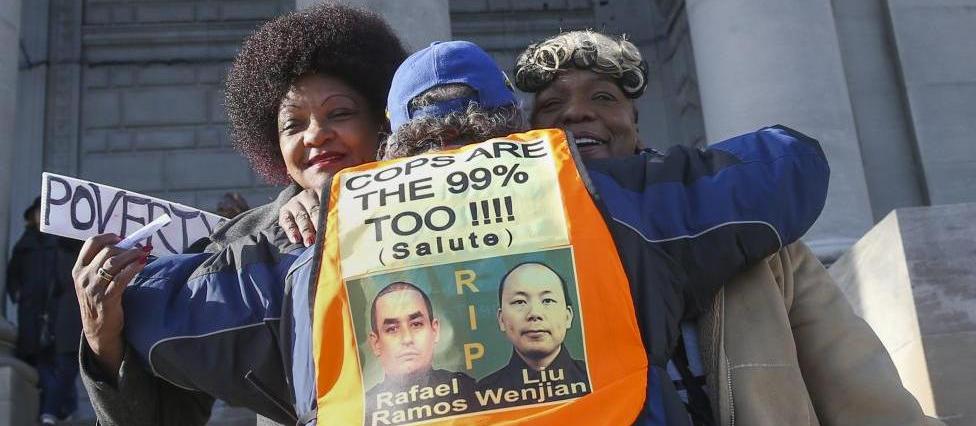
Police 1 (Reuters)

“An attempt to achieve the good by force is like an attempt to provide a man with a picture gallery at the price of cutting out his eyes.”

–Ayn Rand

“They say ‘means are after all means’. I would say ‘means are after all everything’. As the means so the end.”

–Mohandas Gandhi

Reuters image

Ends and Means

????????????????????

“The principle that the ends justify the means is in individualist ethics regarded as the denial of all morals.”

–F. A. Hayek

“He who chooses the beginning of the road chooses the place it leads to. It is the means that determine the end.”

–Harry Emerson Fosdick

The Second Amendment, Then and Now

The Bill of Rights, which includes the first ten of the amendments to the Constitution, was first proposed to Congress by James Madison as articles to be incorporated into the main body of the Constitution.

Congress approved twelve articles of amendment to the Constitution in 1789 and submitted them to the states for ratification. Contrary to Madison’s proposal, they were submitted as “supplemental” additions. Articles Three through Twelve were ratified by the required number of states and became Amendments One through Ten in 1791.

The Second Amendment, which has become a matter of considerable interest in recent years, reads as follows:

“A well regulated Militia, being necessary to the security of a free State, the right of the people to keep and bear Arms, shall not be infringed.”

This was not controversial at the time. The concept existed in English common law long before the enactment of the Bill of Rights. And for a variety of reasons today many Americans feel it is necessary to own firearms.

The importance of this issue to the founders was quite clear. James Madison introduced the language that became the Second Amendment and also wrote: “The Constitution preserves the advantage of being armed which Americans possess over the people of almost every other nation where the governments are afraid to trust the people with arms.”

Alexander Hamilton, like Madison a strong advocate for Federalism, was equally explicit: “The constitution shall never be construed…to prevent the people of the United States who are peaceable citizens from keeping their own arms.”

Thomas Jefferson famously said: “No freeman shall be debarred the use of arms.” And he also wrote that “The strongest reason for the people to retain their right to keep and bear arms is as a last resort to protect themselves against tyranny in government.”

During the years leading up to the Revolutionary War there was mob violence in several of the colonies. In addition, many American lived in or close to wilderness regions where conditions were essentially lawless. The need people felt to protect their families was quite rational.

It should be noted that a primary motivation for supporting “a well regulated Militia,” articulated in the Second Amendment as “being necessary to the security of a free State,” was the strong opposition among the founders to the concept of a standing army.

Thomas Jefferson put it this way: “None but an armed nation can dispense with a standing army. To keep ours armed and disciplined is therefore at all times important.” “Every citizen should be a soldier,” he wrote. “This was the case with the Greeks and Romans, and must be that of every free state.”

The American reality in 1776 and 1791 was entirely different from that confronting us today. Yet, news of social, religious, and psychopathic violence imposes itself on us every day. Older Americans are particularly sensitized to what has changed: the radical loss of trust and the lack of civility, ethical integrity, and social responsibility we see everywhere.

We must acknowledge the compelling reasons why so many feel it necessary to own firearms.

That said, however, I must tell you I believe the use of force among Americans today, in defense of the Constitution and the American freedoms, would be counterproductive and incompatible with an effective strategy.

Our consideration in recent posts of the dynamic relation of means to ends should, in my view, make this clear.

Violence committed by Americans against Americans would contradict the rationale behind the impetus to violence itself. It would be self-contradictory, pitting brother and sister against brother and sister, subverting the integrity and viability of the American Idea as a guiding force for the good.

We can do far better.

I have presented principles supporting this assertion in previous posts, (see especially Nov 28 and Dec 12), and will offer a more explicit argument next week.

We need to consider this carefully and get it right. We face a long crisis. Many dark and dangerous things are possible.

Tom

Next week: Principled Means, Principled Ends

Note to readers: You can support this blog and the book project by suggesting that your friends and associates take a look.

A Severe Choice

The confluence of crises confronting the American people in this new century represents a profound turning point in the nation’s history, and for each of us personally.

In the turbulence of multiple crises it can be easy to forget the unique stature of the United States and the role it has played and will continue to play in the progress of an ever-advancing civilization.

The American Idea has been a beacon of hope for the world, however imperfect the reality might be. America has been an intense source of intellectual and creative vibrancy, and has served as a model of political freedom, social diversity, and economic vitality.

Many new readers have started following this blog, particularly on the Facebook page. So, I will pause this week to clarify my purpose.

I have been presenting ideas concerning the motives and principles and discipline I believe we will need to successfully rebuild the foundation of the United States as a free and democratic republic. During the holiday period I will be focused on the importance of ensuring that our means are consistent with the ends we desire.

Some of you will find these ideas familiar, especially those who are rooted in a religious tradition. However, I will propose thinking that I hope will be meaningful to everyone, religious and non-religious alike.

The opening words of this post were lifted from the first chapter of the book I am working on, and I offer more of the same passage below.

The United States has entered the fiery test of a crucible in which the forces of crisis will burn away the self-centeredness and sloppy thinking of the past to forge an American identity we can feel good about.

Or, if we fail to rise to our calling, the social violence arising from failing institutions and human suffering will incinerate our children’s future and turn a great vision to hopelessness and anguish.

At a time of extraordinary existential threat we are confronted with a severe choice.

Will we return to the founding principles of these United States as the bedrock on which to build a free, ethical, and comfortable future? Will we defend and protect two hundred years of commitment, hard work, and sacrifice by generations of Americans who have given their lives to this unprecedented vision?

Or, will we give way to the emotions of uncompromising partisanship – and allow a great trust to shatter and vanish?

Infrastructure, systems, and services we have long depended upon are going to fail in the coming years. Problems will have to be solved without many of the tools and supports to which we are accustomed.

So, let us set aside partisanship and sectarian differences when necessary, in the interest of stabilizing and rebuilding the nation. Panic neither serves nor becomes us.

This nation has progressed gradually toward maturity, dedicated to the cause of liberty built upon the foundation of unity within diversity – diversity of nationality, religion, ethnicity, and, most of all, political philosophy.

We possess wide ranging distinctions and differences, but together we share an essential inviolable common ground.

Let us pull together, reorient ourselves to the originating principles upon which this country was built, and step forward to reassert the vision and secure our communities.

I submit to you that something far better, far nobler, something perhaps beyond our present capacity to imagine, will emerge from the present turmoil.

If, however, we cannot work effectively to build safe communities with people we are not in complete agreement with, then we will be condemned to the only possible alternative: a collapsing civilization characterized by fear and violence, a nightmare for our children, and a land where no principles, no values, no stable order can be realized.

Tom

Next week: First Principles

Until It’s Done

People 15

“It always seems impossible until it’s done.”
–Nelson Mandela

“People who say it cannot be done should not interrupt those who are doing it.”
–George Bernard Shaw

“No pessimist ever discovered the secret of the stars, or sailed to an uncharted land, or opened a new doorway for the human spirit.”
–Helen Keller

Trust

People 13

“Trust is the glue of life. It’s the most essential ingredient in effective communication. It’s the foundational principle that holds all relationships.”

–Stephen Covey

Doing What’s Necessary

Farm 10

“Start by doing what’s necessary; then do what’s possible; and suddenly you are doing the impossible.”

–Francis of Assisi

Knowing Is Not Enough

Horses 5

“Knowing is not enough; we must apply. Being willing is not enough; we must do.”

–Leonardo da Vinci