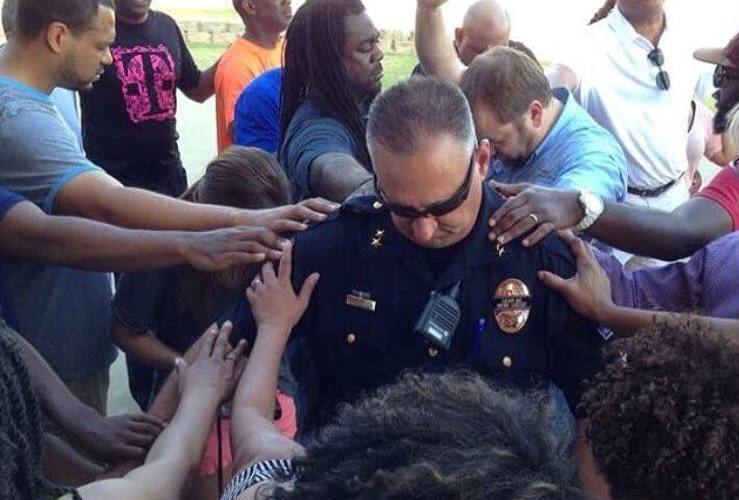
Vital Necessity, Effective Means

In recent years commitment to the integrity of the United States Constitution on the part of political leaders and others has been seriously questioned.  This is a serious charge.

Those who understand and value the importance of the Constitution, will also understand the importance of remaining vigilant in its defense.

This is an emotional concern for many people.  The recent proliferation of armed citizen militias across the country has drawn attention to the strong feelings associated with it.

Clearly it would be wise for us to think pragmatically about how we can ensure the integrity of the Constitution.  And, this requires thoughtful consideration of means and ends.

An unrestrained emotionalism that leads to destructiveness could cause precisely the opposite of its’ intended purpose.

It was Hayek who said, “the principle that the ends justify the means is in individualist ethics regarded as the denial of all morals.”

In my view, Harry Emerson Fosdick stated this truth most clearly: “He who chooses the beginning of the road chooses the place it leads to. It is the means that determine the end.”

Ayn Rand drove the point home most emphatically in her own indomitable style: “An attempt to achieve the good by force is like an attempt to provide a man with a picture gallery at the price of cutting out his eyes.”

Americans can easily recognize the challenge of this logic.  In the heat of battle nothing is more important than a clear mind.  Yet, we human beings are emotional creatures.

So, let’s take a look at the reasons why incivility, antagonism, and especially the threat of violence, will actually subvert our efforts to defend what we believe in.  I suggest four reasons here, as follows.

First, force, or threat of force, subverts the Constitution itself, immediately destroying its’ capacity to function as intended and effectively nullifying its existence.

Indeed, the Founders created a structure for governance that depends on civility and moral responsibility among participants.  The Founders depend on our readiness to adjust our behavior accordingly, so as not to subvert the dignity and integrity of their purpose.

Second, hostile tactics conducted by even a tiny minority would make it difficult, even impossible, for more disciplined and rational strategies to be mounted effectively.  Indeed, such actions could actually set back their own cause for decades.

Why?  The use of force by a militia group would harden the attitudes of most Americans toward their stated purpose or philosophy.  This would make it far more difficult for any of us to win a fair hearing from citizens who respect the rule of law.

Third, any rebellion by force of arms pits itself against the uniformed services – police agencies and the military.  These are our sons and daughters, brothers and sisters, and sworn defenders of the Constitution.

Members of militias need to be clear who exactly they intend to fight, and who they would rather attract and win over in a battle for hearts and minds.

Fourth, the vast majority of Americans value the character of the United States deeply. And, they recognize the fundamental role of the Constitution in making it all possible.  If we wish Americans to have a better understanding of how the Constitutional structure of governance should function, it will not be accomplished by beating them up.

Rather it will require rational argument that can be heard and understood.  This means committing ourselves to teaching what we believe in, and learning how best to do that.

Not only do we depend on civil order for the safety of our families, for safe streets, jobs, schools and hospitals, but there is a fundamental principle involved: We cannot defend what we believe in by tearing it down.

The course of action that will preserve the Constitution and renew the strength of the Union calls us to address our countrymen with well-considered reasoning, presented compellingly and in a composed and self-possessed manner.

The Constitution will last far into the future if, and only if, Americans stand by it with steadfast adherence to the rule of law and the civility the Founders expected of us.

Tom

A note to regular readers:  During the holidays blog posts will appear slightly less often.  Please watch for the next post to appear on or about December 2.  A description of the project and several chapter drafts appear elsewhere on this page.
A Different Kind of Nation

The United States Constitution holds a unique place in history.  The framers stepped away from the customs and tyrannies of the past to devise a new model for governance envisioned for a free and civilized people.  It has endured for more than two hundred years.

Are we willing to overlook the subsequent missteps and mistakes, the rude and selfish behavior, to consider what is truly of value to us?  Are we prepared to step forward to defend what we wish to preserve?

If we let this inheritance die, what will we have lost?

The record has been rough-hewn, but how could we expect anything like perfection when we have gathered the human race together from across the world into the managed chaos of a democratic republic?

We are blessed with a brilliantly conceived structure for governance that has channeled the energies and creative genius of the world’s people into a dynamic force for capacity-building and prosperity.

As I tried to illustrate in the previous post, the founders made an effort to see the end in the beginning.  We now stand at another profound turning point in history, a moment requiring a visionary maturity from Americans of all colors, stripes, and viewpoints.

I do not suggest the impending election is such a turning point. I speak of something far greater and more profound, a shift in attitudes and thinking that will require at least a generation to comprehend and internalize.

In the coming years we must find our way through a sequence of social and material crises that transcend partisan politics.  These troubles are the consequence of foolishness, mistaken assumptions and a lack of responsibility and foresight over the course of many decades.

Shamelessness and iniquity have walked together on this land.

There are those who think 200 years is a reasonable age for a democratic republic to reach its’ natural demise.  However, the United States of America remains an extraordinary model of spirit and governance, despite the blemishes.

I think it more reasonable to understand 200 years as the age of maturity, shaped by experience and illuminated by the affairs of a disturbed world, when this nation must necessarily come of age.

We have responsibility for a trust grounded in the heritage of the American idea.  Indeed, it is the responsibility to provide a faltering world with the vision and stability to support the next surge forward by the human race.

This is a trust that no other nation has the vision, the strength of will or the generosity of spirit, to embrace.  Brought into focus by the creativity of the American founders, it shines even now from the darkness, a beacon amid dangers and hardship.

Human imperfections remain.  Those who point to the evils and injustices of the past and present are serving a necessary role.  Certainly we must not forget the ignoble or wrongly conceived.  It is not useful, however, to condemn the vision and good will that give character to what the world has admired.

Questions also remain.  Thoughtful citizens will reconsider the requirements that liberty imposes in the way we handle our civil discourse, our disagreements and decision-making.

Surely there can be no freedom for thought, for creativity, for social and economic advancement in the absence of the civility and self-discipline that allows us to engage freely and without fear.

Recognizing the necessity for the social stability upon which all else depends, a practical reality confronts each of us every day.  Have we matured to the degree that we can represent our personal views patiently, listen with understanding, and, when necessary, live with our differences?

The crisis-fueled tensions of the early 21st century leave us wondering.

Ultimately, stability and prosperity depend on our ability to engage in meaningful problem-solving, and to accept our differences within the supporting constraints of shared principles.

If we fail we could lose everything.

Tom

Please look for the next post on or about November 11: Standing together for the American idea.

A note to new readers: To receive email alerts when posts are published click the Follow button.

Justice, Balance in Governance

The structure of the Constitution is simple yet profound.  It carefully restrains the passions of factionalism, however intense, from imposing destructively on either minority or majority.  It limits the potential for regional conflict and ensures the strength to confront external threats.

It is the antagonistic divisiveness current among Americans that concerns us here.  “Give all the power to the many,” wrote Alexander Hamilton, “they will oppress the few.  Give all the power to the few, they will oppress the many.”

To understand how and why we depend on the Constitution as we navigate through crises, it will be useful to consider both the reasoned manner in which it was conceived and the negative reaction that it at first inspired.

It can be instructive to review some of the numerous essays and polemics that were published in the American colonies during the period when the proposed document was being considered for ratification.  Among these, a series of 85 commentaries was published in 1787 and 1788 by three members of the Constitutional Convention for the purpose of supporting ratification.

The three writers, who originally shared the pseudonym, “Publius”, were Alexander Hamilton, John Jay, and James Madison.

Later consolidated into a single volume as The Federalist, the assembled papers were said by Thomas Jefferson, another participant at the Convention, to be “the best commentary on the principles of government, which ever was written,”[i]  a view many legal scholars agree with today.

The Federalist is often cited in major court cases and has appeared in the debates surrounding virtually every constitutional crisis.  Another collection entitled The Anti-Federalist Papers and edited by Ralph Ketcham is also available.

In the end, the outcome turned out not to be in question except in New York, where the State Constitutional Convention passed it by only three votes. But, the issues remain instructive and have a similarity to some we find ourselves engaged in today.

As an example, I refer here to the way the framers addressed a familiar challenge to both basic freedoms and effective governance.

In The Federalist, Number 10, James Madison argues that there is no more important purpose in structuring a sound government than that of limiting the “violence” of factionalism.

Responding to the issues prevalent in the colonies immediately following the Revolutionary War, Madison writes:

“Complaints are everywhere heard…, that our governments are too unstable; that the public good is disregarded in the conflicts of rival parties; and that measures are too often decided, not according to the rules of justice, and the rights of the minor party, but by the superior force of an interested and overbearing majority.”

 Madison continues:

“As long as the reason of man continues fallible, and he is at liberty to exercise it, different opinions will be formed. As long as the connection subsists between his reason and his self-love, his opinions and his passions will have a reciprocal influence on each other; and the former will be objects to which the latter will attach themselves.

“The latent causes of faction are thus sown in the nature of man; and we see them everywhere brought into different degrees of activity, according to the different circumstances of civil society…. So strong is this propensity of mankind, to fall into mutual animosities, that where no substantial occasion presents itself, the most frivolous and fanciful distinctions have been sufficient to kindle their unfriendly passions, and to excite their most violent conflicts.

“But the most common and durable source of factions, has been the various and unequal distribution of property.  Those who hold and those who are without property have ever formed distinct interests in society.  Those who are creditors, and those who are debtors, fall under a like discrimination.  A landed interest, a manufacturing interest, a mercantile interest, a monied interest, with many lesser interests, grow up of necessity in civilized nations, and divide them into different classes, actuated by different sentiments and views.

“The regulation of these various and interfering interests forms the principal task of modern legislation, and involves the spirit of party and faction in the necessary and ordinary operations of government….

“The inference to which we are brought,” Madison concludes, “is that the causes of faction cannot be removed; and that relief is only to be sought in the means of controlling its effects.”

Tom

Please look for the next blog post, “A different kind of nation,” to appear on or about Friday, October 28.


[i]  Thomas Jefferson to James Madison, November 18, 1788, in Thomas Jefferson, The Republic of Letters: The Correspondence Between Thomas Jefferson and James Madison, 1776-1826, 3 vols., ed. by James Morton Smith (New York: W.W. Norton, 1995), vol. 1, p.567.

Freedom and Stability

When the first European settlers came to North America and dispersed into the forests and across the open plains, they had only their own initiative, ingenuity, and self-reliance to depend upon.

No one was there to counsel them about the requirements for survival.  Freedom and responsibility were defined by harsh realities.

Intrepid settlers also relied on one another as neighbors, so long as each took responsibility for themselves.  Self-reliance and the acceptance of personal responsibility are sources of self-respect and lead to mutual respect among neighbors.  Whining and complaint don’t fly, however tough the circumstances.

I believe we will soon find ourselves coming full circle to a time when some of the requirements of frontier life may become necessary once again.

The physical circumstances are different and our independence as self-sufficient individuals is generally gone, but the challenges will increasingly resemble those of an earlier time when we were forced to stand on our own feet, depending on inventiveness, cooperation, and reliability.

In the early years of European settlement, American frontier life required little organization other than that prescribed by the traditions of English common law, and common decency.  But, as populations became more concentrated, it was not long before undisciplined enthusiasm and competitiveness roiled civil order.

Thinking people soon found themselves responding to growing contentiousness – and the dangers of majority rule, which threatened to suppress individual initiative and minority liberties.

Democracy was a new idea 200 years ago.  The Constitutional Convention of 1787 struggled with concerns about the growing intensity of divisiveness in the civil order, and recognition that the future Republic would see changes and stresses that were hard to imagine.

Libertarian sentiments were strong among Americans in the 18th century.  There was a natural fear of the social and political oppressiveness colonists had so recently fled from in their European past.  Many had strong feelings about protecting the freedom they experienced in their daily lives.

Despite deep personal sympathies with this viewpoint, the Founders recognized that majority factions had no compunctions against suppressing the interests or rejecting the needs of anyone who differed with them.  Given a perspective inherited from European history it was easy to imagine a violent and tumultuous future.

The Constitution of the United States is the product of this tension and a determination to create a dynamic framework capable of protecting freedoms and yet absorbing the forces of conflict and change that would surely come.

The Constitution is a legal document, not a guide to rational behavior.  It is designed to provide the stability upon which liberty depends, a structure for governance and a set of practical rules.

It does not supply the values and attitudes, or the crucial necessity for cooperation among equals, upon which its’ effectiveness must depend.

The forthcoming book, on which this blog is based, is largely devoted to this challenge.  Before addressing the future, however, let us first place our current challenges in historical context, and consider the foundational principles and visionary institutions Americans already possess.

How do we understand our role in allowing the Constitution to function according to its’ design and purpose?

How do we understand the true meaning of freedom, and what are the practical constraints required by freedom if it is to survive in an orderly, civilized context?

How did the delegates at the Constitutional Convention of 1787 formulate a structure for governance that would preserve a balance between freedom and stability?  How did they endeavor to encourage a role for civic responsibility that it might prevail into a future they could only barely imagine?

Structural stability is written into the formation of the Republic.  The rest depends on us.  Instability begins with a lack of foresight and an inability to compromise.  Solutions will only be found through moral responsibility, emotional restraint, and cooperative problem-solving.

We stand today at an extraordinary turning point.  Let’s not throw away our inheritance and attempt to start over from nothing.

Tom

Next on the Blog!  The United States Constitution depends on mutual respect and a strong sense of moral and social responsibility, a careful balance that requires commitment to citizenship and readiness to compromise.  Please watch for the next post on or about Friday, October 14.

In Response to Violence

Jay Scoffield is a recently retired police detective and regular reader of this blog. He responds here to our earlier discussion of safety and self-defense (blog posts 5-26, 6-3).

In addition to being a patrolman and detective, Jay has served as a field training officer and his Department’s first mental health liaison officer.  He also taught part-time at his local community college for 16 years while a police officer.  The courses he taught included self-defense and domestic violence, among others.  His thinking reflects a constructive attitude and deserves consideration.

Art, Skill, and Intention

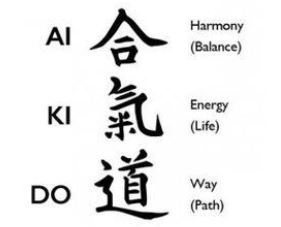
I have practiced various means of self-defense throughout my career as a police officer. While I have trained in many, Aikido found me.  I want to share my thinking here about a method of self-defense that I consider particularly effective, both physically and as a means of progress toward a world I can believe in.

I don’t see Aikido as the only answer available to us when those tense moments come. But I do find the philosophy of Aikido compelling. I offer a short summary here that reflects my training and experience.

Having compassion for people is at the heart of what passionate people do. I appreciate the Greek definition for compassion, to care from deep within oneself. For instance, the Bible refers to “the bowels of mercy” using a verb sometimes translated from the Greek as “to be moved with compassion or kindness” (Matthew 14:14, Mark 1:41, Colossians 3:12).

Mercy is an essential ingredient in justice, as is forgiveness.

Evidence exists of what some in behavioral sciences are calling the second brain; a brain that exists, if you will, in our gut. Scholars also suggest that each and every cell in our bodies gathers information concurrently with our brain. Humans can learn to do things very quickly. It’s a good idea to train our brain to check in with our gut, or that area where “the bowels of mercy” are located.

I think many of us have forgotten how to feel deeply, thus the path to being centered is lost. In the art of Aikido, we learn how to center ourselves.

aikido-2Centering is critical during hand-to-hand combat, and it is the centering of the emotional self that is necessary. Emotional centering involves gathering your internal energy with your mind and placing the energy two inches below your navel – the area of the “bowels of mercy.”

I function at my best when centered. Strangely, this helps one to function better when force is used. And centering can be helpful in situations that require force or diffusing.  If I am fully present and centered myself, I can center someone by my mere presence. Centering someone can be as simple as a touch to the shoulder or an empathic ear. Sometimes we may have to reach into our tool bag for other things.

When a police officer uses force the goal ought to be to get a person re-centered. This requires the officer to be centered before and after the use of force. After the use of force, the officer must lead the person to his/her path of re-centering. This can only be done with love and compassion.

Sadly, some folks will never be centered. Deadly force may be necessary to protect your life or the life of another. Could this be the penultimate experience for police work? I don’t think so. I think showing compassion and love is the ultimate experience.

This model can extend to extremists as well. We have dealt with militant forces before. Will love or compassion overcome these things? Sometimes I don’t think so. But at the end of the day, I truly believe humanity has the upper hand – a humanity based on love.

Jay Scoffield

Dear readers: The next post, “Freedom and Stability”, will initiate a series on the creation of the United States Constitution in 1787 as a visionary and pioneering structure for a newly emerging democratic republic.  Please look for it on or about September 30.

American Meaning, American Challenge

Americans have placed great value on both national unity and our characteristic diversity.  We are a contentious lot, yet we are capable of showing fierce allegiance to one another.

In the book, The Wisdom of Crowds, introduced in my previous post, James Surowiecki offers convincing evidence that good judgment can be found in large groups, and challenges our assumptions about the wisdom of democratic decision-making.  He describes startling results when the independent thinking of unrelated strangers is aggregated.

Importantly, Mr. Surowiecki emphasizes the necessity for both independent thinking and diversity of viewpoints.

But, what about small groups – and communities?

I would suggest that wisdom can also be found, intentionally and intelligently, when we are working face-to-face and committed to common interests.

A decision-making process that culminates in unified common purpose is a learned skill.  Effective solutions depend on a group’s ability to generate ideas that go beyond consensus.

This is only possible when we can rise above our differences to leverage our diversity of knowledge, experience, and problem-solving skills.

Unity is not sameness.  Unity can only come into being with the embrace of differences.  Living with diversity presents us with the necessity for learning how to engage with one another in practical ways.  We can work together easily when we learn and accept certain common sense principles based on mutual respect.

In Chapter One, American Crucible (www.freedomstruth.net), I quoted Peggy Noonan’s heartfelt call to the American people in her little book, Patriotic Grace, What It Is and Why We Need It Now.  In it she urges us to rise above our differences, however significant they may be, to reaffirm “what it is to be an American.”

Rarely has there been a time in the past of this extraordinary country when it has been more important to reaffirm what it is to be an American.

Peggy Noonan writes:

“Politics is a great fight and must be a fight; that is its purpose. We are a great democratic republic, and we struggle with great questions. One group believes A must be law, the other Z. Each side must battle it through, and the answer will not always be in the middle.  The answer is not always M.

“But we can approach things in a new way, see in a new way, speak in a new way.  We can fight honorably and in good faith, while—and this is the hard one—both summoning and assuming good faith on the other side.

“To me it is not quite a matter of ‘rising above partisanship,’ though that can be a very good thing.  It’s more a matter of remembering our responsibilities and reaffirming what it is to be an American.

“…And so I came to think this: What we need most right now, at this moment, is a kind of patriotic grace—a grace that takes the long view, apprehends the moment we are in, comes up with ways of dealing with it, and eschews the politically cheap and manipulative.  That admits affection and respect.  That encourages them.  That acknowledges the small things that divide us are not worthy of the moment; that agrees that the things that can be done to ease the stresses we feel as a nation should be encouraged, while those that encourage our cohesion as a nation should be supported.

“I’ve come to think that this really is our Normandy Beach, …the key area in which we have to prevail if the whole enterprise is to succeed.  The challenge we must rise to.”

Some readers will recoil at the suggestion that “small things… divide us,” feeling that very substantial things divide us.  I am quite sure that Peggy Noonan would not want to minimize the significance of our concerns.

However, she has a point.  We can acknowledge the things that divide us, address them in a respectful manner that allows practical debate, and unite to strengthen the nation to protect a civil order that allows us to preserve or recover the freedoms we cherish.

Or, we can let it all come to naught.

I never said it would be easy.  I have said that if we wish to recover the integrity of the nation we honor and respect – we have no choice.

Tom

A note to readers: The next blog post, appearing on or about September 16, will be a guest post by a recently retired police officer (and regular reader) on the importance of compassion in law enforcement.

Unexpected Wisdom

How has the American identity developed amidst such a diversity of conflicting ideas and beliefs?  And, how has the clash of differing opinions contributed to strength?

The idea that unity is strengthened by diversity may at first sound counter-intuitive, but it is measurable and irrefutable.

In his book, The Wisdom of Crowds, James Surowiecki describes compelling evidence that large groups of people possess an extraordinary power to solve problems when their judgment is aggregated, and that the more diverse the crowd, the more efficient the solutions.

Citing a variety of examples Surowiecki presents a fascinating description of the conditions in which democratic decision-making does and does not work.

In his introduction to the book we hear of the surprise of scientist Francis Galton when 787 participants in a raffle at a county fair submitted guesses at what the weight of a large ox would be after it had been slaughtered and dressed.

“The analogy to a democracy, in which people of radically different abilities and interests each get one vote, had suggested itself to Galton immediately. ‘The average competitor was probably as well fitted for making a just estimate of the dressed weight of an ox, as an average voter is of judging the merits of most political issues on which he votes,’ he wrote.”

Galton, who expected to confirm his view that “the average voter” was capable of very little good judgment, borrowed the tickets from the organizers following the competition. He then ran a series of statistical tests on them.  Adding all the contestants’ estimates, he calculated the average.

The crowd had guessed that the ox, after it had been slaughtered and dressed, would weigh 1,197 pounds. In fact, it weighed 1,198 pounds.

Another example described by Surowiecki is the story of the 1968 loss of the United States submarine Scorpion, which disappeared in the Atlantic Ocean. The Navy had no idea what happened to the vessel, where it was or how fast it had been traveling.

Mr. Surowiecki recounts the story as told by Sherry Sontag and Christopher Drew in their book Blind Man’s Bluff, about how a naval officer named John Craven assembled a diverse group of people – mathematicians, submarine specialists, and salvage men – provided them with a number of varied scenarios, and asked them to offer their best guesses without benefit of contact with each other. All they knew was the sub’s last reported location.

The group laid wagers on why the submarine ran into trouble, on its speed as it headed for the ocean floor and the steepness of descent, among other things.

Craven built a composite picture of what happened and calculated the group’s collective estimate of where the submarine was. The location he came up with was not a location specifically suggested by any members of the group. But, that is where it was.

The Navy found the wreck 220 yards from where Craven’s group said it would be.

Mr. Surowiecki proceeds to demonstrate the surprising consistency of this outcome in widely varied circumstances. And, he explains how groups work well in some circumstances better than others.

As we all know, there are times when aggregating individual judgments produces a collective decision that is disastrous; a riot, for example, or a stock market bubble.

Interestingly, he writes: “Diversity and independence are important because the best collective decisions are the product of disagreement and contest, not consensus or compromise.

“An intelligent group, especially when confronted with cognition problems, does not ask its members to modify their positions in order to let the group reach a decision everyone can be happy with.  Instead, it figures out how to use mechanisms – like market prices, or intelligent voting systems – to aggregate and produce collective judgments that represent not what any one person in the group thinks but rather, in some sense, what they all think.

“Paradoxically, the best way for a group to be smart is for each person in it to think and act as independently as possible.”

Later in the present project, we will look at practical methods by which groups with diverse viewpoints can engage in creative problem-solving and decision-making in a manner that goes beyond consensus, even when face-to-face, to reach unexpected and mutually satisfying outcomes.

Tom

In two weeks: The challenge we must rise to.

Knowing Our Strength

The first step is ours to take.  We can address one another with dignity and join with our neighbors to resolve problems and address local needs.  Or, we can accept a world of hostility, disorder, and ultimate collapse as our children’s inheritance – and let the vision and the treasure of the American idea slip away.

The road to security is built with civility and paved with trust.  To make it so will be difficult.  It is, however, the only alternative to disaster.

The argument that the future can only be built on the foundation of dependable communities is as old as history.  It follows from the rational perception that conflict is a condition in human relationships and can only be understood and transcended in and through human relationships.

It is in the struggle with interpersonal relationships that direct and honest communication can take place.  The means for making this fractious process effective in the context of American history is the subject of this blog and forthcoming book.

Some may say that it is too late.  I say that Americans are courageous, resourceful, resilient.  The United States was conceived in controversy, and the pragmatic vision of the Founders came with recognition that wisdom and strength are found in diversity.

Indeed, it will be argued here that diversity is the foundation for strength, and that the United States Constitution is a visionary assertion of this belief.  The Founders gave us structure.  It is our responsibility to make it work.

Our answer to crisis will determine the shape of our future.  We find ourselves confronted today by one of the great tests of history, a challenge to the intent embodied in the Constitution and the coherence of the American vision that has been gradually maturing for more than two hundred years.

Perhaps we have lost our way for periods of time, stumbled, gotten sloppy.  But now it is time to pull together.  It is argued here that this must begin in our local communities – the historic home to pure democracy and the seat of civilization.

In a free society stability cannot be imposed from above. The kind of strength we seek is grounded in trust and the dependability of personal relationships.

I am not writing about a “recovery” from crisis in the normal sense.  Rather, I submit that we stand at the threshold of an unprecedented turning point – a dangerous crossroads, yet one that offers us a unique window of opportunity to affirm and uphold our exceptional and multifaceted identity as a nation.

In navigating through an extraordinary confluence of sequential crises we will be forced to renew our values, think on our feet, and make both pragmatic and ethical adjustments.  A creative process is now underway that would not be possible otherwise.

An assessment of shared values is in order, and reconsideration of the generosity of spirit that once made America so attractive to the world.

In September we will consider the foresight of the Constitutional Convention of 1787 that led to the system of protections, checks and balances that make the American structure of governance what it is.  First, however, we will examine the reasons why diversity has given America a dynamic strength – not as a nice idea, but as a pragmatic imperative.

If American communities are to emerge into a vibrant matrix of local and regional networks, they will depend on citizens with diverse skills and varied perspectives who are capable of teamwork and practical problem-solving.

Resistance to diversity often involves our discomfort with those we perceive as “outsiders”, people who look or think differently than we do, or who come from unfamiliar cultural backgrounds.  Yet, in crises, many differences will allow critical problem-solving that we can ill afford to do without.

It is important to feel confidence in our own ideas and values.  Yes, but why should we be afraid of different ways of thinking?

Aristotle said that “it is the mark of an educated mind to be able to entertain a thought without accepting it.”

The opportunity to explore the world through the eyes of others different from ourselves is a blessing and a gift.  And, in the event of social and economic collapse – it may be the key to survival.

Tom

Please watch for the next post on or about August 19:  The unexpected wisdom in diversity – how it happens and what makes it work.

Cooperation or Collapse?

And what of our differences?  The diversity of views and perspectives that divide Americans in the early years of the 21st century are unquestionably the deepest that have existed since the Civil War.

Our differences are based on many things today: ethical and religious values, economic disparities and personal experience with hardship, our understanding of history, and our perceptions of the very real dangers facing the world.

The vitality of the American Republic has always been energized by the clash of differing opinions.  The national character is rooted in the fertile engagement of divergent ideas that test and expand our wide-ranging perspectives.  America has flourished on the principle of pluralism.

Our opinions, values, perceptions all deserve respect; yet we disagree vehemently on matters of fundamental importance. We have good reasons for holding our views. This is the way it is supposed to be in a healthy civil society.

And this begs a critical question: How can we find a way to live and work together in a time of maximum stress?

As sequential crises take hold, is the security of our families and communities important enough that we are willing to do what is necessary to build trust and dependability, meeting life-sustaining needs and working effectively with our neighbors – many of whom we have substantial differences with?

Are we prepared to struggle for this country shoulder-to-shoulder, indeed to be truly loyal to one another as Americans?

And, what is it really that makes this a cause worth fighting for?

I believe that such questions lead to the pivotal question I have described on this blog as a “severe choice” (June 24).

Many readers have expressed concerns about the imposing challenges these questions represent.  Indeed, we stand at a monumental turning point in the nation’s history.

The survival of the Republic will require certain virtues that Americans are not generally known for—moral responsibility, dependability, trustworthiness.  Our most fundamental challenge will be learning to view others – especially our opponents – in essentially ethical rather than political terms.

This is not about charity.  A level of civility is required that goes far beyond kindness and common decency.  If Americans are to turn the corner, it will be with a civilized and responsible attitude that appears unfamiliar at present.

Cooperation does not require compromising our principles.  Indeed, unexpected opportunities for influencing one another will surely come with working together to address common needs, especially in the face of crises.

Times of danger tend to open ones’ personal perspective, allowing us to see with new eyes and hear with new ears.

It is neither practical nor civilized to go to war with one another when our common interests depend on our ability to communicate clearly and to engage in rational problem-solving.  What is essential is not that we agree, but that we seek dependable cooperation in the face of serious threats.

Naturally, this will require more than a right attitude.  Practical skills will be necessary to help us work effectively in small groups, ensure food security, make consultative decisions and manage conflict, organize projects and start small businesses.

Together we will share and develop the necessary skills.

Under the present conditions of social disintegration, strident divisiveness, and dysfunctional institutions, I have encouraged Americans to turn aside from partisan politics, at least temporarily, to focus primary attention on practical needs in our local communities.

I am not at all opposed to effecting change by traditional means. However, as the crisis deepens I believe we will gain far more safety and control over our lives through community building. And, I believe this effort will impart many of the essential lessons that will lead to a decent future.

This is my message.  Dependable community is the ground of civilization.

However complex the problems we face, in the final analysis we are confronted by a single simple question.  Will we accept the destruction of civilized society, a rending of the very fabric of the Republic, and retreat into a state of siege?  Or, will we have the courage to begin anew?

Tom

A note to readers: Please watch for the next blog post on or about August 5.

To believe absurdities…

Police 2 (BradWSutton)

“Those who can make you believe absurdities can make you commit atrocities.”  –Voltaire

(Photo credit: Brad W Sutton)


Endurance, Resourcefulness and Faith

The severity of a deepening crisis raises unavoidable questions. Will the country be torn apart by anger and frustration?  Will the nation survive as the Republic created by its founders? Or, will the American people have the vision, fortitude, and grit to learn the lessons and reaffirm the vision and principles that will lead to a genuine renewal?

If the Republic is to prevail, how will we pull it off?  Do we have the patience and wisdom to give priority first to the stability that makes problem-solving possible, to rebuild a national unity that transcends the very real differences that divide us?

Early in 2008 Peggy Noonan, a widely read conservative commentator and one-time aide to President Ronald Reagan, addressed this question eloquently in a collection of essays, Patriotic Grace, What It Is and Why We Need It Now.  She wrote during a season of bitter political back-biting, and, as we all know, things soon became very much worse:

“I believe we have to assume that something bad is going to happen, someday, to us.  Maybe it will be ten years from now, but maybe not, maybe sooner, much sooner.  We have to assume, I think, that it will be a 9/11 times ten, or a hundred, or more, and that it will have a deeply destabilizing effect on our country; that it will test our unity and our endurance, our resourcefulness and faith.

“We all know this, I think, deep down.  I don’t know a major political figure in America to whom all this has not occurred, and often…. And yet in some deep way our politics do not reflect our knowledge.  It’s odd.  Stunning, actually.  We keep going through the same old motions in the bitter old ways.  Even our cynics are not being realistic!

“…Will the banks fail, is the system built on anything but faith, and will the faith hold?  Will we keep our coherence as a country, will we hold together, can we continue as a sovereign nation at peace with itself?”

Peggy Noonan’s little book radiates a much needed spirit.  I recommend it.  Most of us never expected to see the United States in the condition in which we find it today.  Many of us never expected to face the personal hardship in which we increasingly find ourselves.

Ultimately we face a uniquely American crisis, yet one that is unfolding in the midst of an extraordinary global turning point.  I will attempt to cut through the emotions and complexity of a monumental moment in history to argue that we must unite to regenerate and rebuild the United States as a living model for a free, stable, and prosperous world.

This nation has progressed gradually toward maturity for 200 years, dedicated to the cause of responsible liberty and built upon the foundation of unity within diversity – diversity of nationality, religion, ethnicity, and, most of all, political philosophy.  We possess wide ranging distinctions and differences, but together we share an essential inviolable common ground.

We are all Americans.  The promise we all hold dear can only prevail if we have the courage and forbearance to rise above our differences, to address our problems shoulder to shoulder, and to do what must be done to make our children safe and our communities secure.

We have the inherent capacity to move forward despite the mistakes and tragedies of the past – and the mysteries of the future.

Our future hangs in the balance.  Let’s pull together, reassert our common ground in the vision with which the nation was built, and step forward to forge a future shaped by fairness, trustworthiness, and moral responsibility.

I submit to you that something far better, far nobler, something perhaps beyond our present ability to imagine, will emerge from the present turmoil.

If, however, we cannot work effectively to build safe communities with people we are not in complete agreement with, then we will be condemned to the only possible alternative: a collapsing civilization defined by fear and violence, a nightmare for our children, and a land where no principles, no values, no stable order can be realized.

Tom

Next post: Cooperation or collapse?

A note to regular readers:  As I announced in late June, I have shifted to a new schedule and will now post every two weeks.  This will allow me more time for completing the book.  I will continue to post on Fridays and hope to publish the next blog entry on or about July 22.

A Severe Choice

The extraordinary depth and breadth of the many crises confronting the American people today represent a critical turning point and test of America’s place in history.

For more than two hundred years the United States has stood before the world as a beacon of hope and an unparalleled model of political freedom, social diversity, and economic vitality.  People from throughout the world have been attracted to the vision it represents.

In the midst of upheaval it can be easy to forget the unique stature of the United States and the role it has played and will continue to play in the progress of an ever-advancing civilization.  Yet, our confidence in its’ social coherence, its’ economic well-being and generosity of spirit has faltered.

This blog, and the forthcoming book it represents, is addressed to those who are interested in understanding lessons from the past, and who recognize that failures of responsibility and foresight have led us to the brink of disaster.

Do we possess the resolve to join with one another in rebuilding the United States based on its core values and ultimate meaning?

In redirecting our attention and redoubling our commitment, it might be wise to consider those aspects of the American character and cultural attitude that have influenced the downward slide from responsibility to turmoil.

A self-indulgent materialism and thoughtless disregard for the consequences of our actions has placed the future in jeopardy.

The fragmented way we have perceived the world and led our lives may have origins in our immigrant past, but it will not serve us well in reconstructing a stable, coherent, and economically viable future.

There is much to think about.

However, my message is brief.  It will be short on analysis and will forego blame.  There is more than enough blame to go around and we all know about it.  Rather, I will focus on the essentials of mind and attitude, of human character, and of our relationships to one another that will be required if we are to turn despair into courage and failure into triumph.

We will address areas of concern that I believe to be central to realistic solutions.  Most importantly, we will consider the manner in which we relate to one another as individuals when we have very great personal differences.

I submit that the safety and security of our families and communities can only be assured if we unite around the structural order provided by the Constitution, which has anchored the American Republic from its inception, and to the principles of mutual respect and moral responsibility that give strength and resiliency to all civilized societies.

The United States has entered the fiery test of a crucible in which the forces of crisis will burn away the self-centeredness and sloppy thinking of the past to forge an American identity we can respect and feel good about.

If we fail to rise to our calling, however, the social violence generated by failing institutions and human suffering will threaten to incinerate our children’s future and turn a great vision to hopelessness and anguish.

At a time of extraordinary existential threat we are confronted with a severe choice.

Will we return to the founding ideals and principles of these United States as the bedrock on which to build a free and ethical future?  Will we defend and protect two hundred years of commitment, hard work, and sacrifice by generations of Americans who have given their lives to this unprecedented vision?

Or, will we give way to the emotions of uncompromising partisanship – and allow a great trust to shatter and vanish?

Infrastructure, systems, and services we have long depended upon are going to fail in the coming years. Problems will have to be solved without many of the tools and supports to which we are accustomed.  We will need to depend on one another in our local communities.

So, let’s set aside partisanship and sectarian differences when it becomes necessary in the interest of stabilizing and rebuilding the nation. Panic neither serves nor becomes us.

Tom

A note to regular readers:  Starting in July, I intend to post on alternate weeks.  This will allow me more time for completing the book.  I hope to post the next blog entry on or about July 8.  Have a good summer!