Can we be different?

GoldPour 3 Golden Band

“Democracy… while it lasts is more bloody than either aristocracy or monarchy. Remember, democracy never lasts long. It soon wastes, exhausts, and murders itself. There is never a democracy that did not commit suicide.”

—John Adams, second President of The United States

Dear readers: Are we, as Americans, somehow different? Are we prepared to pull ourselves together in the crucible of crisis – to forge a rational, humane, and sustainable future?

Tom

The way to get started…

Background 3

“If the present Congress errs in too much talking, how can it be otherwise in a body to which the people send one hundred and fifty lawyers, whose trade it is to question everything, yield nothing, and talk by the hour?”

–Thomas Jefferson

“Any fool can criticize, condemn and complain – and most fools do.”

–Benjamin Franklin

“The way to get started is to quit talking and begin doing.”

–Walt Disney

Freedom and Stability in Governance

The structure of the Constitution is simple yet profound. It carefully restrains the passions of factionalism, however intense, from imposing destructively on either minority or majority. It limits the potential for regional conflict and ensures the strength to confront external threats.

It is the antagonistic divisiveness current among Americans that concerns us here.

“Give all the power to the many,” wrote Alexander Hamilton, “they will oppress the few. Give all the power to the few, they will oppress the many.”

To understand how and why we depend on the Constitution as we navigate through crises, it will be useful to consider both the carefully reasoned manner in which it was conceived and the negative reaction that it at first inspired.

The founders made a great effort to see into the future.

It can be instructive to review some of the numerous essays and polemics that were published in the American colonies during the period when the proposed document was being considered for ratification. Among these, a series of 85 commentaries was published in 1787 and 1788 for the purpose of supporting ratification by three members of the Constitutional Convention.

The three writers, who originally shared the pseudonym, “Publius”, were Alexander Hamilton, John Jay, and James Madison. Later consolidated into a single volume as The Federalist, the assembled papers were said by Thomas Jefferson, another participant at the Convention, to be “the best commentary on the principles of government, which ever was written,” a view many legal scholars agree with today.

The Federalist remains an authoritative text often cited in major court cases and has appeared in the debates surrounding virtually every constitutional crisis. Another collection entitled The Anti-Federalist Papers, edited by Ralph Ketcham, is also easily available.

Readers are encouraged to investigate the issues reflected in the debate that led to ratification.

In the end, the outcome turned out not to be in question except in New York, where the State Constitutional Convention passed it by only three votes. But, the debates remain instructive and bear a strong similarity to many of those we find ourselves engaged in today.

As an example, I refer you here to the way the framers of the Constitution addressed an inevitable challenge to both fundamental freedoms and effective governance.

In The Federalist, Number 10, James Madison argues that there is no more important purpose in structuring a sound government than that of limiting the “violence” of factionalism.

Responding to the issues prevalent in the colonies immediately following the Revolutionary War, Madison writes that: “Complaints are everywhere heard…, that our governments are too unstable; that the public good is disregarded in the conflicts of rival parties; and that measures are too often decided, not according to the rules of justice, and the rights of the minor party, but by the superior force of an interested and overbearing majority.”

Does this not sound familiar to the citizen of today?

Madison continues:

“As long as the reason of man continues fallible, and he is at liberty to exercise it, different opinions will be formed. As long as the connection subsists between his reason and his self-love, his opinions and his passions will have a reciprocal influence on each other; and the former will be objects to which the latter will attach themselves.

“The latent causes of faction are thus sown in the nature of man; and we see them everywhere brought into different degrees of activity, according to the different circumstances of civil society…. So strong is this propensity of mankind, to fall into mutual animosities, that where no substantial occasion presents itself, the most frivolous and fanciful distinctions have been sufficient to kindle their unfriendly passions, and to excite their most violent conflicts.

“But the most common and durable source of factions, has been the various and unequal distribution of property. Those who hold and those who are without property have ever formed distinct interests in society. Those who are creditors, and those who are debtors, fall under a like discrimination. A landed interest, a manufacturing interest, a mercantile interest, a monied interest, with many lesser interests, grow up of necessity in civilized nations, and divide them into different classes, actuated by different sentiments and views.

“The regulation of these various and interfering interests forms the principal task of modern legislation, and involves the spirit of party and faction in the necessary and ordinary operations of government….

“The inference to which we are brought,” Madison concludes, “is that the causes of faction cannot be removed; and that relief is only to be sought in the means of controlling its effects.”

Tom

Next week: A different kind of nation

Man’s capacity for justice…

Tree 7

“Man’s capacity for justice makes democracy possible, but man’s inclination to injustice makes democracy necessary.”

–Reinhold Niebuhr

Freedom and Tolerance…

Sunrise 2

“Laws alone cannot secure freedom of expression; in order that every man present his views without penalty there must be spirit of tolerance in the entire population.”

–Albert Einstein

All your strength is in union…

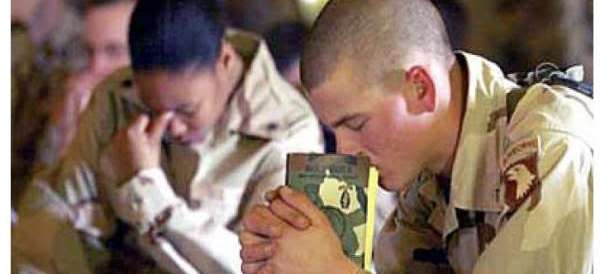
Soldier 6-x

“All your strength is in union, all your danger is in discord.”

–Henry Wadsworth Longfellow

The Challenge We Must Rise To

Last week I introduced you to James Surowiecki’s observations regarding democratic decision-making in his book, The Wisdom of Crowds. Offering convincing evidence that wisdom can be found in large groups if we know how to look for it, Mr. Surowiecki challenges our understanding of democracy.

None of us would expect the citizens of a democratic republic to make objective decisions when they have individual interests at stake. However, he reports startling results when aggregating the thinking of unrelated groups of strangers.

Importantly, Mr. Surowiecki emphasizes the necessity for both diversity of viewpoints and independence in thinking.

I would suggest that wisdom can also be found more intentionally, and intelligently, when we are fully committed to seeking the greater good. And this is most effective when we are committed to the safety and well-being of our friends and neighbors.

Such commonality of intention has certain basic requirements of course. Local initiatives will always depend on shared purpose, and to a large extent on shared values. And, this can only happen when we rise above our differences to appreciate the diversity of our knowledge, our varied experience and unique ways of seeing things.

Unity cannot exist in a state of sameness. It only comes into being with the embrace of differences. Living with diversity presents us with the necessity for learning how to engage with one another in practical ways. Nothing will be possible otherwise.

In Chapter One, American Crucible, I quote Peggy Noonan’s heartfelt call to the American people in her little book, Patriotic Grace, What It Is and Why We Need It Now. In it she urges us to rise above our differences, however significant they may be, to reaffirm “what it is to be an American.”

Rarely has there been a time in the past of this extraordinary country when it has been more important to consider and to reaffirm what it is to be an American.

Peggy Noonan puts it to us like this:

“Politics is a great fight and must be a fight; that is its purpose. We are a great democratic republic, and we struggle with great questions. One group believes A must be law, the other Z. Each side must battle it through, and the answer will not always be in the middle. The answer is not always M.

“But we can approach things in a new way, see in a new way, speak in a new way. We can fight honorably and in good faith, while—and this is the hard one—both summoning and assuming good faith on the other side.

“To me it is not quite a matter of ‘rising above partisanship,’ though that can be a very good thing. It’s more a matter of remembering our responsibilities and reaffirming what it is to be an American.

“…And so I came to think this: What we need most right now, at this moment, is a kind of patriotic grace—a grace that takes the long view, apprehends the moment we are in, comes up with ways of dealing with it, and eschews the politically cheap and manipulative. That admits affection and respect. That encourages them. That acknowledges the small things that divide us are not worthy of the moment; that agrees that the things that can be done to ease the stresses we feel as a nation should be encouraged, while those that encourage our cohesion as a nation should be supported.

“I’ve come to think that this really is our Normandy Beach, …the key area in which we have to prevail if the whole enterprise is to succeed. The challenge we must rise to.”

Some readers will recoil from the suggestion that “small things… divide us.” Some feel strongly that very substantial thing divide us. I am quite sure that Peggy Noonan would not want to minimize the significance of our concerns.

But, she has a point. We can acknowledge the things that divide us, address them in a respectful manner, and unite to strengthen the nation to protect the civil order that allows us our freedoms. Or, we can let it all come to naught.

I never said it would be easy. I said we have no choice.

Tom

Next week: A Disciplined Freedom

For myself, alone…

Tree 4

“It is not for me to judge another man’s life. I must judge, I must choose, I must spurn, purely for myself. For myself, alone.”

–Hermann Hesse

The American Idea

Coast 1

The integrity of the American Idea is founded upon honesty and the strength of diversity. This nobility is the desire of the world. It will live on – generous, tolerant, and fair – long after foolishness and irresponsibility have been left to the dregs of memory.

–Tom Harriman

Compassion is hard…

Sunrise 1-x

“Let us not underestimate how hard it is to be compassionate. Compassion is hard because it requires the inner disposition to go with others to the place where they are weak, vulnerable, lonely, and broken. But this is not our spontaneous response to suffering. What we desire most is to do away with suffering by fleeing from it or finding a quick cure for it….

“Compassion asks us to go where it hurts, to enter into the places of pain…. Compassion means full immersion in the condition of being human.”

–Henri J.M. Nouwen

Indulgence, pride, a lack of shame…

City 3 NYC

“Self-centered indulgence, pride, and a lack of shame over sin are now emblems of the American lifestyle.”
–Billy Graham

“Liberty cannot be established without morality, nor morality without faith.”
–Alexis de Tocqueville, Democracy in America (1840)

Our greatest glory…

People 16

“Our greatest glory is not in never failing, but in rising up every time we fail.”

–Ralph Waldo Emerson