An uncharted land…

Helen Keller 1

“The only thing worse than being blind is having sight but no vision.”

“No pessimist ever discovered the secret of the stars, or sailed to an uncharted land, or opened a new doorway for the human spirit.”

“Optimism is the faith that leads to achievement.  Nothing can be done without hope and confidence.”

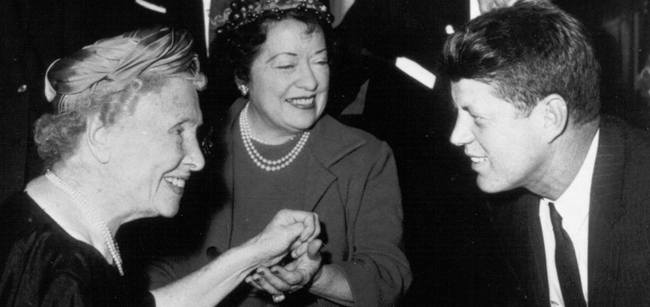
Helen Keller, who lived her life both blind and deaf.

A new kind of thinking…

Tree 11

“We cannot solve our problems with the same thinking we used when we created them.”

–Albert Einstein

“You don’t think your way into a new kind of living. You live your way into a new kind of thinking.”

–Henri J.M. Nouwen, Christian theologian

“If the human race is to survive it will have to change more in its ways of thinking in the next twenty-five years than it has done in the last twenty-five thousand.”

–Kenneth Boulding, former president of the American Association for the Advancement of Science, and a Christian mystic.

The trial of principle…

Wire 3

“Comfort and prosperity have never enriched the world as much as adversity has.”
–Billy Graham

“Adversity is the trial of principle. Without it, a man hardly knows whether he is honest or not.”
–Henry Fielding

“These are the times that try men’s souls.”
–Thomas Paine

The Resilience of Inner Freedom

I fear America is sliding steadily toward social disorder and economic disarray. In an atmosphere of deepening crisis, I am concerned about the potential for overreaction by government, police agencies, and citizens. These are circumstances in which terrible things can happen, and indeed are happening.

This week I will share a story with you that illuminates our capacity as human beings to assert our dignity and inner freedom even amidst the most dreadful circumstances.

Responding to the contradictions and injustices we experience in life is challenging. Yet, doing so rationally and responsibly can be a personal statement of transcendent freedom. This is possible regardless of the conditions around us, however difficult they may be.

To be free we must seek to be autonomous individuals first, whole and complete in ourselves, and then to actualize our identity with dignity and perseverance.

We may not like the reality in which we find ourselves. Indeed, it could be nightmarish. But, possessing free will necessitates a commitment to be free in oneself and to engage proactively with the circumstances we face.

If there is a primary requirement for attaining inner integrity, it is the personal determination to do so. In my view, this choice has never been described more eloquently than by Viktor Frankl in the book, Man’s Search for Meaning, the testimony of four terrible years as a prisoner in Auschwitz, the Nazi death camp.

Because his response to that experience is so revealing, I will devote most of this post to his words:

“I may give the impression that the human being is completely and unavoidably influenced by his surroundings. (In this case the surroundings being the unique structure of camp life, which forced the prisoner to conform his conduct to a certain set pattern.) But, what about human liberty?

“Is there no spiritual freedom in regard to behavior and reaction to any given surroundings? …Do the prisoners’ reactions to the singular world of the concentration camp prove that man cannot escape the influences of his surroundings? Does man have no choice of action in the face of such circumstances?

“We can answer these questions from experience as well as on principle.

“The experiences of camp life show that man does have a choice of action. There were enough examples, often of a heroic nature, which proved that apathy could be overcome, irritability suppressed. Man can preserve a vestige of spiritual freedom, of independence of mind, even in such terrible conditions of psychic and physical stress.

“We who lived in concentration camps can remember the men who walked through the huts comforting others, giving away their last piece of bread. They may have been few in number, but they offer sufficient proof that everything can be taken from a man but one thing: the last of the human freedoms – to choose one’s attitude in any given set of circumstances, to choose one’s own way.

“And there were always choices to make. Every day, every hour, offered the opportunity to make a decision, a decision which determined whether you would or would not submit to those powers which threatened to rob you of your very self, your inner freedom….

“Even though conditions such as lack of sleep, insufficient food and various mental stresses may suggest that the inmates were bound to react in certain ways, in the final analysis it becomes clear that the sort of person the prisoner became was the result of an inner decision, and not the result of camp influences alone. Fundamentally, therefore, any man can, even under such circumstances, decide what shall become of him – mentally and spiritually. He may retain his human dignity even in a concentration camp.”

As we face our own tests, which we hope will not be so daunting as Dr. Frankl’s, how can we find this resilience within ourselves? Here is a freedom gained through empowered compassion and responsibility as we respond to the turmoil of a transformative age.

No one can do this for us. As we turn our attention to the suffering and confusion of those around us, we are preparing for both the coming hardship and the new day beyond.

Tom

Next week: Liberty and justice made personal.

The Ultimate Freedom…

Farm 5-x

“Every human has four endowments – self awareness, conscience, independent will, and creative imagination. These give us the ultimate human freedom… The power to choose, to respond, to change.”

–Stephen R. Covey, The 7 Habits of Highly Effective People

To Act With Integrity

We each have a sense of self, a coherent unity within ourselves, a feeling of integrity that defines our identity in our own minds. This sense of self is challenged by the conflicts and incongruities we are forced to contend with, between the material and the moral, the physical and the metaphysical, and the various unresolved concerns in our lives.

The moral philosopher Mary Midgley describes this experience rather well I think:

“I am suggesting…, that human freedom centers on being a creature able, in some degree, to act as a whole in dealing with… conflicting desires. This may sound odd, because freedom sounds like an advantage, and having conflicting desires certainly does not.

“But it is not a new thought that freedom has a cost. And the conflicting desires themselves are of course not the whole story. They must belong to a being which in some way owns both of them, is aware of both, and can therefore make some attempt to reconcile them.

“…The endeavor must be to act as a whole, rather than as a peculiar, isolated component coming in to control the rest of the person. Though it is only an endeavor – though the wholeness is certainly not given ready-made and can never be fully achieved, yet the integrative struggle to heal conflicts and to reach towards this wholeness is surely the core of what we mean by human freedom.” (1994)

Each of us, consciously or otherwise, adopts a system of morality upon which to base decisions and guide our way in the world, either a formal religious system or one assumed or devised by ourselves.

Whether it is weak or strong, sloppy or consistent, or we even think about it very much, our personal morality serves as the grounding for our sense of identity and our actions. It is impossible to function without it.

It is our integrity as “whole persons” that resists the onslaught of disintegrating forces in our lives. When we lose consciousness of this effort and succumb to the fragmentation imposed by the incoherent impact of advertising and mass media that constantly bombards us, we lose control of our independence as individuals.

This is particularly challenging I think for those who choose to disregard the teachings of the great religious traditions, which supply us with rich and textured guidance. For the reader who is religiously inclined, the way forward is generally well-lit – at least in principle.

If the reader is non-religious, the task will be to ground oneself in common decency, to focus ones’ vision on the highest good, to abide consistently by an ethical code, and to bring healing and encouragement to those around us.

Let’s be clear, however: This is quite difficult, especially when we rely on our own devices.
Each of us is called to step forward to participate in the affairs of the community we have chosen as our home, and to engage with our neighbors respectfully as active listeners and facilitators motivated by a desire to encourage and empower.

We can only ensure the integrity of our purpose by means that are in harmony with our purpose. Mahatma Gandhi said it best:  “They say ‘means are after all means’. I would say ‘means are after all everything’. As the means so the end.” (1937)

This assertion was stated somewhat differently, but just as explicitly by the economist and political philosopher F. A. Hayek, when he wrote: “The principle that the ends justify the means is in individualist ethics regarded as the denial of all morals.” (1944)

These are not theoretical statements. Rather they express a profound truth. The integrity of means must always provide the standard of reference in every endeavor.

If each of us holds our personal integrity clearly in focus, attends to moral responsibility, and respects our neighbor as we ourselves would wish to be respected, we should not find ourselves at odds with justice.

The manner in which we respond to our personal differences will determine who we are and the freedom we are capable of knowing.

Tom

In Two Weeks: Finding a transcendent resilience through inner freedom

Dear readers: I am scheduled for surgery next week. Consequently the blog will be on pause very briefly. I hope to have the next post ready for you on Friday, February 19.

If you just sit there…

Horses 1

“Even if you’re on the right track, you’ll get run over if you just sit there.”

–Will Rogers


Either life entails courage…

Vista 7-x

“Either life entails courage, or it ceases to be life.”

–E. M. Forster

At the crossroads…

Mountain 12 MendenhallGlacier Alaska

“Stand at the crossroads and look; ask for the ancient paths, ask where the good way is, and walk in it, and you will find rest for your souls.”

–Jeremiah 6:16

The people of this country…

Clouds 5

“It has been frequently remarked that it seems to have been reserved to the people of this country to decide, by their conduct and example, the important question, whether societies of men are really capable or not of establishing good government from reflection and choice, or whether they are forever destined to depend, for their political constitutions, on accident and force.”

–Alexander Hamilton

To offer freedom…

Farm 11

“Hospitality means primarily the creation of free space where the stranger can enter and become a friend instead of an enemy. Hospitality is not to change people, but to offer them space where change can take place. It is not to bring men and women over to our side, but to offer freedom not disturbed by dividing lines.”

–Henri J.M. Nouwen, Christian theologian

Ignorant and free…?

Desert 7

“If a nation expects to be ignorant and free in a state of civilization, it expects what never was and never will be.”

–Thomas Jefferson