
The Challenge of Inner Freedom

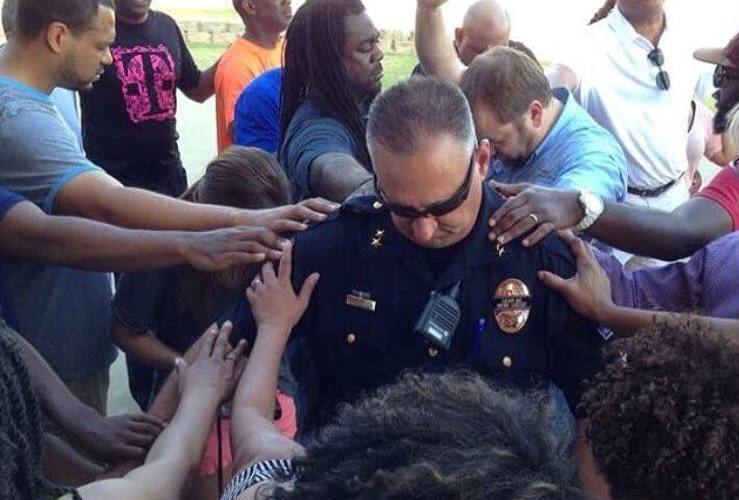
At a time of deepening social disorder and economic disarray, I am concerned about the potential for overreaction – by the power elite, by police agencies and by citizens.  We are experiencing circumstances in which terrible things can happen.

I will share a story with you that illuminates our capacity as human beings to assert our dignity and inner freedom even amid the most terrible circumstances.

Responding to injustices and irrational behavior is difficult.  And yet, facing the world rationally and responsibly can be a personal statement of transcendent freedom.

This is possible regardless of the conditions around us, however difficult they may be.

To be free we must seek to be autonomous individuals first, whole and complete in ourselves, and then to actualize our identity with dignity and perseverance.

We may not like the reality in which we find ourselves.  Indeed, it could become nightmarish.  But, possessing free will necessitates a commitment to be free in oneself and to engage proactively with the circumstances we face.

If there is a primary requirement for attaining the integrity of inner freedom, it is the personal determination to do so with moral responsibility and ethical discipline.

In my view, this choice has never been described more eloquently than by Viktor Frankl in the book, Man’s Search for Meaning, his testimony of four terrible years as a prisoner in Auschwitz, the Nazi death camp.

Because his response to those circumstances is so revealing, I will devote most of this post to his words:

“I may give the impression that the human being is completely and unavoidably influenced by his surroundings.  (In this case the surroundings being the unique structure of camp life, which forced the prisoner to conform his conduct to a certain set pattern.)  But, what about human liberty?

“Is there no spiritual freedom in regard to behavior and reaction to any given surroundings? …Do the prisoners’ reactions to the singular world of the concentration camp prove that man cannot escape the influences of his surroundings?  Does man have no choice of action in the face of such circumstances?

“We can answer these questions from experience as well as on principle.

“The experiences of camp life show that man does have a choice of action.  There were enough examples, often of a heroic nature, which proved that apathy could be overcome, irritability suppressed.  Man can preserve a vestige of spiritual freedom, of independence of mind, even in such terrible conditions of psychic and physical stress.

“We who lived in concentration camps can remember the men who walked through the huts comforting others, giving away their last piece of bread.  They may have been few in number, but they offer sufficient proof that everything can be taken from a man but one thing: the last of the human freedoms – to choose one’s attitude in any given set of circumstances, to choose one’s own way.

“And there were always choices to make.  Every day, every hour, offered the opportunity to make a decision, a decision which determined whether you would or would not submit to those powers which threatened to rob you of your very self, your inner freedom….

“Even though conditions such as lack of sleep, insufficient food and various mental stresses may suggest that the inmates were bound to react in certain ways, in the final analysis it becomes clear that the sort of person the prisoner became was the result of an inner decision, and not the result of camp influences alone.

“Fundamentally, therefore, any man can, even under such circumstances, decide what shall become of him – mentally and spiritually.  He may retain his human dignity even in a concentration camp.”

As we face our own personal tests, which we hope will not be so daunting as Dr. Frankl’s, how can we find this strength within ourselves?

Here is a freedom reached through personal empowerment, compassion and responsibility, as we respond to the turmoil of a transformative age.

No one can do this for us.  As we turn our attention to the distress and confusion of those around us, we are preparing for both the coming hardship and the new day beyond.

Tom

Please look for the next post on or about June 16.
Illusion Over Liberty?

Answering questions about what has gone wrong is never comfortable.  Some truths are not pretty.  But, revitalizing our core values and the restoration of a once vibrant civic spirit will require that we recognize what has been lost and why.

The current difficulties have developed over a long period of time.  The gradual loss of a spirited civic life has left most Americans without a shared sense of purpose or the interwoven fabric of community relationships.

Americans have become obsessed with immediacy.  We want what we want and we want it now.  We seek to be entertained with melodrama and spectacle, or violence and degraded behavior.

We find ourselves dominated by materialism and immersed in a homogenized culture with little conscious identity.

Reason and foresight have been eclipsed by a fixation on material appearances.  Even the once humiliating liabilities personal debt seems to be of no concern.  We live on false appearances bought with future income.

Strange as it may seem, we have essentially abandoned the future. Where is there a purposeful commitment to neighborhood, to responsibility for local needs?

The moral bankruptcy and distortions of logic represented by this posture have influenced almost every aspect of our national life.  An undisciplined attitude has led us to the brink of financial disaster, and our insistence on freedom from institutional and cultural restraints is fraught with contradictions.

For example, our respect for the individual requires that we honor the independent integrity and privacy of each individual, and yet we have readily abandoned this principle out of fear for our own safety.

Similarly, we fail to see that privacy and integrity are sacrificed when we welcome obscenity and titillation into our lives on television, in film and web-based media.

Personal integrity is lost to gossip, backbiting, and fascination with “the raw stuff of life,” in the words of the conservative American philosopher Richard Weaver:

The extremes of passion and suffering are served up to enliven the breakfast table or to lighten the boredom of an evening at home.  The area of privacy has been abandoned because the definition of person has been lost; there is no longer a standard by which to judge what belongs to the individual man.  Behind the offense lies the repudiation of sentiment in favor of immediacy.

Richard Weaver wrote these words in the late 1940s, before television existed.  And he was not the first to make such an observation.  A quarter of a century earlier the renown Irish playwright George Bernard Shaw commented that an American has no sense of privacy.  He does not know what it means.  There is no such thing in the country.”

Weaver warned Americans of a self-destructive streak that would ultimately lead to crisis.

He pointed out our fascination with specialization, with the parts of things at the expense of understanding and respecting the whole.  He argued that an obsession with fragmentary parts without regard for their function necessarily leads to instability.

Such instability is insidious, penetrating all relationships and institutions.  In Weaver’s words, “It is not to be anticipated that rational self-control will flourish in the presence of fixation upon parts.”

Until we understand how things function as a whole we will have no capacity for good judgment and no control over outcomes.

This is not the fault of government – except to the extent that government, managed by people like ourselves, has joined wholeheartedly in the party.  In a democracy it is tragically easy for government policy to degenerate until it serves the worst inclinations of a self-interested electorate.

Consequently we have descended into the financial profligacy of recent decades and are now the most indebted nation in history by a wide margin.

Ours has been a twisted path with a clearly visible end.  Yet, the inevitable outcome remains ignored.

If we are to recover our balance, it is essential that we recognize the attitudes and thoughtlessness that got us here.  Will we continue to choose illusion over liberty?  Would we rather be ruined than to think?

It will never be too late to turn the corner – to clear our minds, to straighten up and step forward with purpose.

Tom

Please look for the next post on or about April 7: Responsibility with dignity, or apathy and paralysis?

A note to new readers: A project description, an introduction to the forthcoming book, and several chapter drafts are available on this page.

Individual, Community, and the State

For much of the nation’s first 100 years, Americans gave meaning to their values and expressed their creative energy in a diverse array of civic activity.  As we saw in the previous post, Americans overcame constraints to their freedom through their own inspiration and sense of community.

Today, action has been replaced by inaction.  A once spirited culture of engagement has been replaced by an increasingly self-centered attitude and the loss of initiative, cooperation, trust, and moral responsibility.

While it is easy the see how technology – the automobile, television, and internet – can limit as well as enhance human interaction, historian Niall Ferguson argues that it is “not technology, but the state – with its seductive promise of ‘security from the cradle to the grave’ – [which is] the real enemy of civil society.”

Ferguson cites the prophetic vision of Tocqueville, who we met in the previous blog post, when he imagined a future America in which the spirit of community has been co-opted by government:

“I see an innumerable crowd of like and equal men,” Tocqueville wrote in 1840, “who revolve on themselves without repose, procuring the small and vulgar pleasures with which they fill their souls.

“Each of them, withdrawn and apart, is like a stranger to the destiny of all the others: his children and his particular friends form the whole human species for him; as for dwelling with his fellow citizens, he is beside them, but he does not see them; he touches them and does not feel them; he exists only in himself and for himself alone….

“Above these an immense tutelary power is elevated, which alone takes charge of assuring their enjoyments and watching over their fate. It is absolute, detailed, regular, far-seeing, and mild.

“It would resemble paternal power if, like that, it had for its object to prepare men for manhood; but on the contrary, it seeks only to keep them fixed irrevocably in childhood….

“Thus, …the sovereign extends its arms over society as a whole; it covers its surface with a network of small, complicated, painstaking, uniform rules through which the most original minds and the most vigorous souls cannot clear a way to surpass the crowd; it does not break wills, but it softens them, bends them, and directs them; it rarely forces one to act, but it constantly opposes itself to one’s acting; it does not destroy, it prevents things from being born; it does not tyrannize, it hinders, compromises, enervates, extinguishes, dazes, and finally reduces each nation to being nothing more than a herd of timid and industrious animals of which the government is the shepherd.”

Elsewhere Tocqueville added an explicit warning:

“But what political power would ever be in a state to suffice for the innumerable multitude of small undertakings that American citizens execute every day with the aid of association?…

“The morality and intelligence of a democratic people would risk no fewer dangers than its business and industry if government came to take the place of associations everywhere.

“Sentiments and ideas renew themselves, the heart is enlarged, and the human mind is developed only by the reciprocal action of men upon one another.”

I do believe that government has had a part in the deadening of the American spirit.  But, I do not think we can attribute the present condition solely to government.

In my view, the degeneration of behavior and attitudes cannot be divorced from the paralyzing effect of corporate domination and the corrupting influence of mass culture and advertising.

I also believe the long slide toward alienation and apathy has come with our personal acquiescence.  For several generations Americans have gradually descended into a materialistic passivity and embraced an obsessive passion for entertainment and spectacle.

This is something we can only fault ourselves for accepting.

Our government began, after all, as a creature of our own invention.  And it is now served by people who have been subjected to the same degraded values and demoralized sense of responsibility as the rest of us.

Real change will depend on each of us – taking initiative as individual citizens, accepting responsibility for the well-being of our communities, and by renewing the foundations of society with civility, cooperation, and constructive action.

Tom

Coming posts:  Living our values into the future– What do we care about; what do we wish to do better or differently?  Look for the next post on or about March 24.

Justice, Balance in Governance

The structure of the Constitution is simple yet profound.  It carefully restrains the passions of factionalism, however intense, from imposing destructively on either minority or majority.  It limits the potential for regional conflict and ensures the strength to confront external threats.

It is the antagonistic divisiveness current among Americans that concerns us here.  “Give all the power to the many,” wrote Alexander Hamilton, “they will oppress the few.  Give all the power to the few, they will oppress the many.”

To understand how and why we depend on the Constitution as we navigate through crises, it will be useful to consider both the reasoned manner in which it was conceived and the negative reaction that it at first inspired.

It can be instructive to review some of the numerous essays and polemics that were published in the American colonies during the period when the proposed document was being considered for ratification.  Among these, a series of 85 commentaries was published in 1787 and 1788 by three members of the Constitutional Convention for the purpose of supporting ratification.

The three writers, who originally shared the pseudonym, “Publius”, were Alexander Hamilton, John Jay, and James Madison.

Later consolidated into a single volume as The Federalist, the assembled papers were said by Thomas Jefferson, another participant at the Convention, to be “the best commentary on the principles of government, which ever was written,”[i]  a view many legal scholars agree with today.

The Federalist is often cited in major court cases and has appeared in the debates surrounding virtually every constitutional crisis.  Another collection entitled The Anti-Federalist Papers and edited by Ralph Ketcham is also available.

In the end, the outcome turned out not to be in question except in New York, where the State Constitutional Convention passed it by only three votes. But, the issues remain instructive and have a similarity to some we find ourselves engaged in today.

As an example, I refer here to the way the framers addressed a familiar challenge to both basic freedoms and effective governance.

In The Federalist, Number 10, James Madison argues that there is no more important purpose in structuring a sound government than that of limiting the “violence” of factionalism.

Responding to the issues prevalent in the colonies immediately following the Revolutionary War, Madison writes:

“Complaints are everywhere heard…, that our governments are too unstable; that the public good is disregarded in the conflicts of rival parties; and that measures are too often decided, not according to the rules of justice, and the rights of the minor party, but by the superior force of an interested and overbearing majority.”

 Madison continues:

“As long as the reason of man continues fallible, and he is at liberty to exercise it, different opinions will be formed. As long as the connection subsists between his reason and his self-love, his opinions and his passions will have a reciprocal influence on each other; and the former will be objects to which the latter will attach themselves.

“The latent causes of faction are thus sown in the nature of man; and we see them everywhere brought into different degrees of activity, according to the different circumstances of civil society…. So strong is this propensity of mankind, to fall into mutual animosities, that where no substantial occasion presents itself, the most frivolous and fanciful distinctions have been sufficient to kindle their unfriendly passions, and to excite their most violent conflicts.

“But the most common and durable source of factions, has been the various and unequal distribution of property.  Those who hold and those who are without property have ever formed distinct interests in society.  Those who are creditors, and those who are debtors, fall under a like discrimination.  A landed interest, a manufacturing interest, a mercantile interest, a monied interest, with many lesser interests, grow up of necessity in civilized nations, and divide them into different classes, actuated by different sentiments and views.

“The regulation of these various and interfering interests forms the principal task of modern legislation, and involves the spirit of party and faction in the necessary and ordinary operations of government….

“The inference to which we are brought,” Madison concludes, “is that the causes of faction cannot be removed; and that relief is only to be sought in the means of controlling its effects.”

Tom

Please look for the next blog post, “A different kind of nation,” to appear on or about Friday, October 28.


[i]  Thomas Jefferson to James Madison, November 18, 1788, in Thomas Jefferson, The Republic of Letters: The Correspondence Between Thomas Jefferson and James Madison, 1776-1826, 3 vols., ed. by James Morton Smith (New York: W.W. Norton, 1995), vol. 1, p.567.

American Meaning, American Challenge

Americans have placed great value on both national unity and our characteristic diversity.  We are a contentious lot, yet we are capable of showing fierce allegiance to one another.

In the book, The Wisdom of Crowds, introduced in my previous post, James Surowiecki offers convincing evidence that good judgment can be found in large groups, and challenges our assumptions about the wisdom of democratic decision-making.  He describes startling results when the independent thinking of unrelated strangers is aggregated.

Importantly, Mr. Surowiecki emphasizes the necessity for both independent thinking and diversity of viewpoints.

But, what about small groups – and communities?

I would suggest that wisdom can also be found, intentionally and intelligently, when we are working face-to-face and committed to common interests.

A decision-making process that culminates in unified common purpose is a learned skill.  Effective solutions depend on a group’s ability to generate ideas that go beyond consensus.

This is only possible when we can rise above our differences to leverage our diversity of knowledge, experience, and problem-solving skills.

Unity is not sameness.  Unity can only come into being with the embrace of differences.  Living with diversity presents us with the necessity for learning how to engage with one another in practical ways.  We can work together easily when we learn and accept certain common sense principles based on mutual respect.

In Chapter One, American Crucible (www.freedomstruth.net), I quoted Peggy Noonan’s heartfelt call to the American people in her little book, Patriotic Grace, What It Is and Why We Need It Now.  In it she urges us to rise above our differences, however significant they may be, to reaffirm “what it is to be an American.”

Rarely has there been a time in the past of this extraordinary country when it has been more important to reaffirm what it is to be an American.

Peggy Noonan writes:

“Politics is a great fight and must be a fight; that is its purpose. We are a great democratic republic, and we struggle with great questions. One group believes A must be law, the other Z. Each side must battle it through, and the answer will not always be in the middle.  The answer is not always M.

“But we can approach things in a new way, see in a new way, speak in a new way.  We can fight honorably and in good faith, while—and this is the hard one—both summoning and assuming good faith on the other side.

“To me it is not quite a matter of ‘rising above partisanship,’ though that can be a very good thing.  It’s more a matter of remembering our responsibilities and reaffirming what it is to be an American.

“…And so I came to think this: What we need most right now, at this moment, is a kind of patriotic grace—a grace that takes the long view, apprehends the moment we are in, comes up with ways of dealing with it, and eschews the politically cheap and manipulative.  That admits affection and respect.  That encourages them.  That acknowledges the small things that divide us are not worthy of the moment; that agrees that the things that can be done to ease the stresses we feel as a nation should be encouraged, while those that encourage our cohesion as a nation should be supported.

“I’ve come to think that this really is our Normandy Beach, …the key area in which we have to prevail if the whole enterprise is to succeed.  The challenge we must rise to.”

Some readers will recoil at the suggestion that “small things… divide us,” feeling that very substantial things divide us.  I am quite sure that Peggy Noonan would not want to minimize the significance of our concerns.

However, she has a point.  We can acknowledge the things that divide us, address them in a respectful manner that allows practical debate, and unite to strengthen the nation to protect a civil order that allows us to preserve or recover the freedoms we cherish.

Or, we can let it all come to naught.

I never said it would be easy.  I have said that if we wish to recover the integrity of the nation we honor and respect – we have no choice.

Tom

A note to readers: The next blog post, appearing on or about September 16, will be a guest post by a recently retired police officer (and regular reader) on the importance of compassion in law enforcement.

Unexpected Wisdom

How has the American identity developed amidst such a diversity of conflicting ideas and beliefs?  And, how has the clash of differing opinions contributed to strength?

The idea that unity is strengthened by diversity may at first sound counter-intuitive, but it is measurable and irrefutable.

In his book, The Wisdom of Crowds, James Surowiecki describes compelling evidence that large groups of people possess an extraordinary power to solve problems when their judgment is aggregated, and that the more diverse the crowd, the more efficient the solutions.

Citing a variety of examples Surowiecki presents a fascinating description of the conditions in which democratic decision-making does and does not work.

In his introduction to the book we hear of the surprise of scientist Francis Galton when 787 participants in a raffle at a county fair submitted guesses at what the weight of a large ox would be after it had been slaughtered and dressed.

“The analogy to a democracy, in which people of radically different abilities and interests each get one vote, had suggested itself to Galton immediately. ‘The average competitor was probably as well fitted for making a just estimate of the dressed weight of an ox, as an average voter is of judging the merits of most political issues on which he votes,’ he wrote.”

Galton, who expected to confirm his view that “the average voter” was capable of very little good judgment, borrowed the tickets from the organizers following the competition. He then ran a series of statistical tests on them.  Adding all the contestants’ estimates, he calculated the average.

The crowd had guessed that the ox, after it had been slaughtered and dressed, would weigh 1,197 pounds. In fact, it weighed 1,198 pounds.

Another example described by Surowiecki is the story of the 1968 loss of the United States submarine Scorpion, which disappeared in the Atlantic Ocean. The Navy had no idea what happened to the vessel, where it was or how fast it had been traveling.

Mr. Surowiecki recounts the story as told by Sherry Sontag and Christopher Drew in their book Blind Man’s Bluff, about how a naval officer named John Craven assembled a diverse group of people – mathematicians, submarine specialists, and salvage men – provided them with a number of varied scenarios, and asked them to offer their best guesses without benefit of contact with each other. All they knew was the sub’s last reported location.

The group laid wagers on why the submarine ran into trouble, on its speed as it headed for the ocean floor and the steepness of descent, among other things.

Craven built a composite picture of what happened and calculated the group’s collective estimate of where the submarine was. The location he came up with was not a location specifically suggested by any members of the group. But, that is where it was.

The Navy found the wreck 220 yards from where Craven’s group said it would be.

Mr. Surowiecki proceeds to demonstrate the surprising consistency of this outcome in widely varied circumstances. And, he explains how groups work well in some circumstances better than others.

As we all know, there are times when aggregating individual judgments produces a collective decision that is disastrous; a riot, for example, or a stock market bubble.

Interestingly, he writes: “Diversity and independence are important because the best collective decisions are the product of disagreement and contest, not consensus or compromise.

“An intelligent group, especially when confronted with cognition problems, does not ask its members to modify their positions in order to let the group reach a decision everyone can be happy with.  Instead, it figures out how to use mechanisms – like market prices, or intelligent voting systems – to aggregate and produce collective judgments that represent not what any one person in the group thinks but rather, in some sense, what they all think.

“Paradoxically, the best way for a group to be smart is for each person in it to think and act as independently as possible.”

Later in the present project, we will look at practical methods by which groups with diverse viewpoints can engage in creative problem-solving and decision-making in a manner that goes beyond consensus, even when face-to-face, to reach unexpected and mutually satisfying outcomes.

Tom

In two weeks: The challenge we must rise to.

To believe absurdities…

Police 2 (BradWSutton)

“Those who can make you believe absurdities can make you commit atrocities.”  –Voltaire

(Photo credit: Brad W Sutton)


Endurance, Resourcefulness and Faith

The severity of a deepening crisis raises unavoidable questions. Will the country be torn apart by anger and frustration?  Will the nation survive as the Republic created by its founders? Or, will the American people have the vision, fortitude, and grit to learn the lessons and reaffirm the vision and principles that will lead to a genuine renewal?

If the Republic is to prevail, how will we pull it off?  Do we have the patience and wisdom to give priority first to the stability that makes problem-solving possible, to rebuild a national unity that transcends the very real differences that divide us?

Early in 2008 Peggy Noonan, a widely read conservative commentator and one-time aide to President Ronald Reagan, addressed this question eloquently in a collection of essays, Patriotic Grace, What It Is and Why We Need It Now.  She wrote during a season of bitter political back-biting, and, as we all know, things soon became very much worse:

“I believe we have to assume that something bad is going to happen, someday, to us.  Maybe it will be ten years from now, but maybe not, maybe sooner, much sooner.  We have to assume, I think, that it will be a 9/11 times ten, or a hundred, or more, and that it will have a deeply destabilizing effect on our country; that it will test our unity and our endurance, our resourcefulness and faith.

“We all know this, I think, deep down.  I don’t know a major political figure in America to whom all this has not occurred, and often…. And yet in some deep way our politics do not reflect our knowledge.  It’s odd.  Stunning, actually.  We keep going through the same old motions in the bitter old ways.  Even our cynics are not being realistic!

“…Will the banks fail, is the system built on anything but faith, and will the faith hold?  Will we keep our coherence as a country, will we hold together, can we continue as a sovereign nation at peace with itself?”

Peggy Noonan’s little book radiates a much needed spirit.  I recommend it.  Most of us never expected to see the United States in the condition in which we find it today.  Many of us never expected to face the personal hardship in which we increasingly find ourselves.

Ultimately we face a uniquely American crisis, yet one that is unfolding in the midst of an extraordinary global turning point.  I will attempt to cut through the emotions and complexity of a monumental moment in history to argue that we must unite to regenerate and rebuild the United States as a living model for a free, stable, and prosperous world.

This nation has progressed gradually toward maturity for 200 years, dedicated to the cause of responsible liberty and built upon the foundation of unity within diversity – diversity of nationality, religion, ethnicity, and, most of all, political philosophy.  We possess wide ranging distinctions and differences, but together we share an essential inviolable common ground.

We are all Americans.  The promise we all hold dear can only prevail if we have the courage and forbearance to rise above our differences, to address our problems shoulder to shoulder, and to do what must be done to make our children safe and our communities secure.

We have the inherent capacity to move forward despite the mistakes and tragedies of the past – and the mysteries of the future.

Our future hangs in the balance.  Let’s pull together, reassert our common ground in the vision with which the nation was built, and step forward to forge a future shaped by fairness, trustworthiness, and moral responsibility.

I submit to you that something far better, far nobler, something perhaps beyond our present ability to imagine, will emerge from the present turmoil.

If, however, we cannot work effectively to build safe communities with people we are not in complete agreement with, then we will be condemned to the only possible alternative: a collapsing civilization defined by fear and violence, a nightmare for our children, and a land where no principles, no values, no stable order can be realized.

Tom

Next post: Cooperation or collapse?

A note to regular readers:  As I announced in late June, I have shifted to a new schedule and will now post every two weeks.  This will allow me more time for completing the book.  I will continue to post on Fridays and hope to publish the next blog entry on or about July 22.

Someplace else…

Background 11 YogiBerra

“If you don’t know where you are going, you might wind up someplace else.”

–Yogi Berra


Ends and Means…

Music 4-x

“The principle that the ends justify the means is in individualist ethics regarded as the denial of all morals”

–F. A. Hayek

“He who chooses the beginning of the road chooses the place it leads to.  It is the means that determine the end.”

–Harry Emerson Fosdick

“An attempt to achieve the good by force is like an attempt to provide a man with a picture gallery at the price of cutting out his eyes.”

–Ayn Rand

“They say ‘means are after all means’.  I would say ‘means are after all everything’.  As the means, so the end.”

–Mohandas Gandhi

“The first sign of corruption in a society that is still alive is that the end justifies the means.”

–Georges Bernanos


The Second Amendment, Then and Now

The Bill of Rights, which includes the first ten amendments to the Constitution, was first proposed to Congress by James Madison as articles to be incorporated into the main body of the Constitution.

Congress approved twelve articles of amendment to the Constitution in 1789 and submitted them to the states for ratification.  Contrary to Madison’s proposal, they were submitted as “supplemental” additions.  Articles Three through Twelve were ratified by the required number of states and became Amendments One through Ten in 1791.

The Second Amendment, which has become a matter of considerable interest in recent years, reads as follows:

“A well regulated Militia, being necessary to the security of a free State, the right of the people to keep and bear Arms, shall not be infringed.”

This was not controversial at the time.  The concept existed in English common law long before the enactment of the Bill of Rights.  And, many Americans feel it necessary to own firearms today.

The importance of this issue to the Founders was quite clear.  James Madison, who introduced the language that became the Second Amendment, also wrote that “The Constitution preserves the advantage of being armed which Americans possess over the people of almost every other nation where the governments are afraid to trust the people with arms.”

Alexander Hamilton, like Madison a strong advocate for Federalism, was equally explicit: “The constitution shall never be construed…to prevent the people of the United States who are peaceable citizens from keeping their own arms.”

Thomas Jefferson famously said: “No freeman shall be debarred the use of arms.” And he also wrote that “The strongest reason for the people to retain their right to keep and bear arms is as a last resort to protect themselves against tyranny in government.”

During the years just prior to the Revolutionary War there was mob violence in several of the colonies.  In addition, many Americans lived in or close to wilderness regions where conditions were essentially lawless.  The need people felt to protect their families was quite rational.

It should be noted that a primary motivation for supporting “a well regulated Militia,” articulated in the Second Amendment as “being necessary to the security of a free State,” was the strong opposition among the Founders to the concept of a standing army.

Thomas Jefferson put it this way: “None but an armed nation can dispense with a standing army.  To keep ours armed and disciplined is therefore at all times important.” “Every citizen should be a soldier,” he wrote. “This was the case with the Greeks and Romans, and must be that of every free state.”

The American reality in 1776 and 1791 was entirely different from that confronting us today.  Yet, news of social and religious violence imposes on our peace every day.  Older Americans are particularly sensitized to what has changed: the radical loss of trust and the lack of civility, ethical integrity, and social responsibility we see everywhere.

We must acknowledge the compelling reasons why so many feel it necessary to possess firearms.

It is in this context that I have expressed my concern about threats of force made or implied in the name of political ends.  We already face dangerous instability, a condition that can only grow worse as conditions deteriorate.

Unfortunately, I expect it will ultimately be demonstrated for all to see – that the pursuit of violence will produce exactly the opposite of its intended purpose.  Such destructiveness will set us back immeasurably.

There is a dynamic relationship between means and ends.  The character of the ends we seek will be determined by the character of the means with which we seek them.

Violence committed by Americans against Americans would contradict the rationale behind the impetus to violence itself.   It would be self-contradictory, pitting brother and sister against brother and sister, subverting the integrity and viability of the American Idea as a guiding force for the good.

We can do better.

Both our purpose and our means need to be carefully considered, and we need to get it right.  We face an extended period of sequential crises.  Many dark and dangerous things are possible.

Tom

Next week: Principled Means, Principled Ends

Sorrow and suffering enough…

Trees 10

“If we could read the secret history of our enemies, we should find in each man’s life sorrow and suffering enough to disarm all hostility.”

–Henry Wadsworth Longfellow