The First Principle

If we are to regain our self-confidence with the vision and values of the founders, it would be useful to employ means that can actually lead to the goals we seek.  Let’s proceed then with careful deliberation rather than emotion and ego.

No American responds well to abuse, verbal or otherwise.  Nothing will subvert our purpose more quickly than a combative attitude that alienates the very people we need to win over.

Will we allow our differences to tear us apart?

We have choices.  We can choose to join forces to tackle the practical problems that threaten the safety and security of our communities.  We can choose to distinguish ourselves with common decency and cooperation in the interests of a well-reasoned and purposeful future.

It is only in dependable personal relationships tasked with essential responsibilities that we can truly come to know and influence one another.

We live in an era of dangerous instability.   It is a time to refrain from antagonistic words; a time to refocus our creative energy away from the dysfunction of partisan politics, so to secure the essential needs of our local communities.

I have described three essential elements that make community possible – trust, dependability, and constructive action.  These elements will only be found in communities where neighbors rise above their differences to serve a higher purpose.  And, for a self-respecting people, purpose must be something more than “survival.”

As regular readers know, I have chosen the term “constructive action” to describe the positive means by which we can realistically engage with one another and progress.  And, I have explained why a shared sense of purpose is helpful in guiding constructive action.

Shared purpose, I wrote, is a lens through which a community can bring the challenges of necessity into focus, and coordinate the efforts of diverse personalities.  Purpose can provide a standard by which to determine priorities and judge progress.

So, how can we understand constructive action?

Constructive action is based on the refusal to do harm.  It is action taken in a spirit of respect and kindness, a spirit founded upon the refusal to do violence to fellow citizens.

The principle here is the refusal to hurt – by impatience, dishonesty, hatred, or wishing ill of anybody.

I submit to you that this is the essential first principle upon which all other principles, values, and purposes depend.

Please do not misinterpret constructive action as merely a negative state of harmlessness. Quite the contrary, while constructive action in its purest form attempts to treat even the evil-doer with grace, it by no means assists the evil-doer in doing wrong or tolerates wrong-doing in any way.

The state of constructive action requires that we resist what is wrong and disassociate ourselves from it even if doing so antagonizes the wrong-doer.

There is a close relationship between the positive spirit of kindness, respect, and trustworthiness that characterizes constructive action and the moral integrity of the civil society we wish to build.  As means and ends, the two are inseparable.

Constructive action is the means.  Unity of purpose, grounded in the truthfulness of moral integrity, is the end.

Western political thinking has always considered means to be either an abstraction of tactics or simply the character of social and political machinery.  In both cases means are considered only in their service to the goals of particular political interests.

We will approach our understanding of means in quite a different way, replacing end-serving goals with an end-creating purpose.

Such an approach to means is necessary if we seek to apply traditional American values to rapidly changing circumstances.

This is the reason for my insistence on the meaningful engagement of all Americans in this endeavor, despite our vast diversity.

A vital and energetic future can only be realized by leveraging our differences in knowledge, skills, perspectives.  And, the closer we work together the greater our opportunity to influence, attract and inspire.

Again, we have clear choices to make.  Either we choose to recover and refine the fundamental meaning of the American Idea, or we can walk away forever from the safety, stability, and purpose of a future we can trust and believe in.

Tom

Next week: The Second Amendment, Then and Now.

A note to regular readers:  Your ideas, views, and constructive feedback have been immensely helpful to me, especially on the Facebook page.  This project would be impossible without you.  To receive alerts by email you may click on “Follow” on the right side of this page.

Stability and Constructive Action

Security concerns increase with social instability in the world around us.  Our safety and well-being will ultimately depend, as I observed in the previous post, upon the stability and trustworthiness of the conditions we put in place around us.

Stability and security are mutually reinforcing, but without stability any effort to increase security is futile.  Stability makes our efforts to create security possible, and it benefits from those efforts.

It is natural to think that security must come first, but actually it is the other way around.  The key to security is effective community and the value of our personal investment in each other.

The first priority for any stable community is the strength of interpersonal relationships. These form the basis for trust, for good communication and effective problem-solving.

Dependable community depends on dependable relationships.

Americans are used to thinking of security as the responsibility of trained professionals who are expected to deal with emergency situations.  That is because we have been accustomed to stable institutions and dependable systems.

This may not always be true.  Things we have taken for granted in the past may become emergency concerns – if we are not prepared for them.

Food security is an important example.  Supermarkets typically limit their distribution centers to a three-day supply.  If the supply chain is disrupted and their vendors are unable to deliver, we are in trouble.

Unless we use our imaginations, the interruption of systems we take for granted will catch us off guard.  A systemic disruption could be caused by an Ebola-type epidemic, a cyber-attack on the banking system or national grid, a global monetary crisis, or any number of other reasons.

These are not unreasonable possibilities.

In my view, we would do well to think about the implications – from public health threats and emergency medicine to the need for a cash economy.  Building dependable networks of support among neighboring communities will also be important.

Knowing how to work effectively in groups will be key.  This will mean developing personal skills. Group decision-making and resolving interpersonal conflicts need not be traumatic ordeals, if we have acquired the necessary skills.

We are quite capable of preparing ourselves if we remain purposeful and ready to learn.  In the coming months I will discuss additional challenges we are likely to face, and tools to address them.

I have written of the importance of such virtues as trustworthiness, dependability, and responsibility.  I expect these make sense to you.  But, I have also introduced an idea that might seem novel, which I call “constructive action.”  And, last week I argued that stability is not possible without forward motion.

Why are motion and constructive action indispensable to our endeavors?

Think of it this way: Keeping our balance while riding a bicycle requires forward motion.  In any community, business, or organization, activity guided by a sense of purpose serves a similar function.  No social group can sustain coherence or affectionate ties unsupported by vision and purpose.

We will face two important areas of consideration as we consolidate our communities: What we do and how we do it.  The concept of constructive action concerns the latter – the way we can work together effectively.

This has a direct bearing on security.  To put it simply, constructive action is about being constructive rather than destructive, building rather than tearing down, freeing rather than oppressing.

A constructive approach requires a positive attitude and will contribute to improved safety and well-being.  Destructive actions and a negative attitude will set us back, the results of emotional reaction rather than rational purposefulness.

One leads toward the ends we seek; the other pushes us farther away.

Shared purpose is a lens through which the challenges of necessity can be brought into focus and the efforts of diverse personalities can be coordinated.  Shared purpose provides a standard by which a community can judge priorities and progress.

With sufficient willpower and discipline, each of us can develop our skills and learn how to do this.  And, a positive attitude will support rational thinking and a constructive way forward.

Tom

Next week:  Hard realities, practical necessities

A note to readers: Please consider supporting this blog and book project by suggesting that your friends and associates that they take a look.  And, clicking the Follow button will provide email alerts.

Doing the impossible…

Leaves 3

“There is nothing wrong with America that faith, love of freedom, intelligence, and the energy of her citizens cannot cure.”

–Dwight D. Eisenhower

“Start by doing what’s necessary; then do what’s possible; and suddenly you are doing the impossible.”

–Francis of Assisi


Foundations for Security

In seeking security for those we care for – access to food and clean water, the safety of our children, or a defense against a collapsing civil order – we would do well to consider the qualities of order and stability that security requires.

Safety depends on the conditions we put in place around us, and therefore upon our ability to provide for necessities and to create a dependable environment.  This will not be possible without active trustworthy relationships with our neighbors.

With deteriorating social and economic conditions we will be exposed to the failure of institutions and systems we have depended on for basic needs.  Our neighborhoods may feel less safe.  Police protection may become less dependable.  We are likely to see some of our fellow citizens become disoriented and lose their balance.

We may be required to organize our communities effectively to meet needs and resolve practical problems.

It may also be wise to think carefully and rationally about the potential for sociopathic violence.  But, let’s be clear: The possibility for violence is only one among a wide range of security concerns.  In the coming weeks I will touch on some of these, including ways we can both prepare for and limit violence.

As we experience increasing social and economic disorder, I expect it will become increasingly clear that we must assume responsibility for our own necessities.

Food security will be a major problem if we do not learn how to produce and preserve food.  Hunger is not fun and hungry people are often not very nice.

The greatest test for some may be the sudden recognition that we do not really know how to be self-sufficient.  Our well-being will depend on how we respond to these challenges.  And so, as we find our way forward in a new reality it will become apparent that the requirements of security are in fact the requirements of stable communities.

That said, let’s be realistic about the relative nature of security.

President Dwight Eisenhower, a five star general, reminded us of the limits: “If you want total security,” he said, “go to prison. There you’re fed, clothed, given medical care and so on. The only thing lacking… is freedom.”

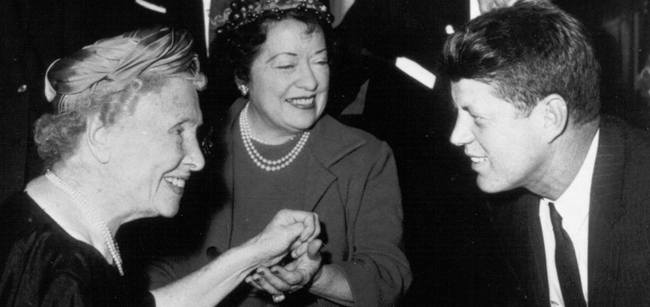
Like President Eisenhower, Helen Keller also had a way of putting things in perspective.  Being both deaf and blind gave her insights into life that the rest of us would do well to think about.

Security is mostly a superstition,” she said. “It does not exist in nature, nor do the children of men as a whole experience it.  Avoiding danger is no safer in the long run than outright exposure.  Life is either a daring adventure, or nothing.”

Fear can interfere with our ability to address problems and to keep our heads clear in difficult circumstances.  However, security concerns certainly do need to be addressed to keep our families safe and our communities productive.

I suggest that a sequence of responsibilities applies to local communities:  Freedom depends on security, which depends on stability, which in turn depends upon honesty, trust, dependability, and forbearance.

There is one other essential component as well, which I call “constructive action.”  By this I mean the active condition in which dependable working relationships develop.  We have already discussed the critical importance of trust and dependability at length.  These depend on constructive action, guided by principle and a sense of purpose.

Principle and purpose cannot exist frozen in time.  I believe stability is only possible when we are in motion.

Constructive action supported by a shared sense of purpose will be the only way to navigate through dark times.  For family and community, a stable foundation is our first priority.  Constructive action allows us dynamic flexibility in responding to what the world throws at us.

All of this will depend on our readiness to work closely with people we have differences with. We cannot be tentative about it.  Building trustworthy communities will not be easy.  Our future depends on it.

Tom

Dear readers:  In the coming weeks I will consider several issues related to security for families and communities.  I look forward to your comments and constructive feedback; this project would be impossible without you.

Walking the Talk

Big corporations often seem to behave with disregard for the humanity of citizens and community.  Geared to function with a singular profit-making intensity that is resistant to compromise, these are not human creatures.

Living with a dominant corporate culture, we find ourselves perceived as economic units, “consumers” pressed into service by a materialist mindset.

And so we have been isolated from one another, forced apart by social forces that are difficult to overcome.  The personal experience of meaning and interconnectedness that civil society depends upon has evaporated.

Americans need not submit to such a sorry destiny.

Independence is always relative, but it is an attitude and a choice.  Self-sufficiency could actually become a matter of life or death.  It can mean food security or financial stability or being a good parent.  Its’ meaning will take on new dimensions when crises strike.  But, there is much more to it than survival.

It is in community and in the quality of our active relationships that we form the matrix of a free society.  Freedom is realized in serving a principled purpose, and in the vitality of lives that are engaged and in motion.

It is in productive interaction with others that ideas are shared and problem-solving is most effective.  In trustworthy relationships, self-sufficiency gains strength and dependability.

But, are we willing to take this on?

We might not want to put up with community.  A few try to avoid it all together.  But, it is impossible to completely ignore it – unless we take snowshoes, an axe and a rifle, and walk into the wilderness.

I know how attractive solitude can be.  I also know that it would deny me the opportunity to grow as an individual, as well as the honor and adventure of dedication to the country I love.

Historically, the basic building blocks of the American Republic have been communities. And, the bonds that held everything together were the personal relationships that make communities work.

Communities are formed by the inspiration and determination of individuals and families, interwoven into mutually supportive networks, and networks of networks.  And, no, it will not be easy to regain what came to us so naturally in the past.

Let me state again, however, that the ultimate visionary force can only be that loyalty to the American Idea that welcomes diversity and rejects hostile divisiveness.

Americans are accustomed to contentious politics and unconstrained partisanship.  There will always be value in the clash of differing opinions.  However, we have entered a period of instability and potential danger.  It is time to rise above our differences in the interests of ensuring the balance and cohesion of the Republic.

We face the instability of extraordinary complexity, deteriorating infrastructure, and institutions that are trapped in the past.  Things are not going to work the way we think they should, and there will be no one to resolve the problems except ourselves.

If we are to rebuild a society in which the foolishness of the past is not repeated, we must think constructively about the qualities and principles that are needed.  Generosity and good will are essential human virtues.  We must keep them strong in our hearts, but help one another to understand why they are not enough.  Some things just don’t work.

Finding solutions to community problems will demand that we put our heads together.  It will require consultation, deliberation, and creative imagination.  And, it calls for the most diverse range of minds and perspectives possible.  The way to maximize effective problem-solving is to include people with a broad range of experience and practical skills.

This might sound idealistic.  In fact, it is the only way to restore a broken society.  Learning how to do it will be hard work, but people of good faith will always have the capacity to succeed.

We must hold our personal beliefs clearly in mind, while keeping in mind that we can expect less conflict and far greater security if we connect, listen and learn, understand and influence.

Holding ourselves apart from one another in disagreement while hurling insults can only reap destruction.  Engaging with one another can be extremely challenging, but there is no other way.

Tom

Next week: Foundations for security.

From Darkness to Light

Without safe communities, and neighbors we can depend on, how will we find security for our families or begin to create a future we can believe in?  Tell me, please, in what other place do we have the freedom and the opportunity to build a stable civil order?

Do we imagine that a shining superhero will ride to our rescue?  Or will we, as I asked last week, pick ourselves up and do what needs to be done?

This is an uncompromising question.  Not to answer it, or to defer commitment, is in fact to answer it.  Failure to rise to necessity is to accept defeat.

Whatever our personality, our political philosophy or religious belief, the individual has an unavoidable choice to make.  Either we retreat into ourselves, accepting what is given as beyond our control, or we step forward to engage hardship and purpose with constructive intent.

This is a very personal choice, but at a time of existential crisis for the United States it takes on great importance – not only for ourselves, but for America and the world.

The United States has served as a model for governance and an engine of creative vitality that is unparalleled in human history.  The American idea has been a beacon of hope for people everywhere.  There has never been anything else like it.  And, the world is watching.

To hesitate here would be to respond as victims rather than as citizens.  It would be to choose loss over promise, helplessness over responsibility.  We may be temporarily intimidated by difficult circumstances.  But we must never give in and never lose sight of the dawn of the new day that even now lights the horizon.

Living with purpose gives us courage and inspiration.

I never said it will be easy.  It will not.  What I am saying is that we have no choice.  Without the courage to begin anew, we will join the slide into chaos.

Standing firm in the context of community does not isolate us from uncertainty.  It will provide only limited protection from the confusion around us.  What it does is keep us close to trustworthy and dependable friends and neighbors.

It positions us to best keep our balance, mentally and spiritually.  And, it keeps the potential for an American future alive.

Working with people is probably the most challenging part of life.  Choosing to take control of our destiny will require perseverance and forbearance – a readiness to exercise tolerance, patience, self-control.  Communicating effectively will become a necessity.

There will always be difficult people to test us.

Our job is not to be heroes.  Our job is to win over hearts and minds to the cause of safety, mutual respect, and rational governance.  Only then will it be possible for fear to give way to curiosity, for judgmental attitudes to be replaced with genuine listening and compassionate understanding.

Progress will come just one step at a time, and will often seem painfully slow.  Making a commitment to stay positive can require considerable resolve.  But, holding to the truth in our vision, focusing on productive purpose, and building trustworthy friendships – can make a very big difference.

The negativity that surrounds us may appear powerful, but in reality it can only exist in the absence of constructive action, and it only has the energy we grant it.  When we set out on a practical path and offer encouragement to others with a radiant spirit, we become as a light that pushes back the darkness.

If we are met with overbearing negativity, it may be wise to take our energy elsewhere.  But, we must never allow our vision to dim or our compassion to be compromised.

Darkness can always be countered with light.  Darkness is the absence of light and has no substance of its own.  The light of a small candle defies and defeats even the darkest night.

Tom

Next week:  Finding courage in crisis.

A note to new readers:  Blog entries adapted from the forthcoming book are posted on most Fridays at both this, the main blog site, and on the Facebook page.  To receive alerts by email you may click “Follow” on this site.

Never doubt that a small group…

Background 5

“It does not take a majority to prevail, but rather an irate, tireless minority, keen on setting brushfires of freedom in the minds of men.”

–Samuel Adams

“Never doubt that a small group of thoughtful, concerned citizens can change the world.  Indeed it is the only thing that ever has.”

–Margaret Mead

Turning the Corner

Whether our ancestors came to this continent by choice or in slavery, or were forcibly separated from their indigenous American roots, all of us are estranged from the lands and lives of our forbears.

Cut off from the cultural foundations that provided previous generations with the basis for social stability and moral integrity, we refined our values and forged new standards.

For some the escape from oppression or deprivation has taken great determination and willpower.  With a strength rooted in the individualism of the survivor, Americans reconstructed human society on the basis of association, reciprocity, and principle: freedom of thought, economic independence, and a new sense of belonging that often transcended social and religious differences.

Early on our communities formed on the basis of cultural commonalities.  But our naturally inquisitive nature and the inclination to range far and wide across the North American continent took us away from our physical roots and led to a society characterized by mobility, homogeneity, and economies of scale.

First railways, and then a proliferation of highways, industrial enterprises, and shopping malls facilitated unrestrained pursuit of economic productivity and material comfort.  Cheap energy made many things possible.  Big always seemed better, or at least more profitable.

Somehow we lost any sense of proportion or real purpose.  A society once anchored by small businesses and community cohesion soon fell apart, morphing into urban sprawl, broken families, and lost dreams.

Unfortunately, and paradoxically, the resulting loss of social coherence and community has led to diminishing independence and self-sufficiency among ordinary Americans.

Many of us have a haunting awareness of this loss of social integrity.  Others have responded more inchoately and angrily, with less comprehension of the historical context or economic forces that contribute to their sense of unease.

Mostly we have accepted our dependence on centralized corporate power to manage our lives for us.  We are now only dimly aware of the tenuous commercial supply chain stretching thousands of miles across the continent for the benefit of profitable efficiencies.  Do we understand the extraordinary social and economic change we are experiencing?

Most of us have little knowledge of the vast size and immense interlocking complexity of the financial markets.  Even the financial power-brokers appear oblivious to the systemic risk embedded in the complexity they themselves have created.

Cut off from dependable information and unaware of the larger picture, we assume that every day will be like the last.

Do we accept this state of loss?  Do we understand our heritage?

How carefully have we thought through the principles of justice, the respect for diversity, the distinctive balance the founders envisioned?  How confident are we in the ideas and values that give validity to our ideals?

In recent months this blog has explored some of the elements of a national character that is deeply rooted in our history.  We now find ourselves at a turning point where the original ideals that brought us here are partly veiled from memory, and the need to reconsider and clarify the American identity has become clear.

The foundations of the American past remain firm and valid.  Yet, we find ourselves today with little concept of community – that foundation of civil society that we must depend upon for a sure footing.

Community is the single context and condition that offers us control over our destiny.  Yet, we know very little about how to make it work.

This presents us with a formidable task.  Without trustworthy communities, how are we to engage with others, uprooted and disorganized in the wasteland of a broken society?  How will we build dependable relationships, a stable civil order, and security for our children and grandchildren?

I do not address this question to America as a whole, in all its pain and dysfunction.  Rather, I address it to my readers directly, as thinking, caring, self-respecting individuals.

Do we have the vision and patience to work with our neighbors, meeting needs and resolving problems?  Will we rise above our differences, to find security in the diversity of our experience, knowledge, and practical skills?

Are we prepared to rethink our concept of community, and to build together from the ground up?

It won’t be easy.

Tom

In the coming weeks: Community; the home we have the freedom to build.

A note to readers:  This is the first post to be adapted from Chapter Nine: The Individual and Society.

America at a Tipping Point

To speak of rebuilding the foundations of the Republic is not to suggest deficiencies in the structure and process of governance provided by the Constitution.  On the contrary, the founders created a structural bulwark for stability that must be defended vigorously whenever necessary.

The foundation many of us are concerned about is that of integrity: Justice, trust, responsibility, and a mutual respect that transcends differences among citizens.

A reader commented on this blog’s Facebook page last week that, “America is at a tipping point because every tenet [and] moral fiber of this nation has been diminished, so that no one is held accountable.  [There is] no moral compass because the foundations are removed.”

We do not have to agree on all the details to recognize truth in this view.  And, we cannot wait for somebody else to fix it.  It is time to stop complaining and to step forward to engage with those around us in securing the safety and well-being of our communities.

Changing our attitude does not require changing opinions or compromising principles.  Addressing people and problems with dignity and kindliness will win respect, not harsh or derogatory words.

If we wish to be heard, to share our views and represent our principles, we must do what is necessary to make this possible.  Communication and understanding will not be easy until we are cooperating shoulder-to-shoulder with our neighbors to make things right.

No, it will not be easy.  But this is how mutual respect begins and the ability to listen becomes genuine.

We will talk more about this later, but the important thing to recognize is that when the going gets tough, relationships count.  I don’t just mean next door neighbors, as important as they are.  If we find ourselves under threat, directly or indirectly, the last thing we need is neighbors down the road or over the hill who are an unknown quantity.

And, we are not simply talking about making acquaintances here.  This is not about borrowing a cup of sugar over the back fence.  To create safe communities – to rebuild the nation – we need dependability.  And that means trust.

Yes, well, in the midst of this crisis we find that trust is not something that Americans know much about.  Mostly we do not believe in it any more.  This is a big problem.

We cannot simply start trusting people because we wish to be trusting.  The reality we live in is decidedly untrustworthy.  Most of the people around us do not have a clear concept of what trust means, much less an understanding of why it is important or what to do about it.

Change will take time.  The challenge begins with our willingness to take initiative, to be patient, to accept differences, and, most of all, to listen to others with interested curiosity.  If we wish to be heard it is usually necessary to first convince others that we are actually hearing them.  Only then will we be heard.

In his book, “The Seven Habits of Highly Effective People“, Stephen Covey wrote:

“If you’re like most people, you probably seek first to be understood; you want to get your point across. And in doing so, you may ignore the other person completely, pretend that you’re listening, selectively hear only certain parts of the conversation or attentively focus on only the words being said, but miss the meaning entirely. So why does this happen? Because most people listen with the intent to reply, not to understand.”

We can all see that the loss of trust has accompanied the loss of civil order and security in this country.  We know there are serious structural problems that must be addressed, but I hope we can also see why trust will serve a vital role in recovering stability and prosperity.

Learning how to build trust will come in the context of practical experience – teaming up to work closely with one another, resolving practical problems and meeting needs in our communities.

Without trust the American republic faces existential danger.  And, without personal cooperation and understanding no trust is possible and no progress is attainable.

Tom

Next week: Finding our balance in the storm

Dear readers, I would appreciate your feedback: ideas, viewpoints, and observations.  Expansive reader engagement on the Facebook page has been quite helpful.

The foundational principle…

Lake 1

“Trust is the glue of life. It’s the most essential ingredient in effective communication.  It’s the foundational principle that holds all relationships.”

“When the trust account is high, communication is easy, instant, and effective.”

–Stephen R. Covey

Living with Integrity

I have suggested here that liberty is closely related to justice, and that both depend upon moral responsibility.  How can we think about these things, and find integrity in them and through them?

By responsibility I mean active engagement with the people and institutions around us as interested and caring citizens.  Responsibility gives meaning and order to our lives.  It is a partner to liberty, which cannot exist without it.

I refer to moral responsibility more specifically as our ability to respond on the basis of conscience, using personal judgment regarding what is right and wrong in human behavior, and acting with respect for the dignity of those we encounter.

A friend once pointed out to me that the meaning of “responsibility” might be found in the compound word, “response-ability.”  Without this ability, justice cannot be realized and liberty has no purpose.

We heard from Viktor Frankl several weeks ago in a post entitled: “The Resilience of Inner Freedom.”  Dr. Frankl emerged from his World War II ordeal in a Nazi death camp with the firm conviction that freedom can only be secured through responsibility.

Freedom,” he wrote, “is not the last word.  Freedom is only part of the story and half of the truth.  Freedom is but the negative aspect of the whole phenomenon whose positive aspect is responsibleness.  In fact, freedom is in danger of degenerating into mere arbitrariness unless it is lived in terms of responsibleness.”

For many of us, seeking freedom in our lives is a gradual process of maturing, letting go of dependencies, and trying to make a go at life with what resources we can gather or create.

This is meaningful for a time.  However, we soon begin to realize that the society in which we live, and the material limitations in our lives, impose themselves on us in uncomfortable ways.

Do we then give in to anger – or feeling sorry for ourselves?  Or, do we seek dignity in the face of limitation, asserting control over our personal vices, and engaging constructively in our community and the wider world beyond?

Many of us find it necessary to construct the lives we wish for from the wreckage of past mistakes, our own and those of others, and are grateful simply for the opportunity to do so.  Even cleaning up a mess offers a certain satisfaction.

There is no happiness to be found in complaining.  Self-respect cannot wait for things to change.  We are each capable of responding to the world around us with dignity and creativity.

Contributing to problem-solving in collaboration with others is a choice that can bring great gratification, however difficult the challenges.

Accepting responsibility can mean many things depending on our circumstances.  Usually we think of responsibility as the act of responding to what needs to be done.  I suggest, however, that a core responsibility underlying all others is the imperative to build and ensure trust.

Without trust, the fabric of this nation will continue to disintegrate.  Trust is the substance of integrity and the single most essential factor making it possible for us to build the future.

Can we find ways of thinking and being that are consistent with the foundation of justice we have considered in recent posts?  The integrity of such a framework supports our endeavors in the same way that a sound physical foundation is required to construct a building.

A principled integrity gains primacy in our very identity: our character and way of being.  But, it can easily be squandered in a moment of carelessness.

So, there you have it: Integrity is the quality of being; trustworthiness is the substance of that quality; and, responsibility is the action with which we make it so.  And, finally, justice is the beginning and the end, the matrix that holds it all together.

Responsibility follows immediately from integrity and is the expression of it.  Stability and order depend on this.  When responsibility is understood and applied to the challenges we face, progress is possible.  Otherwise the integrity of intention is lost.

There is no middle ground.  Either integrity and responsibility are wholly present or they are compromised.  Without them no civilization is possible.

Tom

Next week:  On dependability and trust

A note to regular readers:  I wish to express my gratitude for the interest and constructive feedback you have shared on the Facebook page.  I could not reasonably proceed without this.  Those of you who have taken the step of clicking “Follow” on this site are also serving a significant role.  When it comes time to publish, the numbers really can make a difference.

An uncharted land…

Helen Keller 1

“The only thing worse than being blind is having sight but no vision.”

“No pessimist ever discovered the secret of the stars, or sailed to an uncharted land, or opened a new doorway for the human spirit.”

“Optimism is the faith that leads to achievement.  Nothing can be done without hope and confidence.”

Helen Keller, who lived her life both blind and deaf.