
Jay Scoffield is a recently retired police detective and regular reader of this blog. He responds here to our earlier discussion of safety and self-defense (blog posts 5-26, 6-3).
In addition to being a patrolman and detective, Jay has served as a field training officer and his Department’s first mental health liaison officer. He also taught part-time at his local community college for 16 years while a police officer. The courses he taught included self-defense and domestic violence, among others. His thinking reflects a constructive attitude and deserves consideration.
Art, Skill, and Intention
I have practiced various means of self-defense throughout my career as a police officer. While I have trained in many, Aikido found me. I want to share my thinking here about a method of self-defense that I consider particularly effective, both physically and as a means of progress toward a world I can believe in.
I don’t see Aikido as the only answer available to us when those tense moments come. But I do find the philosophy of Aikido compelling. I offer a short summary here that reflects my training and experience.
Having compassion for people is at the heart of what passionate people do. I appreciate the Greek definition for compassion, to care from deep within oneself. For instance, the Bible refers to “the bowels of mercy” using a verb sometimes translated from the Greek as “to be moved with compassion or kindness” (Matthew 14:14, Mark 1:41, Colossians 3:12).
Mercy is an essential ingredient in justice, as is forgiveness.
Evidence exists of what some in behavioral sciences are calling the second brain; a brain that exists, if you will, in our gut. Scholars also suggest that each and every cell in our bodies gathers information concurrently with our brain. Humans can learn to do things very quickly. It’s a good idea to train our brain to check in with our gut, or that area where “the bowels of mercy” are located.
I think many of us have forgotten how to feel deeply, thus the path to being centered is lost. In the art of Aikido, we learn how to center ourselves.
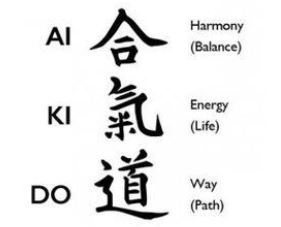 Centering is critical during hand-to-hand combat, and it is the centering of the emotional self that is necessary. Emotional centering involves gathering your internal energy with your mind and placing the energy two inches below your navel – the area of the “bowels of mercy.”
I function at my best when centered. Strangely, this helps one to function better when force is used. And centering can be helpful in situations that require force or diffusing. If I am fully present and centered myself, I can center someone by my mere presence. Centering someone can be as simple as a touch to the shoulder or an empathic ear. Sometimes we may have to reach into our tool bag for other things.
When a police officer uses force the goal ought to be to get a person re-centered. This requires the officer to be centered before and after the use of force. After the use of force, the officer must lead the person to his/her path of re-centering. This can only be done with love and compassion.
Sadly, some folks will never be centered. Deadly force may be necessary to protect your life or the life of another. Could this be the penultimate experience for police work? I don’t think so. I think showing compassion and love is the ultimate experience.
This model can extend to extremists as well. We have dealt with militant forces before. Will love or compassion overcome these things? Sometimes I don’t think so. But at the end of the day, I truly believe humanity has the upper hand – a humanity based on love.
Jay Scoffield
Dear readers: The next post, “Freedom and Stability”, will initiate a series on the creation of the United States Constitution in 1787 as a visionary and pioneering structure for a newly emerging democratic republic. Please look for it on or about September 30.
 Liberty and the American Idea