Illusion Over Liberty?

Answering questions about what has gone wrong is never comfortable.  Some truths are not pretty.  But, revitalizing our core values and the restoration of a once vibrant civic spirit will require that we recognize what has been lost and why.

The current difficulties have developed over a long period of time.  The gradual loss of a spirited civic life has left most Americans without a shared sense of purpose or the interwoven fabric of community relationships.

Americans have become obsessed with immediacy.  We want what we want and we want it now.  We seek to be entertained with melodrama and spectacle, or violence and degraded behavior.

We find ourselves dominated by materialism and immersed in a homogenized culture with little conscious identity.

Reason and foresight have been eclipsed by a fixation on material appearances.  Even the once humiliating liabilities personal debt seems to be of no concern.  We live on false appearances bought with future income.

Strange as it may seem, we have essentially abandoned the future. Where is there a purposeful commitment to neighborhood, to responsibility for local needs?

The moral bankruptcy and distortions of logic represented by this posture have influenced almost every aspect of our national life.  An undisciplined attitude has led us to the brink of financial disaster, and our insistence on freedom from institutional and cultural restraints is fraught with contradictions.

For example, our respect for the individual requires that we honor the independent integrity and privacy of each individual, and yet we have readily abandoned this principle out of fear for our own safety.

Similarly, we fail to see that privacy and integrity are sacrificed when we welcome obscenity and titillation into our lives on television, in film and web-based media.

Personal integrity is lost to gossip, backbiting, and fascination with “the raw stuff of life,” in the words of the conservative American philosopher Richard Weaver:

The extremes of passion and suffering are served up to enliven the breakfast table or to lighten the boredom of an evening at home.  The area of privacy has been abandoned because the definition of person has been lost; there is no longer a standard by which to judge what belongs to the individual man.  Behind the offense lies the repudiation of sentiment in favor of immediacy.

Richard Weaver wrote these words in the late 1940s, before television existed.  And he was not the first to make such an observation.  A quarter of a century earlier the renown Irish playwright George Bernard Shaw commented that an American has no sense of privacy.  He does not know what it means.  There is no such thing in the country.”

Weaver warned Americans of a self-destructive streak that would ultimately lead to crisis.

He pointed out our fascination with specialization, with the parts of things at the expense of understanding and respecting the whole.  He argued that an obsession with fragmentary parts without regard for their function necessarily leads to instability.

Such instability is insidious, penetrating all relationships and institutions.  In Weaver’s words, “It is not to be anticipated that rational self-control will flourish in the presence of fixation upon parts.”

Until we understand how things function as a whole we will have no capacity for good judgment and no control over outcomes.

This is not the fault of government – except to the extent that government, managed by people like ourselves, has joined wholeheartedly in the party.  In a democracy it is tragically easy for government policy to degenerate until it serves the worst inclinations of a self-interested electorate.

Consequently we have descended into the financial profligacy of recent decades and are now the most indebted nation in history by a wide margin.

Ours has been a twisted path with a clearly visible end.  Yet, the inevitable outcome remains ignored.

If we are to recover our balance, it is essential that we recognize the attitudes and thoughtlessness that got us here.  Will we continue to choose illusion over liberty?  Would we rather be ruined than to think?

It will never be too late to turn the corner – to clear our minds, to straighten up and step forward with purpose.

Tom

Please look for the next post on or about April 7: Responsibility with dignity, or apathy and paralysis?

A note to new readers: A project description, an introduction to the forthcoming book, and several chapter drafts are available on this page.


The power which knowledge gives…

Music 1

“Knowledge will forever govern ignorance; and a people who mean to be their own governors must arm themselves with the power which knowledge gives.”

–James Madison

“If a nation expects to be ignorant and free in a state of civilization, it expects what never was and never will be.”

–Thomas Jefferson

A New Kind of Living

Farm 6

“It contributes greatly towards a man’s moral and intellectual health, to be brought into habits of companionship with individuals unlike himself, who care little for his pursuits, and whose sphere and abilities he must go out of himself to appreciate.”

–Nathaniel Hawthorne, Early American novelist

“You don’t think your way into a new kind of living. You live your way into a new kind of thinking.”

–Henri J. M. Nouwen, Christian mystic

Values That Matter

Readers responded last week to my request for thinking about shared values for a genuine American renewal. What values can we agree on, I asked, as a foundation for a unified starting point – a common American “center” that transcends culture, religion, politics?

[This exchange of ideas took place primarily on the blog’s Facebook page, where more than 80 readers clicked post like: http://www.facebook.com/freedomstruth ]

Ideas were offered and important points were made. Values were identified and we heard the deeply felt need for government policies that reflect them. Frustrations were expressed, as well as some feelings verging on hopelessness.

I wrote of my belief that a small unified core of determined Americans could generate a powerful moral presence, if we articulate essential values clearly and project a vision for the future with a compassionate and welcoming spirit.

This would be immensely attractive to a nation desperate for the feel of solid ground beneath its feet.

A dynamic initiative will not require large numbers at the start. It will grow rapidly. I believe the vision of a civil order based on trust and responsibility will draw Americans to it from every walk of life – from every religious faith, from every economic condition and political philosophy.

A signed pledge would make individual commitment very clear. Such a pledge could be added in the back of the book, if you think this is a good idea. Please let me know what you think.

The hard part is this: It will require a willingness to temporarily set aside some of the political differences that separate us – until such time as we have secured the stability necessary to address common problems in our communities.

What is essential is not that we agree on every aspect of personal belief, but that we join with one another to restore the integrity of a civil society that allows for constructive cooperation, engaging with one another respectfully, so that we can secure the safety of our families and the economic well-being of local and regional communities.

If this is our priority we cannot allow America to disintegrate in unrestrained acrimony and hostility. We will have to choose our battles. Some will have to be fought on another day.

My request for your thinking may not have been clear regarding the distinction between government policies and the principles behind them. My intention here is to take the first step in building a foundation on which we can then proceed to structure debate and build policy.

Among genuinely committed Americans, finding common ground in our values will alter perceptions and increase our ability to actually listen to one another.

Stephen Covey wrote that “most people listen with the intent to reply, not to understand.” If Americans are to recover the vision of this country as free and fair, this will have to change.

In his best-selling book, The 7 Habits of Highly Effective People, Stephen Covey wrote:
Every human has four endowments — self awareness, conscience, independent will and creative imagination. These give us the ultimate human freedom, the power to choose, to respond, to change.

Our challenge is to establish a condition, a mental space, in which we can sustain this freedom and attract our fellow-Americans to it.

Having asked you last week to identify the values that should characterize such a condition, I will share those that I consider essential for a free and just society.

I add these to our commitment to defend the Constitution and respect the rule of law: Justice, equity, truthfulness, honesty, fair-mindedness, reliability, trustworthiness, and responsibility.

There you have it. These values are essentially universal, having been taught by every world religion down through the ages. Unfortunately, many of the followers of religion don’t get it, and so our work is cut out for us.

I would appreciate receiving another round of feedback from readers. Please focus your comments on basic values and the principles to live by – and share the reasons why you think the future of the world depends upon them.

Tom

In the coming weeks: Economic reconstruction and a future built on fairness.

Note to readers: You can support this blog and the book project by suggesting that your friends and associates take a look.

Keeping Our Eyes on the Prize

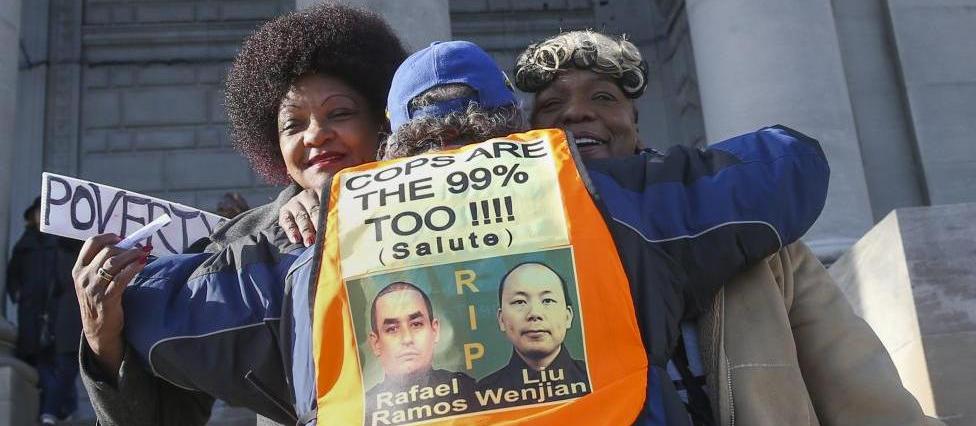
Police 1 (Reuters)

“An attempt to achieve the good by force is like an attempt to provide a man with a picture gallery at the price of cutting out his eyes.”

–Ayn Rand

“They say ‘means are after all means’. I would say ‘means are after all everything’. As the means so the end.”

–Mohandas Gandhi

Reuters image

Ends and Means

????????????????????

“The principle that the ends justify the means is in individualist ethics regarded as the denial of all morals.”

–F. A. Hayek

“He who chooses the beginning of the road chooses the place it leads to. It is the means that determine the end.”

–Harry Emerson Fosdick

A Shattered World

Tree 6

“Faith is the strength by which a shattered world shall emerge into the light.”

–Helen Keller