Never doubt that a small group…

Background 5

“It does not take a majority to prevail, but rather an irate, tireless minority, keen on setting brushfires of freedom in the minds of men.”

–Samuel Adams

“Never doubt that a small group of thoughtful, concerned citizens can change the world.  Indeed it is the only thing that ever has.”

–Margaret Mead

Turning the Corner

Whether our ancestors came to this continent by choice or in slavery, or were forcibly separated from their indigenous American roots, all of us are estranged from the lands and lives of our forbears.

Cut off from the cultural foundations that provided previous generations with the basis for social stability and moral integrity, we refined our values and forged new standards.

For some the escape from oppression or deprivation has taken great determination and willpower.  With a strength rooted in the individualism of the survivor, Americans reconstructed human society on the basis of association, reciprocity, and principle: freedom of thought, economic independence, and a new sense of belonging that often transcended social and religious differences.

Early on our communities formed on the basis of cultural commonalities.  But our naturally inquisitive nature and the inclination to range far and wide across the North American continent took us away from our physical roots and led to a society characterized by mobility, homogeneity, and economies of scale.

First railways, and then a proliferation of highways, industrial enterprises, and shopping malls facilitated unrestrained pursuit of economic productivity and material comfort.  Cheap energy made many things possible.  Big always seemed better, or at least more profitable.

Somehow we lost any sense of proportion or real purpose.  A society once anchored by small businesses and community cohesion soon fell apart, morphing into urban sprawl, broken families, and lost dreams.

Unfortunately, and paradoxically, the resulting loss of social coherence and community has led to diminishing independence and self-sufficiency among ordinary Americans.

Many of us have a haunting awareness of this loss of social integrity.  Others have responded more inchoately and angrily, with less comprehension of the historical context or economic forces that contribute to their sense of unease.

Mostly we have accepted our dependence on centralized corporate power to manage our lives for us.  We are now only dimly aware of the tenuous commercial supply chain stretching thousands of miles across the continent for the benefit of profitable efficiencies.  Do we understand the extraordinary social and economic change we are experiencing?

Most of us have little knowledge of the vast size and immense interlocking complexity of the financial markets.  Even the financial power-brokers appear oblivious to the systemic risk embedded in the complexity they themselves have created.

Cut off from dependable information and unaware of the larger picture, we assume that every day will be like the last.

Do we accept this state of loss?  Do we understand our heritage?

How carefully have we thought through the principles of justice, the respect for diversity, the distinctive balance the founders envisioned?  How confident are we in the ideas and values that give validity to our ideals?

In recent months this blog has explored some of the elements of a national character that is deeply rooted in our history.  We now find ourselves at a turning point where the original ideals that brought us here are partly veiled from memory, and the need to reconsider and clarify the American identity has become clear.

The foundations of the American past remain firm and valid.  Yet, we find ourselves today with little concept of community – that foundation of civil society that we must depend upon for a sure footing.

Community is the single context and condition that offers us control over our destiny.  Yet, we know very little about how to make it work.

This presents us with a formidable task.  Without trustworthy communities, how are we to engage with others, uprooted and disorganized in the wasteland of a broken society?  How will we build dependable relationships, a stable civil order, and security for our children and grandchildren?

I do not address this question to America as a whole, in all its pain and dysfunction.  Rather, I address it to my readers directly, as thinking, caring, self-respecting individuals.

Do we have the vision and patience to work with our neighbors, meeting needs and resolving problems?  Will we rise above our differences, to find security in the diversity of our experience, knowledge, and practical skills?

Are we prepared to rethink our concept of community, and to build together from the ground up?

It won’t be easy.

Tom

In the coming weeks: Community; the home we have the freedom to build.

A note to readers:  This is the first post to be adapted from Chapter Nine: The Individual and Society.

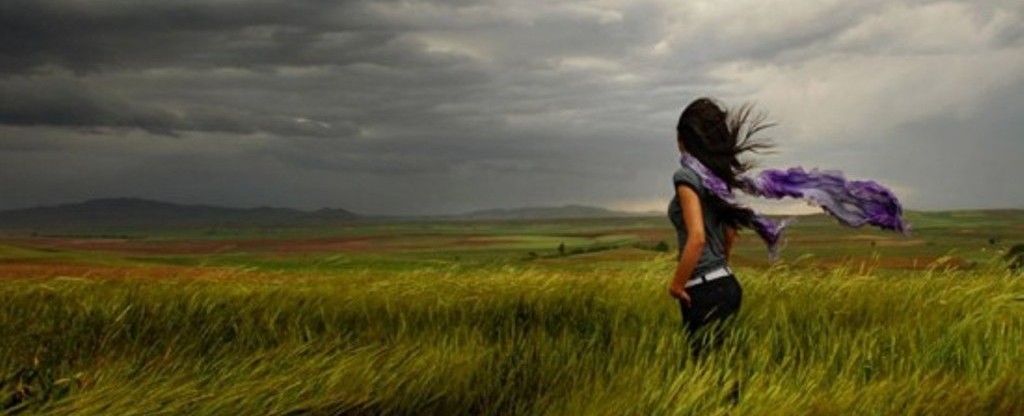
Finding Our Balance in the Storm

The passion for freedom challenges us to rise to the best of our ability as human beings. Whether or not institutions fail us, we are fully capable of giving life to our values when we engage with society, strengthen our communities, connect and collaborate with others.

It is in serving a purpose that each of us discovers the potential in ourselves for strength of character, generosity of spirit, and the inspiration to reach for a better place.

The practical limitations imposed on our personal freedom by moral responsibility and a complex world can be quite challenging, and crisis conditions make things all the more difficult.  For the mature adult, however, these constraints provide a springboard for a meaningful and productive life.

Naturally, it can be difficult to find our place and focus our energy constructively.  At times our courage can fail us.  The demands made on us sometimes feel impossible, even without consideration for others.  Without self-confidence it is difficult to be supportive of others, many of whom we seem to have little in common with.

Preparing ourselves will be important as we navigate through one of history’s great turning points.  Our ability to function responsibly in difficult circumstances will be challenging.

I believe we have entered a period of upheaval that will be unprecedented in character and global in its dimensions.  In my forthcoming book I explain why we will face “a confluence of crises” in the coming years, a series of consecutive and interrelated crises, both natural and man-made.

Preserving the Republic and holding to the core values of the American Idea will be our great responsibility as we transit the upheavals of a great storm.  Our belief systems are already being tested.  Civil order and economic stability will be shaken.

It will be imperative that we meet our tests with dignity, resetting our vision of the American identity based principle rather than watching it descend into chaos.

Our future depends on the survival of core human values and our commitment to retrieving a humane and sustainable future from the wreckage of the past.

Any alternative is too terrible to imagine.

We will prevail if our actions are constructive and the means we employ are harmonious with the ends that we seek.  We must keep our balance in the storm, keep our hearts and minds focused on the greatest good, and not allow ourselves to be dragged down by fear.

And so I offer you a metaphor here for freedom’s truth, a physical reflection of the metaphysical reality.  What follows are the final lines of a eulogy I gave for my father at his memorial service, and a testimony to what I learned from him:

“He gave me one truly great thing above all else….  And, this he did by teaching me the ways of sailing boats.  He taught me to fly on the wind.  He taught me to sail, to ride high on the blustering gale!

“Without fear we ventured out on the running tide, suspended between liquid and ether, to know the snap of the rigging, the sting of salt spray, and the unyielding rush of a steady keel straining against the wild.  Together we embraced the untamed and raced across the sky.  He was my Dad.”

Throughout life we are subject to the vagaries of a capricious human world that seems similar in many ways to the fickle nature of wind and sea.  Yet, core principles, laws, and standards remain firmly in place in both worlds, if we have the eyes to see.

Understanding and embracing this truth, we can spread our wings and learn to fly.

As with a sailing vessel at sea, our identity as human beings can only be realized in action.  And so we are free to discover the world we are given, learning as the sailor learns to engage a fluid and often unpredictable reality with wisdom and flexibility.

Failing this, we will beat ourselves against an implacable and merciless resistance.  An unwillingness to learn will expose us to the storms of life in a rudderless ship and with our rigging in disarray.

Tom

Next week: Turning the corner.

A note to new readers:  Blog entries adapted from the forthcoming book are posted on most Fridays at both this, the main blog site, and on the Facebook page.  To receive alerts by email you may click “Follow” on this site.

Don’t judge each day…

Flowers 6

“I am an optimist.  It doesn’t seem to be much use being anything else.”

–Winston Churchill

“Don’t judge each day by the harvest you reap, but by the seeds that you plant.”

–Robert Louis Stevenson

“Don’t worry about the world coming to an end today.  It’s already tomorrow in Australia.”

–Charles M. Schulz (“Peanuts”)

An uncharted land…

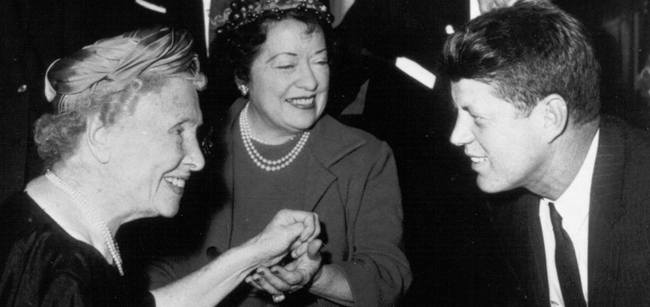
Helen Keller 1

“The only thing worse than being blind is having sight but no vision.”

“No pessimist ever discovered the secret of the stars, or sailed to an uncharted land, or opened a new doorway for the human spirit.”

“Optimism is the faith that leads to achievement.  Nothing can be done without hope and confidence.”

Helen Keller, who lived her life both blind and deaf.

To See for Ourselves

We each have the ability to see, to evaluate and understand things for ourselves.  Yet, all too often we allow the judgments and agendas of others to take us in.  Sometimes we allow ourselves to be manipulated, accepting what is said without investigation – because something supports our preconceived assumptions.

The dishonesty and deceit of partisan politics runs rampant.  Mass media is particularly insidious, creating various alternative realities and imposing them on us in an incoherent stream of disconnected images and sound bites.  Social media is worse.

We can never fully comprehend the reality in which we live, physically or spiritually.  But, we can see that the world survives repeated cataclysms, ever recovering its balance and somehow progressing despite the delusions, duplicity, and chicanery of human beings.

In the previous post I proposed a way of seeing and understanding the world on the basis of justice.  I wrote of a dependable, self-sustaining framework or foundation underlying the whole of reality, which has the character of justice.

We would do well to align ourselves with this basis, to unite with its’ standards and observe its’ conditions as best we can.

Religious people may recognize this truth as the function of God’s Grace.  Others might see it as a function of the integrity of the natural order in the universe.  I believe both are true.

A balanced and coherent unity can be recognized in both the human and natural worlds, when they are freed from manipulation.  The elegant balance found in nature will, if left alone, always manage itself with a delicate, yet robust and resilient functionality.

Human society has a similarly purposeful balance.  But, this is often distorted by insistent efforts to control things according to our selfish desires, rather than with any sense of the right order of things.

Religion has taught us of the integrity and interdependence of the relationships that form the fabric of human communities.  Science has shown us that the earth’s biosphere is a delicate web of life organized as an integrated network of networks.

Whether in human affairs or in the natural world, any disruption or injury inflicted upon the balance will incur consequences that may not be immediately apparent.  Yet the repercussions of injury and injustice spread rapidly abroad, as each impact leads to others in widening circles that extend themselves in perpetuity.

Why is this important to our understanding of freedom?  Understanding the fundamental form and function of things allows us to see things for ourselves without undue influence from others.

While dialog with a trusted friend or genuine consultation within a group can be important safeguards, the personal ability to recognize the consequences of events for ourselves, “to see the end in the beginning,” allows us to determine our own course of action without responding to pressure.

And, understanding the far-flung aftereffects of our own deeds provides us with a degree of protection from engaging in overly emotional, ill-conceived, or destructive acts.

A cursory review of human history reveals numerous examples of poorly conceived actions followed by disastrous consequences.  As we have all seen, both individuals and groups are quite capable of seriously misguided error.

How does this happen?  Well, sometimes we think we have everything all figured out when, in fact, our information is limited and we are only aware of a part of the “truth.”

It is essential that we include a diversity of experience and perspective in our consultations with others.  And, we must always step back periodically to find the mental space to think objectively for ourselves.

Remaining mindful of the foundation of justice that is given, and always checking and rechecking our own motives, will pay ever greater dividends in constructive outcomes and the avoidance of unnecessary trouble.

Justice is a gift that will not go away.  To ignore or repudiate it is fruitless.

However destructive the consequences of unjust acts may be, justice remains integral to the substance of reality, unperturbed and uncompromised.  It remains with us at all times, however discouraged or confused we might feel.

We can count on this, even in the darkest night.

Tom

Next week: Liberty with integrity

A note to new readers:  Blog entries adapted from the forthcoming book are posted on most Fridays at both the main blog site and the Facebook page.  To receive alerts by email you may click “Follow” here at the main blog site.

The trial of principle…

Wire 3

“Comfort and prosperity have never enriched the world as much as adversity has.”
–Billy Graham

“Adversity is the trial of principle. Without it, a man hardly knows whether he is honest or not.”
–Henry Fielding

“These are the times that try men’s souls.”
–Thomas Paine

The Resilience of Inner Freedom

I fear America is sliding steadily toward social disorder and economic disarray. In an atmosphere of deepening crisis, I am concerned about the potential for overreaction by government, police agencies, and citizens. These are circumstances in which terrible things can happen, and indeed are happening.

This week I will share a story with you that illuminates our capacity as human beings to assert our dignity and inner freedom even amidst the most dreadful circumstances.

Responding to the contradictions and injustices we experience in life is challenging. Yet, doing so rationally and responsibly can be a personal statement of transcendent freedom. This is possible regardless of the conditions around us, however difficult they may be.

To be free we must seek to be autonomous individuals first, whole and complete in ourselves, and then to actualize our identity with dignity and perseverance.

We may not like the reality in which we find ourselves. Indeed, it could be nightmarish. But, possessing free will necessitates a commitment to be free in oneself and to engage proactively with the circumstances we face.

If there is a primary requirement for attaining inner integrity, it is the personal determination to do so. In my view, this choice has never been described more eloquently than by Viktor Frankl in the book, Man’s Search for Meaning, the testimony of four terrible years as a prisoner in Auschwitz, the Nazi death camp.

Because his response to that experience is so revealing, I will devote most of this post to his words:

“I may give the impression that the human being is completely and unavoidably influenced by his surroundings. (In this case the surroundings being the unique structure of camp life, which forced the prisoner to conform his conduct to a certain set pattern.) But, what about human liberty?

“Is there no spiritual freedom in regard to behavior and reaction to any given surroundings? …Do the prisoners’ reactions to the singular world of the concentration camp prove that man cannot escape the influences of his surroundings? Does man have no choice of action in the face of such circumstances?

“We can answer these questions from experience as well as on principle.

“The experiences of camp life show that man does have a choice of action. There were enough examples, often of a heroic nature, which proved that apathy could be overcome, irritability suppressed. Man can preserve a vestige of spiritual freedom, of independence of mind, even in such terrible conditions of psychic and physical stress.

“We who lived in concentration camps can remember the men who walked through the huts comforting others, giving away their last piece of bread. They may have been few in number, but they offer sufficient proof that everything can be taken from a man but one thing: the last of the human freedoms – to choose one’s attitude in any given set of circumstances, to choose one’s own way.

“And there were always choices to make. Every day, every hour, offered the opportunity to make a decision, a decision which determined whether you would or would not submit to those powers which threatened to rob you of your very self, your inner freedom….

“Even though conditions such as lack of sleep, insufficient food and various mental stresses may suggest that the inmates were bound to react in certain ways, in the final analysis it becomes clear that the sort of person the prisoner became was the result of an inner decision, and not the result of camp influences alone. Fundamentally, therefore, any man can, even under such circumstances, decide what shall become of him – mentally and spiritually. He may retain his human dignity even in a concentration camp.”

As we face our own tests, which we hope will not be so daunting as Dr. Frankl’s, how can we find this resilience within ourselves? Here is a freedom gained through empowered compassion and responsibility as we respond to the turmoil of a transformative age.

No one can do this for us. As we turn our attention to the suffering and confusion of those around us, we are preparing for both the coming hardship and the new day beyond.

Tom

Next week: Liberty and justice made personal.

The First Steps to Freedom

The struggle for freedom and fairness in governance has a long and turbulent history. In the past the passion for liberty set citizens against totalitarian authority, and the goal was understood to be protection against the self-serving motivations of governments.  By liberty was meant limits on the power of government to impose its’ will on the community.

Later, people came to believe it unnecessary that government should be independent and opposed in its’ interests to themselves. Consequently, a new demand for short-term elected leaders became predominant.

This idea was assumed at first to mean that elected officials should identify with the people and the interests of the nation. It followed that such a nation would not need to be protected from itself.  Supposedly a democracy would not exercise tyranny over itself.

However, as Americans well know, the notion that citizens have no reason to limit their power over themselves only seems reasonable to those who have no experience with popular government.

After two hundred years of experience we know that “self-government” can be fragile and complicated. “The will of the people” often turns out to be the will of the most actively dominant portion of the citizenry, usually the majority, but quite possibly those with overbearing economic or financial firepower.

The American founders took great pains to control any possible abuses of power. As we saw in Chapter Four: Freedom and Order, the Constitutional Convention of 1787 recognized the importance of limiting such dangers throughout an uncertain future.

Liberty came to mean the freedom of each to live our lives as we see fit, so long as we do not impose ourselves on the well-being of others.

As an ideal, this is not so simple in practice. It was controversial then and it is controversial now. And, as I have suggested, the changes and challenges of the ensuing years have given us much to ponder.

Finding ourselves facing the dangers, complexities, and tensions of the present turning point, I believe the American people would do well to step back and reassess the values, principles, and general attitudes with which we can best regain our poise and seek a shared vision and purpose.

In short, I propose that the first steps to freedom will be those that lead to problem-solving and cooperation – if we are to avert catastrophe. And, I believe that this can be done most effectively when addressing felt-needs in our local communities. We will learn by doing, and act we must.

The first steps are challenging, but straight forward:

1) To engage as neighbors, which means learning to listen and to truly understand one another, and then to rise above our differences to resolve problems and address local needs.

2) To recognize the diversity of knowledge, skills, and experience we have available to do what needs to be done; our survival might depend on it.

3) To identify the extent to which we share values, and to build a level of trust that ensures we have neighbors we can depend on when the going gets tough.

4) To commit ourselves seriously to the ultimate purpose of seeking a vision of the future we can hold in common – a future we can all respect and believe in.

In focusing on first things first, we must learn the ways of community that Americans once practiced so well in the vibrant civil society of our past.

Such is the purpose of this little book. The pages that follow are devoted to finding our way through the difficulties and perplexity of this most difficult endeavor.

As we begin to take these first steps, I think we will find it helpful to reflect on the meaning of freedom in our personal lives. For it is deep in our own souls that we must first build confidence in our personal ability to prevail over fear and loss.

There is no greater strength to be found than knowledge of the freedom we control within ourselves. Indeed, it is through this primal freedom that we gain the capacity to respond to life’s tests with grace.

Tom

Next week: The resilience of inner freedom

Dear readers: I wish to thank all those who kept me in your thoughts and prayers during the past two weeks. My surgery went well and I am recovering rapidly. I keep finding more ways to appreciate you, and I look forward very much to continuing our conversation. (Please see the Facebook page, where there is active reader engagement.)

If you just sit there…

Horses 1

“Even if you’re on the right track, you’ll get run over if you just sit there.”

–Will Rogers


Either life entails courage…

Vista 7-x

“Either life entails courage, or it ceases to be life.”

–E. M. Forster

Freedom or Paralysis

We all know the discomfort of unwelcome constraints imposed by our workplace, our families, and society in general. Freedom for the individual, it seems, is relative. As we mature we come to see purpose in the underlying order of things and recognize that often we cannot advance our interests without it.

We generally understand and accept the limitations we experience in life, however much they chafe. Still there are aspects of freedom we value highly despite the complications and challenges they present.

As individuals we value freedom of opportunity. We also have preferences concerning the control of processes that impact on our personal lives, and preferences concerning the processes that operate in society.

There is much of value to discuss here, but I wish to focus on our response to life’s inevitable constraints, especially in the context of crises, and the choices we can make if we wish to work effectively with others.

There are rules we accept that regulate such things as athletic contests and the marketplace, which make it possible to ensure fairness, to strategize and compete. And, it is the certainty of fairness and predictability that allows an economy to be productive and our lives to be sane.

Similarly, it is fairness, honesty and respectfulness that are most conducive to constructive dialog and decision-making in any organization or community. This is what leads to trust, and trust is essential if we are to reach our compatriots.

When we find ourselves confronted with unpredictable and chaotic conditions, our first steps can always be to address the need for order that allows respectful and meaningful communication.

Progress toward social and economic reconstruction in our communities will require that we work together in a civil manner, regardless of our differences. Problem-solving cannot take place otherwise.

We cannot assure safety in our communities or create effective organization if form and structure, or varied opinions, are viewed as limitations to liberty.

The iconic conservative philosopher Richard Weaver, who we heard from in the previous post, would say this goal represents a formidable task; that it would require us to confront a national character uncomfortable with form, resistant to leadership, and impatient with any systematic process. He called America “a nation which egotism has paralyzed.”

We have seen how this egotism has diverted our attention from serious purpose: in our infatuation with expensive toys, in our descent into personal and public indebtedness, and in a sordid media voyeurism that forgoes all pretensions of privacy. Weaver called it “the spirit of self, which has made the [citizen] lose sight of the calling of his task and to think only of aggrandizement.”

Is it this “spirit of self” that has led us to the meaningless disorder in which we now find ourselves, where self-indulgence overwhelms motivation, rational judgment, and foresight?

I see some truth in this, but I believe we must look more deeply into the character of a people who have risen to every test in the past. Americans are smart, resilient, and creative. In the difficult years ahead I expect we will gain a deeper understanding of freedom and will respond with a maturity imposed by necessity.

All form has structural limits. It is the consistent dependability of this reality that allows us to launch ourselves into new frontiers of learning and experience, to control the direction of our efforts, to instigate, organize, create.

Without the constraints of necessity, which include our own values, we would have no capacity to direct our energy and intelligence, to explore new ideas or undertake new ventures.

For the individual, the ability to exercise discipline overcomes the limitations imposed by nature and society. Surely the discipline to leverage inspiration against the constraints we encounter in life provides the power to actualize our freedom and transcend the material difficulties in life.

We cannot leap without a firm foundation beneath our feet; we cannot fly without wings.

It is in the encounter between discipline and necessity that we find the ground of freedom.

Tom

Next week: The freedom within.

Dear readers: Your thoughts and feedback will be very helpful to me.