
“Men might as well be imprisoned, as excluded from the means of earning their bread.”
–John Stuart Mill

“Men might as well be imprisoned, as excluded from the means of earning their bread.”
–John Stuart Mill

“I hope we shall crush in its birth the aristocracy of our monied corporations which dare already to challenge our government to a trial by strength, and bid defiance to the laws of our country.”
–Thomas Jefferson
“If you pick up a starving dog and make him prosperous, he will not bite you. This is the principal difference between a dog and a man.”
–Mark Twain

“We cannot solve our problems with the same thinking we used when we created them.”
–Albert Einstein
“Our greatest glory is not in never failing, but in rising up every time we fail.”
–Ralph Waldo Emerson
“Adversity is the trial of principle. Without it, a man hardly knows whether he is honest or not.”
–Henry Fielding

“A banker is a fellow who lends you his umbrella when the sun is shining, but wants it back the minute it begins to rain.”
–Mark Twain
“All the perplexities, confusion and distress in America arise, not from defects in their Constitution or Confederation, not from want of honor or virtue, so much as from the downright ignorance of the nature of coin, credit and circulation [money].”
–John Adams
“The time to save is now. When a dog gets a bone, he doesn’t go out and make a down payment on a bigger bone. He buries the one he’s got.”
–Will Rogers
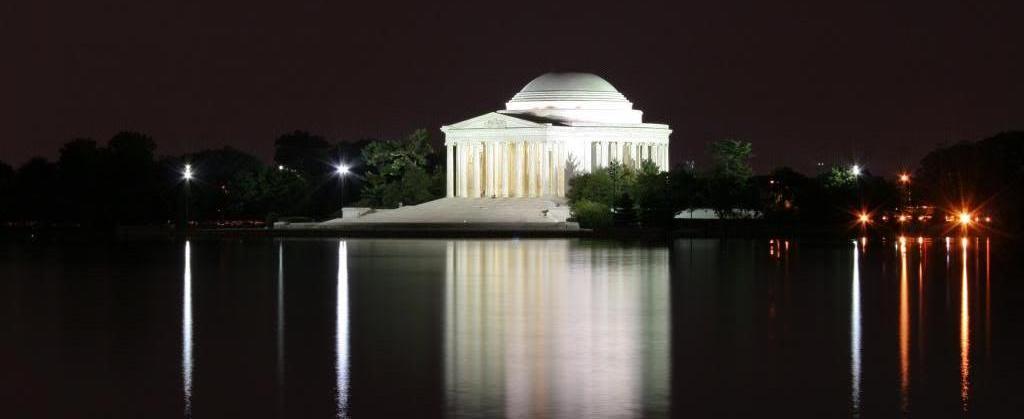
“I believe that banking institutions are more dangerous to our liberties than standing armies.”
–Thomas Jefferson
Few seem to grasp that we have arrived at a turning point; a nation and a world confronted with extraordinary structural change.
To think of the future in terms of recovering the past will not be helpful. We must pick ourselves up, hit the reset button, and move forward in a manner that is congruent with a rapidly changing reality.
I am not a banker or economist. I cannot speak with authority regarding the fragile conditions to which we are exposed. But neither am I trapped in past assumptions or blinkered by custom. My intent here is to monitor a transition I think we should all try to understand.
There are many aspects to the changes we are experiencing, some with immediate implications, others longer-term.
However, I think it useful to begin with a particular question with critical immediacy: “Why is the Federal Reserve unable to return the economy to some semblance of order?” Or, to put it another way: “Why has nothing actually been fixed since 2008?”
Here we find a powerful illustration of what is meant by structural change.
The short answer to these questions is that they want to believe they are dealing with a cyclical crisis rather than a structural crisis.
Again, why? Because the truth represents an unbearable existential threat.
Structural change has shifted the economy into a long-term deflationary trend, which presents financial institutions and governments with an impossible situation.
I refer you here to James Rickards’ recent best-seller, “The Death of Money: The Coming Collapse of the International Monetary System”. A monetary economist and former banker, Rickards is an adviser to the Pentagon and CIA.
Using simple math, Rickards’ explains how “in effect, the impact of declining prices [deflation] more than offsets declining nominal growth [GDP] and therefore produces real growth.”
Most of us would think this is a good thing.
He writes: “Despite possible real growth, the U.S. Treasury and the Federal Reserve fear deflation more than any other economic outcome. Deflation means a persistent decline in price levels for goods and services. Lower prices allow for a higher living standard even when wages are constant, because consumer goods cost less. This would seem to be a desirable outcome, based on advances in technology and productivity that result in certain products dropping in price over time….”
Why is the Federal Reserve so fearful of deflation that it resorts to extreme measures to oppose it? Rickards gives us four reasons.
First, deflation has a severe impact on government debt. “U.S. debt is at a point where no feasible combination of real growth and taxes will finance repayment…. But if the Fed can cause inflation…, the debt will be manageable because it will be repaid in less valuable nominal dollars. In deflation, the opposite occurs, and the real value of the debt increases….”
Second, deflation impacts the debt-to-GDP ratio, causing foreign creditors to lose confidence and demand higher interest rates. This is an urgent problem because the debt is continually increasing. Budget deficits require new financing, and interest payments are being financed with new debt.
Third, deflation is a major problem for banks. As Rickards’ puts it, “deflation increases money’s real value and therefore increases the real value of lenders’ claims on debtors…. But as deflation progresses, the real weight of the debt becomes too great, and debtor defaults surge.”
The fourth problem with deflation is about taxes. When a worker receives a raise, the additional income is subject to taxes. But, if the cost of living drops by the same amount, the worker in effect receives the same raise and the government cannot tax it.
“In summary,” writes Rickards, “the Federal Reserve prefers inflation because it erases government debt, reduces the debt-to-GDP ratio, props up banks, and can be taxed.”
“Deflation may help consumers and workers,” he says, “but it hurts the Treasury and the banks…. The consequence of these deflationary dynamics is that the government must have inflation, and the Fed must cause it. The dynamics amount to a historic collision between the natural forces of deflation and the government’s need for inflation.”
Such are the difficulties and dilemmas of structural change.
Tom
Next week: Insolvency and the Devaluation of the Dollar.
Note to readers: You can support this blog and the book project by suggesting that your friends and associates take a look.

“It is incumbent on every generation to pay its own debts as it goes.”
–Thomas Jefferson
“Alexander Hamilton started the U.S. Treasury with nothing, and that was the closest our country has ever been to being even.”
–Will Rogers
“If a person gets his attitude toward money straight, it will help straighten out almost every other area in his life.”
–Billy Graham
There is trouble in the land. Things are not right and the signs confront us daily. The mainstream media focuses on politics and the economy, but we know it goes far deeper.
The illness is shows itself in violence and bitterness, in material deprivations, in the degradation of human dignity and loss of responsibility. Many of us share a sinking feeling. We are afraid of the future, and increasingly we fear one another.
A wide range of crises are emerging into view or loom on the horizon.
I have surveyed some of these threats in Chapter Two of the book project, “A Confluence of Crises,” where I note that many are interrelated. And, I have argued that Americans must pull together despite our differences, both for self-preservation and to ensure the survival of the American republic.
The broad theme running through this blog (and forthcoming book) is the necessity for Americans to work together shoulder-to-shoulder to meet local needs and resolve local problems. As difficult as this prospect may seem, I do not believe we have a choice.
However, my purpose here is not to warn of impending crises, but to prepare us to remain positive in mind and spirit – to get us through a dark and chaotic time, and out the other side.
We face a long crisis. A constructive response needs to be mounted even as we withstand hardships and disasters.
We are challenged as Americans to rebuild the foundations of the nation in preparation for a future we can respect and believe in. This will require courage and steady determination. Even when we cannot see our way clearly, we must keep our focus on the ends we seek.
In the coming weeks I will offer a broad overview of issues that I think should be taken into consideration as we think about a future beyond this upheaval. We will need to have a realistic understanding of circumstances if we are to progress intelligently, rationally, avoiding wrong turns and hidden dangers.
The most important consideration in all this, in my view, is recognition of the structural nature of the transition. We have arrived at an historic turning point, both as Americans and as human beings. We are experiencing massive structural change.
Structural change takes place outside the realm of our normal experience and expectations. It is caused by events beyond our control.
Examples would include an aging population with insufficient savings, bankrupt governments and institutions, the unprecedented complexity of economic distortions and disruptions, the uncontrolled advance of extraordinary technologies, and the threat of terrorism – all developments that have little to do with partisan politics.
That mistakes have been made and illusions foolishly pursued is undeniable. But, very big changes are taking place that are actually not anyone’s fault.
I have focused attention on values and principles in recent blog posts because, as a practical matter, we are entering new territory. We can only navigate safely with principles that are valid and dependable.
To think of the future in terms of recovering the past will not be helpful. We must pick ourselves up, hit the reset button, and move forward in a manner that is congruent with a rapidly changing reality.
You see, there is a reason the bankers and their economists are not succeeding at returning the economic condition of the United States to some semblance of order. They have proceeded as though they are dealing with a cyclical crisis rather than a structural crisis. And, as long as they continue to do so, there will be no recovery.
Why don’t they understand this? Well, some of them do. But, few dare to speak openly because the financial world would panic.
Why do they continue with a strategy that cannot possibly succeed? Well, there is a reason for that, too. Central bankers (and governments) are trapped between a rock and a hard place.
In the coming weeks we will address the ways a rapidly changing world is changing our lives. We must move past our emotions even as the world is driven over a cliff – because our grandchildren deserve a rational inheritance. And that depends on us.
Tom
Next week: Why the bankers are trapped.
Note to readers: You can support this blog and the book project by recommending that your friends and associates take a look.

“The fact is we can only love what we know personally. And we cannot know much. In public affairs, in the rebuilding of civilization, something less dramatic and emotional is needed, namely tolerance.”
–E. M. Forster (Novelist)
“If man is to survive, he will have learned to take a delight in the essential differences between men and between cultures. He will learn that differences in ideas and attitudes are a delight, part of life’s exciting variety, not something to fear.”
–Gene Roddenberry (Creator of Star Trek)
Readers responded last week to my request for thinking about shared values for a genuine American renewal. What values can we agree on, I asked, as a foundation for a unified starting point – a common American “center” that transcends culture, religion, politics?
[This exchange of ideas took place primarily on the blog’s Facebook page, where more than 80 readers clicked post like: http://www.facebook.com/freedomstruth ]
Ideas were offered and important points were made. Values were identified and we heard the deeply felt need for government policies that reflect them. Frustrations were expressed, as well as some feelings verging on hopelessness.
I wrote of my belief that a small unified core of determined Americans could generate a powerful moral presence, if we articulate essential values clearly and project a vision for the future with a compassionate and welcoming spirit.
This would be immensely attractive to a nation desperate for the feel of solid ground beneath its feet.
A dynamic initiative will not require large numbers at the start. It will grow rapidly. I believe the vision of a civil order based on trust and responsibility will draw Americans to it from every walk of life – from every religious faith, from every economic condition and political philosophy.
A signed pledge would make individual commitment very clear. Such a pledge could be added in the back of the book, if you think this is a good idea. Please let me know what you think.
The hard part is this: It will require a willingness to temporarily set aside some of the political differences that separate us – until such time as we have secured the stability necessary to address common problems in our communities.
What is essential is not that we agree on every aspect of personal belief, but that we join with one another to restore the integrity of a civil society that allows for constructive cooperation, engaging with one another respectfully, so that we can secure the safety of our families and the economic well-being of local and regional communities.
If this is our priority we cannot allow America to disintegrate in unrestrained acrimony and hostility. We will have to choose our battles. Some will have to be fought on another day.
My request for your thinking may not have been clear regarding the distinction between government policies and the principles behind them. My intention here is to take the first step in building a foundation on which we can then proceed to structure debate and build policy.
Among genuinely committed Americans, finding common ground in our values will alter perceptions and increase our ability to actually listen to one another.
Stephen Covey wrote that “most people listen with the intent to reply, not to understand.” If Americans are to recover the vision of this country as free and fair, this will have to change.
In his best-selling book, The 7 Habits of Highly Effective People, Stephen Covey wrote:
“Every human has four endowments — self awareness, conscience, independent will and creative imagination. These give us the ultimate human freedom, the power to choose, to respond, to change.”
Our challenge is to establish a condition, a mental space, in which we can sustain this freedom and attract our fellow-Americans to it.
Having asked you last week to identify the values that should characterize such a condition, I will share those that I consider essential for a free and just society.
I add these to our commitment to defend the Constitution and respect the rule of law: Justice, equity, truthfulness, honesty, fair-mindedness, reliability, trustworthiness, and responsibility.
There you have it. These values are essentially universal, having been taught by every world religion down through the ages. Unfortunately, many of the followers of religion don’t get it, and so our work is cut out for us.
I would appreciate receiving another round of feedback from readers. Please focus your comments on basic values and the principles to live by – and share the reasons why you think the future of the world depends upon them.
Tom
In the coming weeks: Economic reconstruction and a future built on fairness.
Note to readers: You can support this blog and the book project by suggesting that your friends and associates take a look.

“Opinion has caused more trouble on this little earth than plagues or earthquakes.”
–Voltaire
“I never considered a difference of opinion in politics, in religion, in philosophy, as cause for withdrawing from a friend.”
–Thomas Jefferson
“To be free is not merely to cast off one’s chains, but to live in a way that respects and enhances the freedom of others.”
–Nelson Mandela
I cannot imagine an American renewal without a meaningful dialog concerning values.
Can we rise above our differences as Americans to agree on the most basic of shared values? Will a courageous few stand together to agree on a unified starting point – a common American “center” that transcends culture, religion, politics?
Will the center hold?
It is difficult to visualize how this can happen, yet I believe we can do it and will do it. I believe it possible in part because it is not necessary to begin with large numbers. A small unified core of determined Americans can make this happen, citizens with the tenacity and open-minded compassion necessary to assert a powerful moral presence.
If we are willing and able to present a vision for the future with a generous and welcoming spirit, it will be immensely attractive to a nation desperate for the feel of solid ground beneath its’ feet.
I believe the vision of a civil order based on trust and responsibility will draw Americans to it from every walk of life – from every religious faith, from every economic condition and political philosophy.
And, yes, this begs a question. How can we agree? We have substantial differences. This is the hard part.
What is essential is not that we agree on every aspect of personal belief, but that we join with one another to restore the integrity of a civil society that allows for constructive cooperation, engaging with one another respectfully, so that we can secure the safety of our families and the productivity of our communities.
If this is our priority we cannot allow America to disintegrate in unrestrained acrimony and hostility. We will have to choose our battles. Some will have to be fought on another day.
James Madison fought to have slavery abolished in the Constitution when it was first drafted in 1787. It was painful for him to walk away from that vision, but he realized it threatened to kill the entire project. It took decades of determination for abolitionists to finally get the job done.
Today, however, agreement on certain principles will be immediately necessary. What must these be?
What are the core principles that will put America on the road to a dynamic future? Not the core principles held dear by each of us personally, but the essential principles required to pull a diverse people together as a nation.
Each of us will have to decide what we can accept in a healthy, diverse, pluralistic American society. Each will need to consider the extent to which we are prepared to engage in meaningful dialog and debate concerning this question.
I have suggested several principles in these blog posts that I consider essential. In addition to a firm defense of the Constitution, I have written of the necessity for trustworthiness, for responsibility, and the concept of constructive action – action based on the principle of refusing to hurt or do harm, whether by impatience, dishonesty, hatred, or wishing ill of anybody.
(See especially September 26, Foundation of Trust; October 12, Bringing Light to Darkness; October 17, Finding Courage in Crisis; and December 12, First Principles.)
Now I would like to hear from readers. What principles would you ask your fellow Americans to commit themselves to? Please contribute your comments.
And, what of those who remain hardened in attitude, closed-minded, or confused? What of those who simply refuse to accept any kind of responsibility?
We must stand firm in the midst of chaos and not be moved from our choice of principles or our determination to rise above our differences.
A fully American vision can only be reached through thoughtful consultation – by discussing our hopes and beliefs with one another in good faith, exploring the fault lines where we can find common purpose and a higher calling.
A valid vision of the future will require genuine engagement and understanding. Only then can we start working together on real problems and real needs.
We are either all in, building a free, fair, and productive society, or we are each on our own in a devastated world.
Tom
A note to readers: Please share your thinking about principles and fundamental American values in your comments.
 Liberty and the American Idea