
A Deepening Crisis

There is trouble in the land. Things are not right and the signs confront us daily. The mainstream media focuses on politics and the economy, but we know it goes far deeper.

The illness is shows itself in violence and bitterness, in material deprivations, in the degradation of human dignity and loss of responsibility. Many of us share a sinking feeling. We are afraid of the future, and increasingly we fear one another.

A wide range of crises are emerging into view or loom on the horizon.

I have surveyed some of these threats in Chapter Two of the book project, “A Confluence of Crises,” where I note that many are interrelated. And, I have argued that Americans must pull together despite our differences, both for self-preservation and to ensure the survival of the American republic.

The broad theme running through this blog (and forthcoming book) is the necessity for Americans to work together shoulder-to-shoulder to meet local needs and resolve local problems. As difficult as this prospect may seem, I do not believe we have a choice.

However, my purpose here is not to warn of impending crises, but to prepare us to remain positive in mind and spirit – to get us through a dark and chaotic time, and out the other side.

We face a long crisis. A constructive response needs to be mounted even as we withstand hardships and disasters.

We are challenged as Americans to rebuild the foundations of the nation in preparation for a future we can respect and believe in. This will require courage and steady determination. Even when we cannot see our way clearly, we must keep our focus on the ends we seek.

In the coming weeks I will offer a broad overview of issues that I think should be taken into consideration as we think about a future beyond this upheaval. We will need to have a realistic understanding of circumstances if we are to progress intelligently, rationally, avoiding wrong turns and hidden dangers.

The most important consideration in all this, in my view, is recognition of the structural nature of the transition. We have arrived at an historic turning point, both as Americans and as human beings. We are experiencing massive structural change.

Structural change takes place outside the realm of our normal experience and expectations. It is caused by events beyond our control.

Examples would include an aging population with insufficient savings, bankrupt governments and institutions, the unprecedented complexity of economic distortions and disruptions, the uncontrolled advance of extraordinary technologies, and the threat of terrorism – all developments that have little to do with partisan politics.

That mistakes have been made and illusions foolishly pursued is undeniable. But, very big changes are taking place that are actually not anyone’s fault.

I have focused attention on values and principles in recent blog posts because, as a practical matter, we are entering new territory. We can only navigate safely with principles that are valid and dependable.

To think of the future in terms of recovering the past will not be helpful. We must pick ourselves up, hit the reset button, and move forward in a manner that is congruent with a rapidly changing reality.

You see, there is a reason the bankers and their economists are not succeeding at returning the economic condition of the United States to some semblance of order. They have proceeded as though they are dealing with a cyclical crisis rather than a structural crisis. And, as long as they continue to do so, there will be no recovery.

Why don’t they understand this? Well, some of them do. But, few dare to speak openly because the financial world would panic.

Why do they continue with a strategy that cannot possibly succeed? Well, there is a reason for that, too. Central bankers (and governments) are trapped between a rock and a hard place.

In the coming weeks we will address the ways a rapidly changing world is changing our lives. We must move past our emotions even as the world is driven over a cliff – because our grandchildren deserve a rational inheritance. And that depends on us.

Tom

Next week: Why the bankers are trapped.

Note to readers: You can support this blog and the book project by recommending that your friends and associates take a look.

A Freedom of Differences

Coast 6

“Opinion has caused more trouble on this little earth than plagues or earthquakes.”

–Voltaire

“I never considered a difference of opinion in politics, in religion, in philosophy, as cause for withdrawing from a friend.”

–Thomas Jefferson

“To be free is not merely to cast off one’s chains, but to live in a way that respects and enhances the freedom of others.”

–Nelson Mandela

Keeping Our Eyes on the Prize

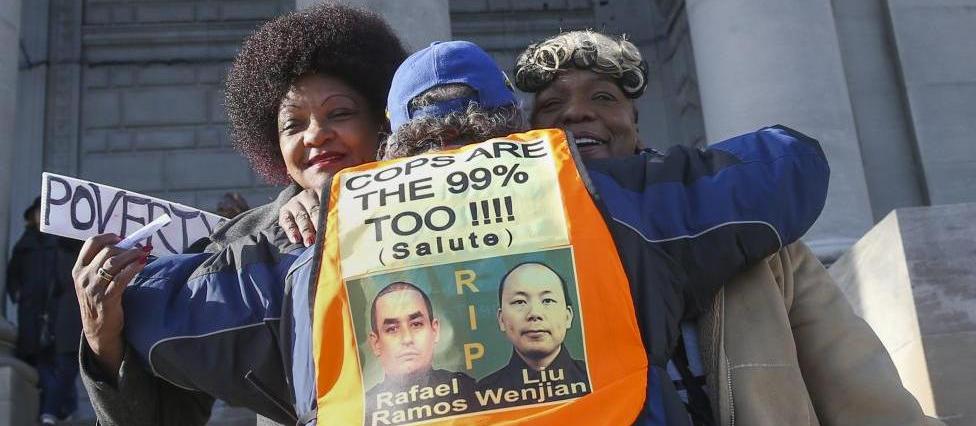
Police 1 (Reuters)

“An attempt to achieve the good by force is like an attempt to provide a man with a picture gallery at the price of cutting out his eyes.”

–Ayn Rand

“They say ‘means are after all means’. I would say ‘means are after all everything’. As the means so the end.”

–Mohandas Gandhi

Reuters image

The Second Amendment, Then and Now

The Bill of Rights, which includes the first ten of the amendments to the Constitution, was first proposed to Congress by James Madison as articles to be incorporated into the main body of the Constitution.

Congress approved twelve articles of amendment to the Constitution in 1789 and submitted them to the states for ratification. Contrary to Madison’s proposal, they were submitted as “supplemental” additions. Articles Three through Twelve were ratified by the required number of states and became Amendments One through Ten in 1791.

The Second Amendment, which has become a matter of considerable interest in recent years, reads as follows:

“A well regulated Militia, being necessary to the security of a free State, the right of the people to keep and bear Arms, shall not be infringed.”

This was not controversial at the time. The concept existed in English common law long before the enactment of the Bill of Rights. And for a variety of reasons today many Americans feel it is necessary to own firearms.

The importance of this issue to the founders was quite clear. James Madison introduced the language that became the Second Amendment and also wrote: “The Constitution preserves the advantage of being armed which Americans possess over the people of almost every other nation where the governments are afraid to trust the people with arms.”

Alexander Hamilton, like Madison a strong advocate for Federalism, was equally explicit: “The constitution shall never be construed…to prevent the people of the United States who are peaceable citizens from keeping their own arms.”

Thomas Jefferson famously said: “No freeman shall be debarred the use of arms.” And he also wrote that “The strongest reason for the people to retain their right to keep and bear arms is as a last resort to protect themselves against tyranny in government.”

During the years leading up to the Revolutionary War there was mob violence in several of the colonies. In addition, many American lived in or close to wilderness regions where conditions were essentially lawless. The need people felt to protect their families was quite rational.

It should be noted that a primary motivation for supporting “a well regulated Militia,” articulated in the Second Amendment as “being necessary to the security of a free State,” was the strong opposition among the founders to the concept of a standing army.

Thomas Jefferson put it this way: “None but an armed nation can dispense with a standing army. To keep ours armed and disciplined is therefore at all times important.” “Every citizen should be a soldier,” he wrote. “This was the case with the Greeks and Romans, and must be that of every free state.”

The American reality in 1776 and 1791 was entirely different from that confronting us today. Yet, news of social, religious, and psychopathic violence imposes itself on us every day. Older Americans are particularly sensitized to what has changed: the radical loss of trust and the lack of civility, ethical integrity, and social responsibility we see everywhere.

We must acknowledge the compelling reasons why so many feel it necessary to own firearms.

That said, however, I must tell you I believe the use of force among Americans today, in defense of the Constitution and the American freedoms, would be counterproductive and incompatible with an effective strategy.

Our consideration in recent posts of the dynamic relation of means to ends should, in my view, make this clear.

Violence committed by Americans against Americans would contradict the rationale behind the impetus to violence itself. It would be self-contradictory, pitting brother and sister against brother and sister, subverting the integrity and viability of the American Idea as a guiding force for the good.

We can do far better.

I have presented principles supporting this assertion in previous posts, (see especially Nov 28 and Dec 12), and will offer a more explicit argument next week.

We need to consider this carefully and get it right. We face a long crisis. Many dark and dangerous things are possible.

Tom

Next week: Principled Means, Principled Ends

Note to readers: You can support this blog and the book project by suggesting that your friends and associates take a look.

A Severe Choice

The confluence of crises confronting the American people in this new century represents a profound turning point in the nation’s history, and for each of us personally.

In the turbulence of multiple crises it can be easy to forget the unique stature of the United States and the role it has played and will continue to play in the progress of an ever-advancing civilization.

The American Idea has been a beacon of hope for the world, however imperfect the reality might be. America has been an intense source of intellectual and creative vibrancy, and has served as a model of political freedom, social diversity, and economic vitality.

Many new readers have started following this blog, particularly on the Facebook page. So, I will pause this week to clarify my purpose.

I have been presenting ideas concerning the motives and principles and discipline I believe we will need to successfully rebuild the foundation of the United States as a free and democratic republic. During the holiday period I will be focused on the importance of ensuring that our means are consistent with the ends we desire.

Some of you will find these ideas familiar, especially those who are rooted in a religious tradition. However, I will propose thinking that I hope will be meaningful to everyone, religious and non-religious alike.

The opening words of this post were lifted from the first chapter of the book I am working on, and I offer more of the same passage below.

The United States has entered the fiery test of a crucible in which the forces of crisis will burn away the self-centeredness and sloppy thinking of the past to forge an American identity we can feel good about.

Or, if we fail to rise to our calling, the social violence arising from failing institutions and human suffering will incinerate our children’s future and turn a great vision to hopelessness and anguish.

At a time of extraordinary existential threat we are confronted with a severe choice.

Will we return to the founding principles of these United States as the bedrock on which to build a free, ethical, and comfortable future? Will we defend and protect two hundred years of commitment, hard work, and sacrifice by generations of Americans who have given their lives to this unprecedented vision?

Or, will we give way to the emotions of uncompromising partisanship – and allow a great trust to shatter and vanish?

Infrastructure, systems, and services we have long depended upon are going to fail in the coming years. Problems will have to be solved without many of the tools and supports to which we are accustomed.

So, let us set aside partisanship and sectarian differences when necessary, in the interest of stabilizing and rebuilding the nation. Panic neither serves nor becomes us.

This nation has progressed gradually toward maturity, dedicated to the cause of liberty built upon the foundation of unity within diversity – diversity of nationality, religion, ethnicity, and, most of all, political philosophy.

We possess wide ranging distinctions and differences, but together we share an essential inviolable common ground.

Let us pull together, reorient ourselves to the originating principles upon which this country was built, and step forward to reassert the vision and secure our communities.

I submit to you that something far better, far nobler, something perhaps beyond our present capacity to imagine, will emerge from the present turmoil.

If, however, we cannot work effectively to build safe communities with people we are not in complete agreement with, then we will be condemned to the only possible alternative: a collapsing civilization characterized by fear and violence, a nightmare for our children, and a land where no principles, no values, no stable order can be realized.

Tom

Next week: First Principles

Renewing Core American Values

Answering questions about what has gone wrong is never comfortable. Some truths are not pretty. But, the renewal of core American values and restoration of the vibrant civic spirit we have had in the past will require recognition of what has been lost, and why.

After an honest appraisal, we are called to affirm the values and principles we have understood, but abandoned.

The present difficulties have developed largely unnoticed over a long period of time. A gradual loss of vision has left us without a collective sense of purpose or the strength of interconnected community relationships. It has left us vulnerable to materialism and the domination of an institutional culture.

Most significantly we have become obsessed with immediacy. We want what we want and we want it now. The weakness of indebtedness seems to be of no concern. And so, we have discovered reality the hard way, neglecting reason and foresight. We have abandoned the future.

We acquired an undisciplined attitude toward almost everything, from parenting to fiscal responsibility. And our attitude infected our government and many institutions.

Our insistence on freedom from institutional and cultural restraints has led to contradictions. For example, our respect for the individual requires that we honor the independent integrity and privacy of each citizen, and yet we have readily abandoned this principle out of fear for our own safety. Similarly, we have failed to see that our very own privacy has been sacrificed to the obscenity and titillation in mass media, lost in a fascination with “the raw stuff of life.” In the words of the iconic conservative philosopher Richard Weaver:

“The extremes of passion and suffering are served up to enliven the breakfast table or to lighten the boredom of an evening at home. The area of privacy has been abandoned because the definition of person has been lost; there is no longer a standard by which to judge what belongs to the individual man. Behind the offense lies the repudiation of sentiment in favor of immediacy.”  (1948)

Richard Weaver actually wrote these words before the advent of television. And he was not the first to observe this propensity. A quarter century earlier George Bernard Shaw was quoted as saying: “An American has no sense of privacy. He does not know what it means. There is no such thing in the country.”  (1933)

Is it any wonder today that we have sought to indulge our appetites for immediate gratification without consideration of the consequences?

Professor Weaver warned of a self-destructive trend that would ultimately lead to a crisis. He pointed out our fascination with specialization and with the parts of things at the expense of understanding and respecting the whole. He argued that an obsession with fragmentary parts without regard for their function necessarily leads to instability. Such instability is insidious, penetrating all relationships and institutions. In his words, “It is not to be anticipated that rational self-control will flourish in the presence of fixation upon parts.”

This is not the fault of government — except to the extent that government, managed by people like ourselves, has joined wholeheartedly in the party. In a democracy it is tragically easy for government policy to degenerate until it serves the worst inclinations of a self-interested electorate.

And so we have descended steadily into the financial profligacy of the last fifty years, and are now the most indebted nation in history by a wide margin. Ours has been a twisted path but with a clearly visible end. Yet, the outcome was foreseen only by a few who were regarded as crackpots.

If we are to restructure our civil order and economic life following the destruction and confusion of our recent past, it is essential that we recognize the wrong-headed thinking that got us here. Values and principle are not in questioned; only wisdom. The United States Constitution provides a firm foundation. What we are challenged to do now is to reconsider the way we think.

The Creative Power of American Civil Society

We face a turning point as a nation that is quite challenging. Yet, it is also an opportunity; a rare moment in history that calls us to clarify our purpose and correct the manner of thinking that brought us to this place. It will require that we keep our minds open and remain objective as we address some tough questions. The effort may not be comfortable, but it is essential if we are to regain our balance and rebuild our resolve.

In his recent book, The Great Degeneration, economic historian Niall Ferguson has provided us with a compelling review of what has come to pass. He considers four areas in which the degeneration of values and social stability in the United States has had devastating consequences. These are, to use my own words, 1) the role of responsibility in the structure of the social order, 2) the disintegration of the market economy, 3) the fundamental role of the rule of law, and 4) the essential qualities of civil society.

Looking back, Dr. Ferguson reminds us of the vigorous civil and cultural life of nineteenth century America: “I want to ask,” he writes, “how far it is possible for a truly free nation to flourish in the absence of the kind of vibrant civil society we used to take for granted? I want to suggest that the opposite of civil society is uncivil society, where even the problem of anti-social behavior becomes a problem for the state.” (2013)

He goes on to cite Alexis de Tocqueville from the first volume of his famous commentary, Democracy in America, which was published in 1840:

“America is, among the countries of the world, the one where they have taken most advantage of association and where they have applied that powerful mode of action to a greater diversity of objects.

“Independent of the permanent associations created by law under the names of townships, cities and counties, there is a multitude of others that owe their birth and development only to the individual will.

“The inhabitant of the United States learns from birth that he must rely on himself to struggle against the evils and obstacles of life; he has only a defiant and restive regard for social authority and he appeals to its authority only when he cannot do without it…. In the United States, they associate for the goals of public security, of commerce and industry, of morality and religion. There is nothing the human will despairs of attaining by the free action of the collective power of individuals.”

Dr. Ferguson writes that “Tocqueville saw America’s political associations as an indispensable counterweight to the tyranny of the majority in modern democracy. But it was the non-political associations that really fascinated him”:

“Americans of all ages, all conditions, all minds constantly unite. Not only do they have commercial and industrial associations in which all take part, but they also have a thousand other kinds: religious, moral, grave, futile, very general and very particular, immense and very small; Americans use associations to give fêtes, to found seminaries, to build inns, to raise churches, to distribute books…; in this manner they create hospitals, prisons, schools. Finally, if it is a question of bringing to light a truth or developing a sentiment with the support of great example, they associate.”

What happened to the creative power of American civil society? And, what is the consequence of this loss? As Tocqueville reports so well, Americans succeeded in overcoming constraints on their freedom through their own initiative and sense of community.

Unfortunately, action has been replaced by inaction. A once spirited culture of engagement, based on committed interpersonal relationships, has been replaced by a self-centered attitude, the loss of community, and the isolating influences of the automobile, television, and the digital age.

Surely it is time to restore what we once did so well, and then, with renewed strength, to address the great challenges ahead.