
Freedom of Thought, Integrity of Values

For most of us any threat to our expression of belief or opinion would be a threat to our personal integrity.  Freedom of thought and expression is a hallmark of liberty and fundamental to a free society.  This post raises questions about how the assumptions we make about beliefs and opinions can impact freedom, both our own and that of others.

Our personal freedom, however, depends on accurate information, including the accuracy of our assumptions about the interests, beliefs, and views of others.

What do our assumptions have to do with freedom? My answer is that our ability to engage effectively, safely, with real people in the real world, both friend and foe, depends on accuracy.

Assumptions are beliefs about facts (or the views of others) that may or may not be true.  My suggestion here is that unexamined assumptions can limit our knowledge of the reality we are dealing with, and thus our ability to respond effectively.  Inaccurate assumptions interfere with the free flow of information, which limits our personal autonomy and independence.

And so I ask you: If we have not investigated and fully understood opposing points of view, how can we engage with and influence others effectively?  How can we question their assumptions?

I do not suggest that agreement is necessary.  That will often be impossible.  But, being mindful of the dangers of untested assumptions can protect us from misunderstandings or worse.

Questions of judgment often involve complex circumstances and depend on information coming from multiple sources.  Sometimes complexity can be aggravating, but if we value the integrity of our beliefs and our role in the world, there is no alternative to pursuing accuracy.  After all, our personal views reflect our identity as decent and intelligent people.

Problems often catch us by surprise as a consequence of assumptions we did not realize we were making.  This can happen socially or politically.  It happens in science.  I have raised a variety of questions in recent blog posts about historical assumptions that I think deserve a closer look.

These included supposed promises that have long been accepted as inevitable by western society and by Americans in particular: The assumption, for example, that rational governance is possible if we simply trust the wisdom of experts, or that nature will eventually submit completely to human control.

Today we face an extraordinary series of interrelated crises that call these and many other assumptions into question.  Political dysfunction, social and economic disarray, and a nearly total lack of civility and cooperation, leave us enmeshed in frustration.

As regular readers know, I have been suggesting that local communities provide the only effective opportunity for Americans to seek local security in the midst of social disorder.

This is a very challenging proposition.  But, I do not believe we have a choice.  The lessons of civility, trustworthiness and cooperative problem-solving may have to be learned by force of necessity.  Our survival might depend on them.

Teaming up with a diverse group of neighbors to meet shared needs will not be easy.  It will require personal courage and initiative.  Understanding does not necessarily lead to agreement, but it lubricates and sustains working relationships.  It is the path to genuine trust.

The greatest challenge for building community in a disintegrating society will not be differences of opinion, but differences in our values.

We each have numerous values, perhaps more than we realize.  Values are not casual ideas or choices; many are deeply rooted in our interests and needs. If we are to live together, certain essential values must be shared; others might challenge our patience, but not our trust.

To find safety in community we will need to seriously examine our assumptions in the clear light of honest dialog.  I believe we will find more agreement than we expect, but we cannot delay. Dependable community will depend on genuine understanding.

We must never abandon our values, but rather control the manner in which we manage them.  Each of us carries a personal perspective that will contribute to the character and wisdom of the whole – as long as we refrain from allowing ego or emotion to overwhelm the context in which we find ourselves.

We must learn how to work with others, to influence one another little by little, and to live with grace and charity.

Tom

Note to regular readers:  Please watch for the next post on or about February 10.
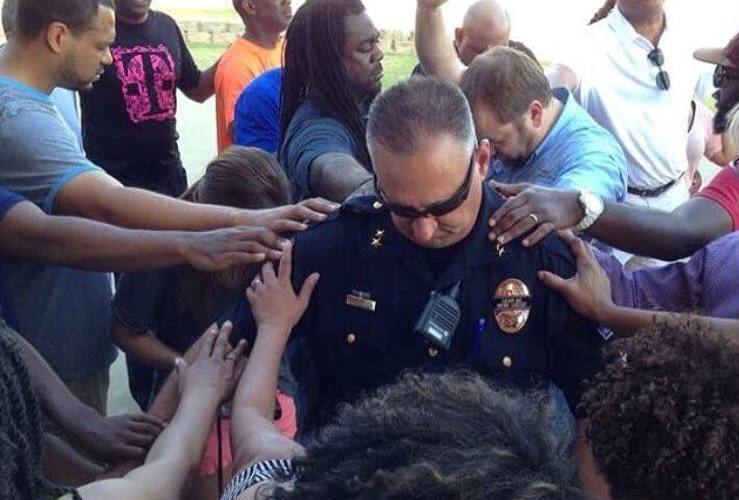
Freedom and Limitation

Questions about the meaning of liberty and freedom have been with us for centuries. Even now, we are confronted by contradictions and constraints.

In the coming months we will ponder the challenges of transcending our limitations – and keeping a positive attitude in difficult circumstances.

As we proceed, I will refer the implications of religious faith to individual judgment. Certainly belief in an all-knowing God imposes constraints on our decisions and behavior.  It can also liberate the heart and mind in entirely transcendent ways.

Here we will focus instead on the spirit of freedom as it can be experienced by thoughtful people of every stripe, religious and non-religious alike, as we engage and prevail over the obstacles and strictures that present themselves in our personal, social, and material lives.

Of particular significance in our present circumstances, our relationship with nature looms large. Many Americans have a great love for the extraordinary beauty of this land.  And, our future depends on it.  This is our home and source of sustenance, yet we sometimes seem to forget our dependence on it.

Two hundred years ago scientists, philosophers, and politicians all expected that nature would ultimately come under human control.  Human beings certainly do have a unique capacity to manipulate nature.  But, as science has begun to understand the complexity of natural systems, it has become clear that the balanced order of nature must be sustained to ensure the survival of life on earth.

Setting aside the controversy surrounding climate change for the moment, the idea that nature has limits when it is sufficiently disrupted seems to make sense.

When I was a child there were two billion people alive on this planet.  Now, having recently reached retirement age, I understand the number is seven billion and growing rapidly.  This has taken place in a single lifetime.  My lifetime.

I cannot see how seven billion human beings, along with a massive agricultural and industrial footprint, can fail to impose a strain on the capacity of nature to provide the clean air and water we all depend on.

I believe this question is worth thinking about.  Yet, any suggestion that absolute freedom has collided with limits in the real world seems to cause a violently negative reaction.

What is this about?

If freedom appears to be threatened by science, this would be no small matter.  And so a disagreement that appeared at first to simply raise questions as to material fact has instead descended into bitter accusations of conspiracy, treason, and dishonor.

Am I wrong to think that this reaction is about more than climate change?  The emotional climate suggests that freedom itself must be under attack.

There are many aspects of our lives that impose on our freedom.  Physical reality is just one.

Today we find ourselves colliding with limitations on many levels, personal, social, economic: the loss of privacy and economic freedom, violence on our streets, aging infrastructure, conflicts over land and water rights, insolvent financial institutions, and massively indebted governments.

Shall I go on?  It gets to be crazy-making, you know?

Emotion coalesces into a rage focused on those who may have effectively driven us off a cliff.  Who is responsible for all this, we ask?  Bankers?  Politicians?  Corporate executives?  Are these not people who are supposed to understand what they are doing?

Whether it is the limits to nature that are in question or a deteriorating social and economic order, clearly the cherished expectations of ultimate human prosperity are no longer assured.

The prospects for peace do not look so great either.

We are confronted by crises that appear to be approaching from every direction.  It is a time for each of us to begin adjusting to new conditions, new questions, and new ways of thinking. We owe it to our children to keep our wits about us.

We are Americans.  We are capable, imaginative, constructive.  Coming to understand freedom in a way that transcends human limitations has become very important.

We each have the capacity to think for ourselves.  We must commit ourselves to the independent investigation of truth, and not allow ourselves to be overly influenced by others.

The future and the responsibility are ours to claim.

Tom

Next post: The Loss of Ultimate Purpose

Note to regular readers: I have been rewriting the draft introduction for the book and would appreciate your feedback.  You can find it on this page.  Please watch for the next post on or about January 27.

The Will to Freedom

When America was first being settled by Europeans, the emerging identity of the new nation was characterized by a hopeful confidence in the future and a belief that freedom would lead ultimately to general prosperity and peace.

A new understanding of history had, in the words of political scientist and philosopher Michael Allen Gillespie, “opened up the possibility that human beings need not merely accommodate themselves to the natural world.  Instead they could become masters of nature and reshape it to meet their needs through the methodological application of will and intelligence. This new understanding of the relation of man and nature had profound implications for man’s own understanding of his place in time.”

The “will to freedom” as conceived by philosophers and treasured by American settlers and colonists, thus became the dominant theme on a continent that seemed unlimited, but for the noble peoples it displaced.

We have not been willing to tolerate anything that stands in our way, including those once proud and independent indigenous American peoples who, despite heroic resistance, were forced to give ground to the relentless advance of western expansion.

The contradictions hidden in the vision of absolute freedom and unlimited prosperity have remained largely unconscious and unresolved, whether they be social, economic, or physical.

Forced by extraordinary circumstances, our attachment to illogical assumptions and inflexible absolutes is today pitching us into a confusion of emotionally charged philosophical and political conflicts.

Several related questions were raised in previous posts.

Do we still think we can make ourselves “master and possessor of nature” without regard for the coherent balance that physical life depends upon?

Is absolute freedom even possible, given the complexity and destructive potential that science and technology have introduced into our lives?

What do we expect of technology?  What of the vulnerability of aging infrastructure we depend on for electricity and water every day, or the steadily growing impact of robotics on the economy and jobs, or swiftly advancing surveillance technologies that are capable of prying into every corner of our lives?

Finally, what do the changing realities we face today suggest about the practical meaning of freedom and responsibility – and the necessity for cooperative problem-solving?  Can we collaborate with one another to address these questions and retake control of our destiny as wise, creative, and courageous people?

The historic questions have taken on a contemporary quality, but they are essentially the same questions.  Earlier generations evaded these questions by exalting science and materialism above all else.  Consequently, the denial of a rational God and the suppression of a religious perspective diverted attention from a logical contradiction that transcended philosophy and belief.

When the constraints and limitations imposed by belief in an all-knowing and all-powerful God were disposed of with the cry of “God is dead!” they were immediately replaced by constraints and limitations imposed by belief in a supposedly mechanical natural world.

It was, of course, assumed that science would soon master nature, human beings would succeed in perfecting rational governance, and humankind would realize absolute freedom.

But, nature proved to be far more complex and unpredictable than was expected.  And, having rejected the God of traditional religion, humankind has found itself confronted with a severe discipline imposed by nature, and without the grace or guidance of a loving Teacher.

And “rational governance”?  Well, we have certainly witnessed in graphic terms the manner in which self-appointed leaders of “rational thought” led us into the totalitarian nightmares of communism, fascism, and Nazism.

Please make no mistake: This past is not far behind us.

If we are to reconsider the cataclysms of the first half of the twentieth century and the horrific consequences of the many bungled attempts to control human destiny – politically, economically, and scientifically – we might start to see the future more clearly.  Indeed, we might then avoid potential disasters before they befall us.

We cannot neatly sidestep such fundamental unresolved questions, which I would suggest have embedded themselves deeply in the American psyche.

Agreement concerning the details is not required, but taking responsibility for the practical consequences of our actions in the real world is of immense significance.

Tom

Next post: Transcending Our Limitations

A note to readers:  Please watch for the next post on or about January 13.  Regular readers can register for email alerts by clicking “Follow” on this page.

A Conflicted Legacy

What makes America different?  During the formative years of colonial America something extraordinary was happening in the world.  Beginning in Europe, new ways of thinking were breaking free from authoritarian institutions and belief systems.  A creative energy was released that came to America with a rising flood of immigration.

The new ethos was grounded in the belief that a rational humanity, freed to recreate the world through the power of reason, must be capable of discovering effectual truth.

From this conviction there arose a faith that humankind would, in the words of philosopher and political scientist Michael Allen Gillespie, ultimately secure “universal freedom, general prosperity, and perpetual peace.”

The idea of a promising future for humankind was powerful, inspiring confidence in the potential to free ourselves from the shackles of an oppressive past.  And, for the thousands of immigrants disembarking in the New World, a working knowledge of philosophy was not required.

Everyone knew what America represented, and the promise, however primal and unformed it might be, came to root itself deeply in the emerging American identity.

Europeans were fascinated by the self-assured confidence of the American character, and Americans were energized by their freedom from the fetters of an autocratic culture and restrictive social norms.

There were abundant crises and controversies, of course, to arouse and vitalize the new nation as it struggled to find its feet.  We did not agree on much.  The country was saddled with the unfinished business of its European past: the scar of slavery, the tensions between moneyed and working classes, and the prejudices of religion, race, and nationality.

Yet, a potent hopefulness prevailed as wave after wave of European arrivals powered the growth of a seemingly insatiable industrial economy.  Despite apparent contradictions, the new ideas continued to generate a confident vision on both sides of the Atlantic through most of the nineteenth century.

While much of the brutality perpetrated against Black and Native American people was ignored by Americans of European descent, the horrific violence of the Civil War shocked the Nation.  And then came the twentieth century.

Professor Gillespie describes what happened next:

“The view of history as progress was severely shaken by the cataclysmic events of the first half of the twentieth century, the World Wars, the Great Depression, the rise of totalitarianism, and the Holocaust.  What had gone wrong?  Modernity, which had seemed on the verge of providing universal security, liberating human beings from all forms of oppression, and producing an unprecedented human thriving, had in fact ended in a barbarism almost unknown in previous human experience. 

“The tools that had been universally regarded as the source of human flourishing had been the source of unparalleled human destruction.  And finally, the politics of human liberation had proved to be the means to human enslavement and degradation.  The horror evoked by these cataclysmic events was so overwhelming that it called into question not merely the idea of progress and enlightenment but also the idea of modernity and the conception of Western civilization itself.”

We have admired the generation of Americans who prevailed during the Great Depression and fought in World War II.  We like to call them “The Greatest Generation.”  They did not forget.

They remained proud and frugal for the rest of their lives, though many of their children failed to understand.

Most are gone now.  How many of us today know what they knew…?  We who have drowned ourselves in materialism purchased with debt.

What happened?

I believe we have tried to walk away from the past with little understanding of what happened.  Both the fear of debt and the destruction of global war have been largely repressed and lost to memory.

The long history of degrading abuses suffered by immigrants and people of color is often forgotten and rarely addressed.  The promises of equality and freedom remain, but are only apparent through a haze of inconsistency and uncertainty.

The practical limits of freedom in a complex world have started to close in on our lives, unforgiving in the absence of clear thinking and moral responsibility.

Are we ready to reflect on where we have come from and to confront the oncoming confluence of crises with responsibility, and with our eyes wide open?

Tom

On New Years’ weekend:  The Will to Freedom

Note to regular readers: The blog will take a break until the end of the month.  To receive emailed alerts, please click the Follow button.

Liberty and the Individual

Among the most influential ideas influencing colonial America was the concept of independent human individuality.  First appearing in ancient Greece, and then more coherently during the Renaissance, a new sense of independent individuality led naturally to the compelling idea of personal freedom.

These conceptions spread together in reaction to an authoritarian European culture of dynastic families, medieval guilds, and other autocratic institutions.

The term “individualism” apparently first came into common use among political philosophers in the late 18th century, leading almost immediately to confusion.  Differing interpretations ultimately engendered two fiercely competitive philosophies.  But, that’s a story for another day.

My purpose here is to consider liberty from our perspective as individuals.

Individual liberty has sometimes been associated with egotism and selfishness. However, the concept was originally conceived as respect for the validity of the views and experience of the individual within his or her own sphere, and the ideal that each of us should be encouraged to develop our own natural gifts.

These ideas were championed by the humanist movement of the 15th and 16th centuries, which began as a dialog among Christian thinkers and generated considerable controversy.  Some of the resulting conflicts have never been resolved.

Humanism has come to be regarded as a secular philosophy in recent times, but religious interpretations remain strong.

The interrelated ideas that ultimately became most influential in the development of western civilization focused on the will to freedom and the notion of human control over nature.

Writing of this history, the American philosopher and political scientist Michael Allen Gillespie, a professor at Duke University, has observed that “modernity has two goals – to make man master and possessor of nature and to make human freedom possible. The question that remains is whether these two are compatible with one another.”

Early humanist thinking gradually crystallized into the conviction that an ideal future civilization would bring freedom and prosperity to the world through the progress of science and rational governance.

To many the United States of America came to embody that promise.

The philosophical contradictions were, however, swept under the carpet and remain to this day.  While the physical realm of nature and the constraints of a complex society impose inevitable limits to freedom, these realities have rarely entered into consideration.

We face constraints to our freedom every day.  We care for our families, whatever that requires, and cooperate with the requirements of our employment.  We commit ourselves willingly to civic responsibilities, athletic teams or dance recitals for our kids, charitable organizations and religious communities, all of which can take up most of our wakeful hours.  And, we rarely fail to notice the impositions made upon us by government and the weather.

As with our social circumstances, the physical environment presents obstacles and burdens. We normally take these things for granted.  But, there is more. The challenges to our sense of personal independence and integrity seem to be everywhere today. Even our values are challenged.

Many things can chafe in life, particularly the actions of others.  Domineering and dysfunctional institutions are particularly aggravating in a time of deteriorating social conditions.  Yet, human beings have always risen above the natural constraints in life to find meaning and purpose in a social world.

As Americans in the early years of the 21st Century we face a simple question – in very complex circumstances.  What do we value here?  What is it that humankind gained with the founding of the United States?  Where do we wish to take it?

I believe we will find it useful to reflect on the meaning and purpose of liberty, a vaguely defined idea that has been central to the American character for more than 200 years, but which has led to illogical thinking and unconstrained behavior.

An inquisitive mind and a questioning attitude are of greater importance today than ever before.  Muddled thinking, stubborn miscommunication, and useless antagonism can easily subvert our best intentions.

In the coming months we will explore the dangers of unexamined assumptions and the role they have played in our past.

Tom

Next week: A Conflicted Legacy.

A note to regular readers:  Please watch for the next post in just one week, on or about December 9, after which there will be a break until December 30.

Vital Necessity, Effective Means

In recent years commitment to the integrity of the United States Constitution on the part of political leaders and others has been seriously questioned.  This is a serious charge.

Those who understand and value the importance of the Constitution, will also understand the importance of remaining vigilant in its defense.

This is an emotional concern for many people.  The recent proliferation of armed citizen militias across the country has drawn attention to the strong feelings associated with it.

Clearly it would be wise for us to think pragmatically about how we can ensure the integrity of the Constitution.  And, this requires thoughtful consideration of means and ends.

An unrestrained emotionalism that leads to destructiveness could cause precisely the opposite of its’ intended purpose.

It was Hayek who said, “the principle that the ends justify the means is in individualist ethics regarded as the denial of all morals.”

In my view, Harry Emerson Fosdick stated this truth most clearly: “He who chooses the beginning of the road chooses the place it leads to. It is the means that determine the end.”

Ayn Rand drove the point home most emphatically in her own indomitable style: “An attempt to achieve the good by force is like an attempt to provide a man with a picture gallery at the price of cutting out his eyes.”

Americans can easily recognize the challenge of this logic.  In the heat of battle nothing is more important than a clear mind.  Yet, we human beings are emotional creatures.

So, let’s take a look at the reasons why incivility, antagonism, and especially the threat of violence, will actually subvert our efforts to defend what we believe in.  I suggest four reasons here, as follows.

First, force, or threat of force, subverts the Constitution itself, immediately destroying its’ capacity to function as intended and effectively nullifying its existence.

Indeed, the Founders created a structure for governance that depends on civility and moral responsibility among participants.  The Founders depend on our readiness to adjust our behavior accordingly, so as not to subvert the dignity and integrity of their purpose.

Second, hostile tactics conducted by even a tiny minority would make it difficult, even impossible, for more disciplined and rational strategies to be mounted effectively.  Indeed, such actions could actually set back their own cause for decades.

Why?  The use of force by a militia group would harden the attitudes of most Americans toward their stated purpose or philosophy.  This would make it far more difficult for any of us to win a fair hearing from citizens who respect the rule of law.

Third, any rebellion by force of arms pits itself against the uniformed services – police agencies and the military.  These are our sons and daughters, brothers and sisters, and sworn defenders of the Constitution.

Members of militias need to be clear who exactly they intend to fight, and who they would rather attract and win over in a battle for hearts and minds.

Fourth, the vast majority of Americans value the character of the United States deeply. And, they recognize the fundamental role of the Constitution in making it all possible.  If we wish Americans to have a better understanding of how the Constitutional structure of governance should function, it will not be accomplished by beating them up.

Rather it will require rational argument that can be heard and understood.  This means committing ourselves to teaching what we believe in, and learning how best to do that.

Not only do we depend on civil order for the safety of our families, for safe streets, jobs, schools and hospitals, but there is a fundamental principle involved: We cannot defend what we believe in by tearing it down.

The course of action that will preserve the Constitution and renew the strength of the Union calls us to address our countrymen with well-considered reasoning, presented compellingly and in a composed and self-possessed manner.

The Constitution will last far into the future if, and only if, Americans stand by it with steadfast adherence to the rule of law and the civility the Founders expected of us.

Tom

A note to regular readers:  During the holidays blog posts will appear slightly less often.  Please watch for the next post to appear on or about December 2.  A description of the project and several chapter drafts appear elsewhere on this page.

A Different Kind of Nation

The United States Constitution holds a unique place in history.  The framers stepped away from the customs and tyrannies of the past to devise a new model for governance envisioned for a free and civilized people.  It has endured for more than two hundred years.

Are we willing to overlook the subsequent missteps and mistakes, the rude and selfish behavior, to consider what is truly of value to us?  Are we prepared to step forward to defend what we wish to preserve?

If we let this inheritance die, what will we have lost?

The record has been rough-hewn, but how could we expect anything like perfection when we have gathered the human race together from across the world into the managed chaos of a democratic republic?

We are blessed with a brilliantly conceived structure for governance that has channeled the energies and creative genius of the world’s people into a dynamic force for capacity-building and prosperity.

As I tried to illustrate in the previous post, the founders made an effort to see the end in the beginning.  We now stand at another profound turning point in history, a moment requiring a visionary maturity from Americans of all colors, stripes, and viewpoints.

I do not suggest the impending election is such a turning point. I speak of something far greater and more profound, a shift in attitudes and thinking that will require at least a generation to comprehend and internalize.

In the coming years we must find our way through a sequence of social and material crises that transcend partisan politics.  These troubles are the consequence of foolishness, mistaken assumptions and a lack of responsibility and foresight over the course of many decades.

Shamelessness and iniquity have walked together on this land.

There are those who think 200 years is a reasonable age for a democratic republic to reach its’ natural demise.  However, the United States of America remains an extraordinary model of spirit and governance, despite the blemishes.

I think it more reasonable to understand 200 years as the age of maturity, shaped by experience and illuminated by the affairs of a disturbed world, when this nation must necessarily come of age.

We have responsibility for a trust grounded in the heritage of the American idea.  Indeed, it is the responsibility to provide a faltering world with the vision and stability to support the next surge forward by the human race.

This is a trust that no other nation has the vision, the strength of will or the generosity of spirit, to embrace.  Brought into focus by the creativity of the American founders, it shines even now from the darkness, a beacon amid dangers and hardship.

Human imperfections remain.  Those who point to the evils and injustices of the past and present are serving a necessary role.  Certainly we must not forget the ignoble or wrongly conceived.  It is not useful, however, to condemn the vision and good will that give character to what the world has admired.

Questions also remain.  Thoughtful citizens will reconsider the requirements that liberty imposes in the way we handle our civil discourse, our disagreements and decision-making.

Surely there can be no freedom for thought, for creativity, for social and economic advancement in the absence of the civility and self-discipline that allows us to engage freely and without fear.

Recognizing the necessity for the social stability upon which all else depends, a practical reality confronts each of us every day.  Have we matured to the degree that we can represent our personal views patiently, listen with understanding, and, when necessary, live with our differences?

The crisis-fueled tensions of the early 21st century leave us wondering.

Ultimately, stability and prosperity depend on our ability to engage in meaningful problem-solving, and to accept our differences within the supporting constraints of shared principles.

If we fail we could lose everything.

Tom

Please look for the next post on or about November 11: Standing together for the American idea.

A note to new readers: To receive email alerts when posts are published click the Follow button.

Freedom and Stability

When the first European settlers came to North America and dispersed into the forests and across the open plains, they had only their own initiative, ingenuity, and self-reliance to depend upon.

No one was there to counsel them about the requirements for survival.  Freedom and responsibility were defined by harsh realities.

Intrepid settlers also relied on one another as neighbors, so long as each took responsibility for themselves.  Self-reliance and the acceptance of personal responsibility are sources of self-respect and lead to mutual respect among neighbors.  Whining and complaint don’t fly, however tough the circumstances.

I believe we will soon find ourselves coming full circle to a time when some of the requirements of frontier life may become necessary once again.

The physical circumstances are different and our independence as self-sufficient individuals is generally gone, but the challenges will increasingly resemble those of an earlier time when we were forced to stand on our own feet, depending on inventiveness, cooperation, and reliability.

In the early years of European settlement, American frontier life required little organization other than that prescribed by the traditions of English common law, and common decency.  But, as populations became more concentrated, it was not long before undisciplined enthusiasm and competitiveness roiled civil order.

Thinking people soon found themselves responding to growing contentiousness – and the dangers of majority rule, which threatened to suppress individual initiative and minority liberties.

Democracy was a new idea 200 years ago.  The Constitutional Convention of 1787 struggled with concerns about the growing intensity of divisiveness in the civil order, and recognition that the future Republic would see changes and stresses that were hard to imagine.

Libertarian sentiments were strong among Americans in the 18th century.  There was a natural fear of the social and political oppressiveness colonists had so recently fled from in their European past.  Many had strong feelings about protecting the freedom they experienced in their daily lives.

Despite deep personal sympathies with this viewpoint, the Founders recognized that majority factions had no compunctions against suppressing the interests or rejecting the needs of anyone who differed with them.  Given a perspective inherited from European history it was easy to imagine a violent and tumultuous future.

The Constitution of the United States is the product of this tension and a determination to create a dynamic framework capable of protecting freedoms and yet absorbing the forces of conflict and change that would surely come.

The Constitution is a legal document, not a guide to rational behavior.  It is designed to provide the stability upon which liberty depends, a structure for governance and a set of practical rules.

It does not supply the values and attitudes, or the crucial necessity for cooperation among equals, upon which its’ effectiveness must depend.

The forthcoming book, on which this blog is based, is largely devoted to this challenge.  Before addressing the future, however, let us first place our current challenges in historical context, and consider the foundational principles and visionary institutions Americans already possess.

How do we understand our role in allowing the Constitution to function according to its’ design and purpose?

How do we understand the true meaning of freedom, and what are the practical constraints required by freedom if it is to survive in an orderly, civilized context?

How did the delegates at the Constitutional Convention of 1787 formulate a structure for governance that would preserve a balance between freedom and stability?  How did they endeavor to encourage a role for civic responsibility that it might prevail into a future they could only barely imagine?

Structural stability is written into the formation of the Republic.  The rest depends on us.  Instability begins with a lack of foresight and an inability to compromise.  Solutions will only be found through moral responsibility, emotional restraint, and cooperative problem-solving.

We stand today at an extraordinary turning point.  Let’s not throw away our inheritance and attempt to start over from nothing.

Tom

Next on the Blog!  The United States Constitution depends on mutual respect and a strong sense of moral and social responsibility, a careful balance that requires commitment to citizenship and readiness to compromise.  Please watch for the next post on or about Friday, October 14.

Knowing Our Strength

The first step is ours to take.  We can address one another with dignity and join with our neighbors to resolve problems and address local needs.  Or, we can accept a world of hostility, disorder, and ultimate collapse as our children’s inheritance – and let the vision and the treasure of the American idea slip away.

The road to security is built with civility and paved with trust.  To make it so will be difficult.  It is, however, the only alternative to disaster.

The argument that the future can only be built on the foundation of dependable communities is as old as history.  It follows from the rational perception that conflict is a condition in human relationships and can only be understood and transcended in and through human relationships.

It is in the struggle with interpersonal relationships that direct and honest communication can take place.  The means for making this fractious process effective in the context of American history is the subject of this blog and forthcoming book.

Some may say that it is too late.  I say that Americans are courageous, resourceful, resilient.  The United States was conceived in controversy, and the pragmatic vision of the Founders came with recognition that wisdom and strength are found in diversity.

Indeed, it will be argued here that diversity is the foundation for strength, and that the United States Constitution is a visionary assertion of this belief.  The Founders gave us structure.  It is our responsibility to make it work.

Our answer to crisis will determine the shape of our future.  We find ourselves confronted today by one of the great tests of history, a challenge to the intent embodied in the Constitution and the coherence of the American vision that has been gradually maturing for more than two hundred years.

Perhaps we have lost our way for periods of time, stumbled, gotten sloppy.  But now it is time to pull together.  It is argued here that this must begin in our local communities – the historic home to pure democracy and the seat of civilization.

In a free society stability cannot be imposed from above. The kind of strength we seek is grounded in trust and the dependability of personal relationships.

I am not writing about a “recovery” from crisis in the normal sense.  Rather, I submit that we stand at the threshold of an unprecedented turning point – a dangerous crossroads, yet one that offers us a unique window of opportunity to affirm and uphold our exceptional and multifaceted identity as a nation.

In navigating through an extraordinary confluence of sequential crises we will be forced to renew our values, think on our feet, and make both pragmatic and ethical adjustments.  A creative process is now underway that would not be possible otherwise.

An assessment of shared values is in order, and reconsideration of the generosity of spirit that once made America so attractive to the world.

In September we will consider the foresight of the Constitutional Convention of 1787 that led to the system of protections, checks and balances that make the American structure of governance what it is.  First, however, we will examine the reasons why diversity has given America a dynamic strength – not as a nice idea, but as a pragmatic imperative.

If American communities are to emerge into a vibrant matrix of local and regional networks, they will depend on citizens with diverse skills and varied perspectives who are capable of teamwork and practical problem-solving.

Resistance to diversity often involves our discomfort with those we perceive as “outsiders”, people who look or think differently than we do, or who come from unfamiliar cultural backgrounds.  Yet, in crises, many differences will allow critical problem-solving that we can ill afford to do without.

It is important to feel confidence in our own ideas and values.  Yes, but why should we be afraid of different ways of thinking?

Aristotle said that “it is the mark of an educated mind to be able to entertain a thought without accepting it.”

The opportunity to explore the world through the eyes of others different from ourselves is a blessing and a gift.  And, in the event of social and economic collapse – it may be the key to survival.

Tom

Please watch for the next post on or about August 19:  The unexpected wisdom in diversity – how it happens and what makes it work.

Cooperation or Collapse?

And what of our differences?  The diversity of views and perspectives that divide Americans in the early years of the 21st century are unquestionably the deepest that have existed since the Civil War.

Our differences are based on many things today: ethical and religious values, economic disparities and personal experience with hardship, our understanding of history, and our perceptions of the very real dangers facing the world.

The vitality of the American Republic has always been energized by the clash of differing opinions.  The national character is rooted in the fertile engagement of divergent ideas that test and expand our wide-ranging perspectives.  America has flourished on the principle of pluralism.

Our opinions, values, perceptions all deserve respect; yet we disagree vehemently on matters of fundamental importance. We have good reasons for holding our views. This is the way it is supposed to be in a healthy civil society.

And this begs a critical question: How can we find a way to live and work together in a time of maximum stress?

As sequential crises take hold, is the security of our families and communities important enough that we are willing to do what is necessary to build trust and dependability, meeting life-sustaining needs and working effectively with our neighbors – many of whom we have substantial differences with?

Are we prepared to struggle for this country shoulder-to-shoulder, indeed to be truly loyal to one another as Americans?

And, what is it really that makes this a cause worth fighting for?

I believe that such questions lead to the pivotal question I have described on this blog as a “severe choice” (June 24).

Many readers have expressed concerns about the imposing challenges these questions represent.  Indeed, we stand at a monumental turning point in the nation’s history.

The survival of the Republic will require certain virtues that Americans are not generally known for—moral responsibility, dependability, trustworthiness.  Our most fundamental challenge will be learning to view others – especially our opponents – in essentially ethical rather than political terms.

This is not about charity.  A level of civility is required that goes far beyond kindness and common decency.  If Americans are to turn the corner, it will be with a civilized and responsible attitude that appears unfamiliar at present.

Cooperation does not require compromising our principles.  Indeed, unexpected opportunities for influencing one another will surely come with working together to address common needs, especially in the face of crises.

Times of danger tend to open ones’ personal perspective, allowing us to see with new eyes and hear with new ears.

It is neither practical nor civilized to go to war with one another when our common interests depend on our ability to communicate clearly and to engage in rational problem-solving.  What is essential is not that we agree, but that we seek dependable cooperation in the face of serious threats.

Naturally, this will require more than a right attitude.  Practical skills will be necessary to help us work effectively in small groups, ensure food security, make consultative decisions and manage conflict, organize projects and start small businesses.

Together we will share and develop the necessary skills.

Under the present conditions of social disintegration, strident divisiveness, and dysfunctional institutions, I have encouraged Americans to turn aside from partisan politics, at least temporarily, to focus primary attention on practical needs in our local communities.

I am not at all opposed to effecting change by traditional means. However, as the crisis deepens I believe we will gain far more safety and control over our lives through community building. And, I believe this effort will impart many of the essential lessons that will lead to a decent future.

This is my message.  Dependable community is the ground of civilization.

However complex the problems we face, in the final analysis we are confronted by a single simple question.  Will we accept the destruction of civilized society, a rending of the very fabric of the Republic, and retreat into a state of siege?  Or, will we have the courage to begin anew?

Tom

A note to readers: Please watch for the next blog post on or about August 5.

To believe absurdities…

Police 2 (BradWSutton)

“Those who can make you believe absurdities can make you commit atrocities.”  –Voltaire

(Photo credit: Brad W Sutton)


Endurance, Resourcefulness and Faith

The severity of a deepening crisis raises unavoidable questions. Will the country be torn apart by anger and frustration?  Will the nation survive as the Republic created by its founders? Or, will the American people have the vision, fortitude, and grit to learn the lessons and reaffirm the vision and principles that will lead to a genuine renewal?

If the Republic is to prevail, how will we pull it off?  Do we have the patience and wisdom to give priority first to the stability that makes problem-solving possible, to rebuild a national unity that transcends the very real differences that divide us?

Early in 2008 Peggy Noonan, a widely read conservative commentator and one-time aide to President Ronald Reagan, addressed this question eloquently in a collection of essays, Patriotic Grace, What It Is and Why We Need It Now.  She wrote during a season of bitter political back-biting, and, as we all know, things soon became very much worse:

“I believe we have to assume that something bad is going to happen, someday, to us.  Maybe it will be ten years from now, but maybe not, maybe sooner, much sooner.  We have to assume, I think, that it will be a 9/11 times ten, or a hundred, or more, and that it will have a deeply destabilizing effect on our country; that it will test our unity and our endurance, our resourcefulness and faith.

“We all know this, I think, deep down.  I don’t know a major political figure in America to whom all this has not occurred, and often…. And yet in some deep way our politics do not reflect our knowledge.  It’s odd.  Stunning, actually.  We keep going through the same old motions in the bitter old ways.  Even our cynics are not being realistic!

“…Will the banks fail, is the system built on anything but faith, and will the faith hold?  Will we keep our coherence as a country, will we hold together, can we continue as a sovereign nation at peace with itself?”

Peggy Noonan’s little book radiates a much needed spirit.  I recommend it.  Most of us never expected to see the United States in the condition in which we find it today.  Many of us never expected to face the personal hardship in which we increasingly find ourselves.

Ultimately we face a uniquely American crisis, yet one that is unfolding in the midst of an extraordinary global turning point.  I will attempt to cut through the emotions and complexity of a monumental moment in history to argue that we must unite to regenerate and rebuild the United States as a living model for a free, stable, and prosperous world.

This nation has progressed gradually toward maturity for 200 years, dedicated to the cause of responsible liberty and built upon the foundation of unity within diversity – diversity of nationality, religion, ethnicity, and, most of all, political philosophy.  We possess wide ranging distinctions and differences, but together we share an essential inviolable common ground.

We are all Americans.  The promise we all hold dear can only prevail if we have the courage and forbearance to rise above our differences, to address our problems shoulder to shoulder, and to do what must be done to make our children safe and our communities secure.

We have the inherent capacity to move forward despite the mistakes and tragedies of the past – and the mysteries of the future.

Our future hangs in the balance.  Let’s pull together, reassert our common ground in the vision with which the nation was built, and step forward to forge a future shaped by fairness, trustworthiness, and moral responsibility.

I submit to you that something far better, far nobler, something perhaps beyond our present ability to imagine, will emerge from the present turmoil.

If, however, we cannot work effectively to build safe communities with people we are not in complete agreement with, then we will be condemned to the only possible alternative: a collapsing civilization defined by fear and violence, a nightmare for our children, and a land where no principles, no values, no stable order can be realized.

Tom

Next post: Cooperation or collapse?

A note to regular readers:  As I announced in late June, I have shifted to a new schedule and will now post every two weeks.  This will allow me more time for completing the book.  I will continue to post on Fridays and hope to publish the next blog entry on or about July 22.