
“Faith is the strength by which a shattered world shall emerge into the light.”
–Helen Keller

“Faith is the strength by which a shattered world shall emerge into the light.”
–Helen Keller
The confluence of crises confronting the American people in this new century represents a profound turning point in the nation’s history, and for each of us personally.
In the turbulence of multiple crises it can be easy to forget the unique stature of the United States and the role it has played and will continue to play in the progress of an ever-advancing civilization.
The American Idea has been a beacon of hope for the world, however imperfect the reality might be. America has been an intense source of intellectual and creative vibrancy, and has served as a model of political freedom, social diversity, and economic vitality.
Ω
Many new readers have started following this blog, particularly on the Facebook page. So, I will pause this week to clarify my purpose.
I have been presenting ideas concerning the motives and principles and discipline I believe we will need to successfully rebuild the foundation of the United States as a free and democratic republic. During the holiday period I will be focused on the importance of ensuring that our means are consistent with the ends we desire.
Some of you will find these ideas familiar, especially those who are rooted in a religious tradition. However, I will propose thinking that I hope will be meaningful to everyone, religious and non-religious alike.
The opening words of this post were lifted from the first chapter of the book I am working on, and I offer more of the same passage below.
Ω
The United States has entered the fiery test of a crucible in which the forces of crisis will burn away the self-centeredness and sloppy thinking of the past to forge an American identity we can feel good about.
Or, if we fail to rise to our calling, the social violence arising from failing institutions and human suffering will incinerate our children’s future and turn a great vision to hopelessness and anguish.
At a time of extraordinary existential threat we are confronted with a severe choice.
Will we return to the founding principles of these United States as the bedrock on which to build a free, ethical, and comfortable future? Will we defend and protect two hundred years of commitment, hard work, and sacrifice by generations of Americans who have given their lives to this unprecedented vision?
Or, will we give way to the emotions of uncompromising partisanship – and allow a great trust to shatter and vanish?
Infrastructure, systems, and services we have long depended upon are going to fail in the coming years. Problems will have to be solved without many of the tools and supports to which we are accustomed.
So, let us set aside partisanship and sectarian differences when necessary, in the interest of stabilizing and rebuilding the nation. Panic neither serves nor becomes us.
This nation has progressed gradually toward maturity, dedicated to the cause of liberty built upon the foundation of unity within diversity – diversity of nationality, religion, ethnicity, and, most of all, political philosophy.
We possess wide ranging distinctions and differences, but together we share an essential inviolable common ground.
Let us pull together, reorient ourselves to the originating principles upon which this country was built, and step forward to reassert the vision and secure our communities.
I submit to you that something far better, far nobler, something perhaps beyond our present capacity to imagine, will emerge from the present turmoil.
If, however, we cannot work effectively to build safe communities with people we are not in complete agreement with, then we will be condemned to the only possible alternative: a collapsing civilization characterized by fear and violence, a nightmare for our children, and a land where no principles, no values, no stable order can be realized.
Tom
Next week: First Principles

“It’s not enough that we do our best; sometimes we have to do what’s required.”
–Winston Churchill

“It always seems impossible until it’s done.”
–Nelson Mandela
“People who say it cannot be done should not interrupt those who are doing it.”
–George Bernard Shaw
“No pessimist ever discovered the secret of the stars, or sailed to an uncharted land, or opened a new doorway for the human spirit.”
–Helen Keller

“Start by doing what’s necessary; then do what’s possible; and suddenly you are doing the impossible.”
–Francis of Assisi

“Knowing is not enough; we must apply. Being willing is not enough; we must do.”
–Leonardo da Vinci
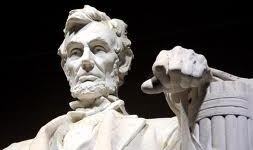
“You cannot escape the responsibility of tomorrow by evading it today.”
–Abraham Lincoln

“I am free because I know that I alone am morally responsible for everything I do.”
–Robert A. Heinlein

“None are more hopelessly enslaved than those who falsely believe they are free.”
Goethe
“Seek freedom and become captive of your desires. Seek discipline and find your liberty.”
Frank Herbert
“We must be willing to let go of the life we have planned, so as to have the life that is waiting for us.”
E. M. Forster
“Freedom is what you do with what’s been done to you.”
Sartre

“It has become appallingly obvious that our technology has exceeded our humanity….
“A perfection of means, and confusion of aims, seems to be our main problem.”
Albert Einstein
Whatever happened to the creative power of American civil society? What is the consequence of this loss?
Tocqueville reported in 1840 that Americans overcame constraints on their freedom through their own initiative and sense of community. But, 174 years later, action has been replaced by inaction. A once spirited culture of engagement, built on committed interpersonal relationships, has been replaced by an increasingly self-centered attitude, the loss of community, and the isolating influences of the automobile, television, and the digital age.
Is it these technologies that have isolated us from one another? Niall Ferguson argues no. Rather he suggests that it is “not technology, but the state – with its seductive promise of ‘security from the cradle to the grave’ – [which is] the real enemy of civil society.” And he cites the astonishingly prophetic vision of Tocqueville, who imagined a future America in which the spirit of community has been co-opted and neutered by government:
“I see an innumerable crowd of like and equal men who revolve on themselves without repose, procuring the small and vulgar pleasures with which they fill their souls. Each of them, withdrawn and apart, is like a stranger to the destiny of all the others: his children and his particular friends form the whole human species for him; as for dwelling with his fellow citizens, he is beside them, but he does not see them; he touches them and does not feel them; he exists only in himself and for himself alone….
“Above these an immense tutelary power is elevated, which alone takes charge of assuring their enjoyments and watching over their fate. It is absolute, detailed, regular, far-seeing, and mild. It would resemble paternal power if, like that, it had for its object to prepare men for manhood; but on the contrary, it seeks only to keep them fixed irrevocably in childhood….
“Thus, …the sovereign extends its arms over society as a whole; it covers its surface with a network of small, complicated, painstaking, uniform rules through which the most original minds and the most vigorous souls cannot clear a way to surpass the crowd; it does not break wills, but it softens them, bends them, and directs them; it rarely forces one to act, but it constantly opposes itself to one’s acting; it does not destroy, it prevents things from being born; it does not tyrannize, it hinders, compromises, enervates, extinguishes, dazes, and finally reduces each nation to being nothing more than a herd of timid and industrious animals of which the government is the shepherd.”
Elsewhere Tocqueville added an explicit warning:
“But what political power would ever be in a state to suffice for the innumerable multitude of small undertakings that American citizens execute every day with the aid of association?…
“The morality and intelligence of a democratic people would risk no fewer dangers than its business and industry if government came to take the place of associations everywhere.
“Sentiments and ideas renew themselves, the heart is enlarged, and the human mind is developed only by the reciprocal action of men upon one another.”
I agree that government has had a part in the demise of the American soul. But, I do not think we can attribute the present condition solely to government. I believe the degeneration of attitudes and behavior cannot be divorced from the isolating influences of corporate culture, the dispersion of communities by the automobile, or the superficiality of a digital society.
Telecommunications and travel by air brought the world together on a macro level, but they also disinclined us to engage with our neighbors. I believe the long slide to isolation is the consequence of social forces that have tracked the trajectory of human progress since the founding of the Republic, and which we can only fault ourselves for accepting without question.
Our government is, after all, a creature of our own invention, served by people who have been subject to the same deterioration of values and responsibility as the nation as a whole.
Tom
We face a turning point as a nation that is quite challenging. Yet, it is also an opportunity; a rare moment in history that calls us to clarify our purpose and correct the manner of thinking that brought us to this place. It will require that we keep our minds open and remain objective as we address some tough questions. The effort may not be comfortable, but it is essential if we are to regain our balance and rebuild our resolve.
In his recent book, The Great Degeneration, economic historian Niall Ferguson has provided us with a compelling review of what has come to pass. He considers four areas in which the degeneration of values and social stability in the United States has had devastating consequences. These are, to use my own words, 1) the role of responsibility in the structure of the social order, 2) the disintegration of the market economy, 3) the fundamental role of the rule of law, and 4) the essential qualities of civil society.
Looking back, Dr. Ferguson reminds us of the vigorous civil and cultural life of nineteenth century America: “I want to ask,” he writes, “how far it is possible for a truly free nation to flourish in the absence of the kind of vibrant civil society we used to take for granted? I want to suggest that the opposite of civil society is uncivil society, where even the problem of anti-social behavior becomes a problem for the state.” (2013)
He goes on to cite Alexis de Tocqueville from the first volume of his famous commentary, Democracy in America, which was published in 1840:
“America is, among the countries of the world, the one where they have taken most advantage of association and where they have applied that powerful mode of action to a greater diversity of objects.
“Independent of the permanent associations created by law under the names of townships, cities and counties, there is a multitude of others that owe their birth and development only to the individual will.
“The inhabitant of the United States learns from birth that he must rely on himself to struggle against the evils and obstacles of life; he has only a defiant and restive regard for social authority and he appeals to its authority only when he cannot do without it…. In the United States, they associate for the goals of public security, of commerce and industry, of morality and religion. There is nothing the human will despairs of attaining by the free action of the collective power of individuals.”
Dr. Ferguson writes that “Tocqueville saw America’s political associations as an indispensable counterweight to the tyranny of the majority in modern democracy. But it was the non-political associations that really fascinated him”:
“Americans of all ages, all conditions, all minds constantly unite. Not only do they have commercial and industrial associations in which all take part, but they also have a thousand other kinds: religious, moral, grave, futile, very general and very particular, immense and very small; Americans use associations to give fêtes, to found seminaries, to build inns, to raise churches, to distribute books…; in this manner they create hospitals, prisons, schools. Finally, if it is a question of bringing to light a truth or developing a sentiment with the support of great example, they associate.”
What happened to the creative power of American civil society? And, what is the consequence of this loss? As Tocqueville reports so well, Americans succeeded in overcoming constraints on their freedom through their own initiative and sense of community.
Unfortunately, action has been replaced by inaction. A once spirited culture of engagement, based on committed interpersonal relationships, has been replaced by a self-centered attitude, the loss of community, and the isolating influences of the automobile, television, and the digital age.
Surely it is time to restore what we once did so well, and then, with renewed strength, to address the great challenges ahead.
 Liberty and the American Idea